
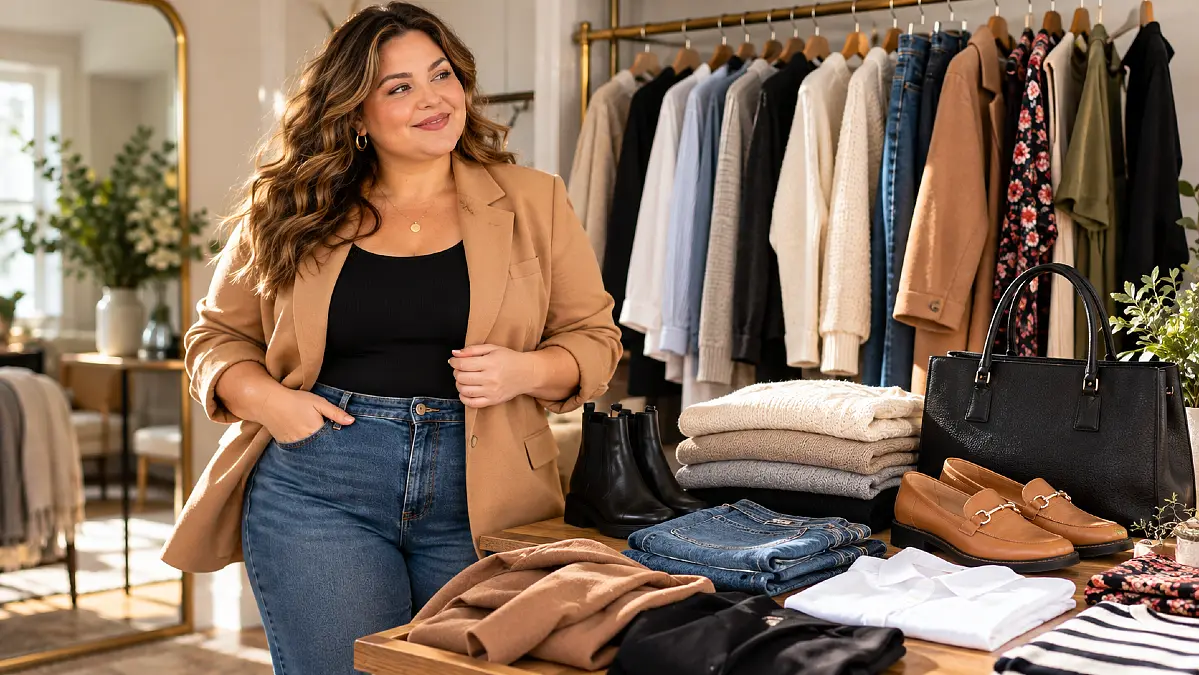
A closet full of clothes means very little when the pieces you reach for every morning never seem to fit quite right. Jeans lose their shape, sweaters stretch after a few washes, and blazers look polished on the hanger but feel uncomfortable by lunchtime.
The secret to building a better wardrobe is knowing which plus size wardrobe staples are worth paying more for. Some pieces deserve better fabric, thoughtful construction, and a little extra tailoring. Others can be simple, affordable finds that do their job beautifully.
Here is where to spend your clothing budget, what quality actually looks like, and how to build a wardrobe that works harder without buying more.
Why Some Wardrobe Staples Deserve a Bigger Budget

An expensive garment is not automatically a better garment. The real value comes from how often you wear it, how comfortably it fits, and how well it holds up after regular washing and movement.
For plus size women, thoughtful construction makes a noticeable difference. A blazer needs enough room through the bust and upper arms, while trousers need a waistband that stays comfortable when sitting and a cut that follows the hips without pulling.
A garment that costs more but requires constant adjusting is rarely a smart purchase. The better investment is something that feels good from morning to evening and works with several pieces already in your closet.
The Bold Mellow Wardrobe Guide
Where Your Clothing Budget Should Go
Not every wardrobe staple needs a premium price. Use these two factors to decide where better quality is worth the extra money.
Invest First
Everyday jeans, work trousers, bras, supportive shoes
Prioritize comfortable construction, reliable fabric recovery, supportive fit, and durability. These pieces affect how you feel throughout the day.
Buy for Reliability
Basic T-shirts, layering tanks, simple casual tops
Look for good opacity, strong seams, stable necklines, and wash performance. A moderate price can deliver everything you need.
Spend Selectively
Event dresses, formal blazers, special-occasion clothing
Fit still matters, but fewer wears may not justify a high price. Consider versatile styles, secondhand finds, and simple alterations.
Save Here
Trend tops, novelty accessories, seasonal statement pieces
Experiment without spending heavily. Restyle pieces you already own or shop affordable options that meet your comfort and quality needs.
Think About Cost Per Wear Before You Buy
Cost per wear is the price of a garment divided by the number of times you wear it. A well-made pair of jeans worn several times a week can offer better value than a cheaper pair that quickly loses its shape.
This does not mean every basic needs to come from an expensive collection. It means spending should reflect your actual lifestyle instead of the wardrobe you think you should own.
| Wardrobe staple | Investment priority | Why it may deserve more |
|---|---|---|
| Everyday jeans and trousers | High | Fit, fabric recovery, and comfortable waistbands matter with frequent wear |
| Everyday bras | High | Good support, comfortable construction, and reliable fit affect daily comfort |
| Tailored blazer | High if worn regularly | Better shoulder construction and fabric improve movement and drape |
| Everyday shoes and boots | High | Foot comfort, durable soles, and secure fit matter over long days |
| Quality knitwear | Medium to high | Better yarn and construction can reduce stretching and premature wear |
| Trendy tops and occasion pieces | Lower | Less frequent wear makes expensive purchases harder to justify |
Before buying anything, picture at least three outfits you could create with it. If the piece only works with one specific combination, it might be better treated as an occasional purchase.
Budget Note: Start by upgrading the item you wear most often and complain about most frequently. That purchase is more likely to improve your everyday dressing than an entirely new outfit.
Well-Fitting Jeans and Trousers Are Worth the Investment

A reliable pair of jeans can carry much of your casual wardrobe. The right pair works with fitted knits, oversized shirts, blazers, relaxed sweatshirts, and everything from sneakers to ankle boots.
The difference between average denim and denim worth paying more for often comes down to fabric recovery and pattern design. Good jeans should follow your shape without becoming noticeably loose around the knees and seat halfway through the day.
Look Beyond the Size on the Label
For plus size jeans, the waistband, rise, hip, and thigh need to work together. A pair can fit beautifully around the waist and still feel restrictive through the upper leg or pull across the front when you sit.
Start with the rise. High-rise jeans can feel secure and comfortable, but the waistband should sit where your torso naturally bends without digging in. Mid-rise styles can be just as useful if they suit your proportions and preferred tops.
Straight-leg denim is a particularly versatile investment because it works with different shoe shapes. Wide-leg jeans offer a more relaxed silhouette, while bootcut styles create a smooth transition over ankle boots and chunkier footwear.
Pay Attention to Fabric Recovery
Stretch denim can feel wonderful in the fitting room, but not every stretchy fabric performs the same way. Look for denim with enough substance to hold its intended shape while allowing comfortable movement.
A small amount of elastane can make jeans more flexible. However, high stretch does not guarantee good recovery, so gently stretch the fabric and see how well it returns to its original shape.
Structured denim can also be a good investment if you prefer a more defined silhouette. Just make sure the waist, hips, and thighs have enough room from the beginning rather than relying on the fabric to loosen.
The Trousers You Should Consider Buying Better
Tailored trousers deserve similar attention, especially if you wear them to work. A good pair should hang cleanly from the hip and allow you to sit, walk, and bend without pulling at the seams.
| Fabric or construction | Best everyday use | What to inspect |
|---|---|---|
| Stretch denim | Casual jeans | Recovery at the knees and seat |
| Ponte knit | Work trousers and travel | Substantial fabric that does not sag or turn sheer |
| Wool-blend suiting | Structured office trousers | Smooth drape, comfortable lining, and seam finishing |
| Cotton twill | Casual tailored pants | Comfortable hip room and fabric that holds its cut |
| Linen blend | Warm-weather trousers | Breathability, drape, and how much wrinkling you prefer |
For workwear, a straight or wide-leg trouser in black, charcoal, navy, or chocolate brown can be useful across several seasons. Pair it with a tucked blouse, a fitted knit, or a relaxed blazer depending on the occasion.
Fit Note: If trousers fit your hips and thighs but have a small gap at the waist, a simple waistband alteration may be worthwhile. It is usually more practical than buying a tighter pair that restricts your movement.
A Comfortable Bra Can Be More Valuable Than Another New Top
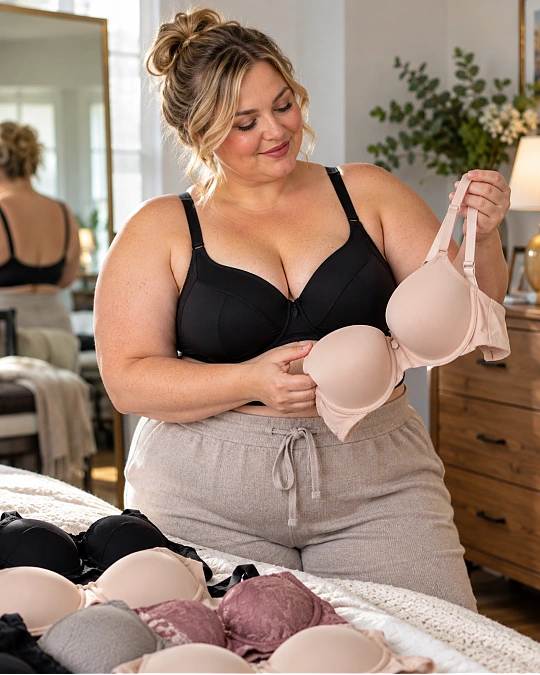
One of the most overlooked plus size wardrobe investments is a properly fitting everyday bra. It affects how clothes sit across the bust, how necklines fall, and how comfortable an outfit feels after several hours.
A bra does not need to push, reshape, or dramatically lift your bust to be useful. The goal is the level of support you personally prefer, with a band and cups that work with your body.
What Makes a Bra Worth Paying More For?
Look for a firm but comfortable band, secure adjustable straps, smooth finishing, and cups that accommodate your breast shape without pinching or creating unwanted gaps.
The band should stay reasonably level around your torso instead of riding up your back. For wired bras, the wire should surround the breast tissue rather than press into it. M&S+1
Women with fuller busts may appreciate broader straps, multiple hook closures, and reinforced side panels. These features can offer more stability, but the right construction depends on breast shape, support preference, and comfort.
A supportive wireless bra can be equally valuable for someone who dislikes underwires. The best choice is one you can wear through a full day without constantly noticing it.
Build a Small Rotation That Matches Your Clothes
Instead of buying several bras that serve the same purpose, think about the necklines and fabrics you actually wear.
A smooth everyday bra can work under fitted T-shirts and thin sweaters. A plunge or balconette style may suit certain necklines, while a soft wireless option can be useful for relaxed days and travel.
Choose underwear colors with your actual wardrobe in mind. Skin-tone shades that match your complexion can be practical beneath light clothing, while black often works well under darker garments.
Comfort Upgrade: If you wear dresses or skirts frequently, comfortable anti-chafe shorts may deserve a place in your wardrobe. Choose breathable fabric, soft seams, and a waistband that stays in place without rolling.
A Beautiful Blazer or Coat Should Fit Beyond the Shoulders
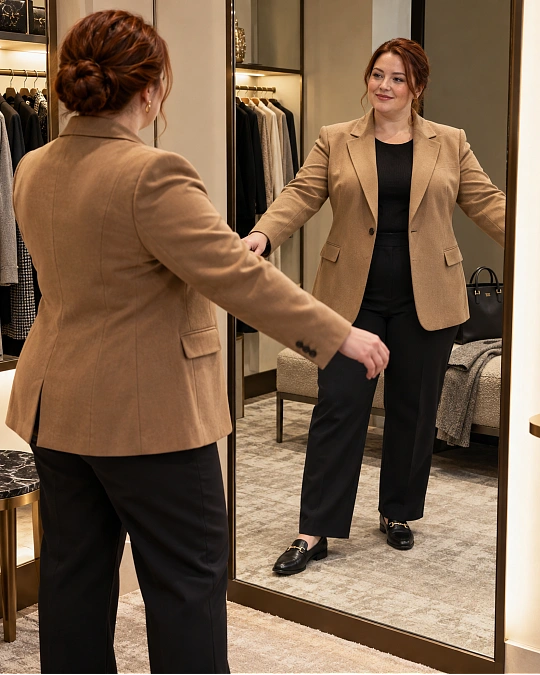
A good blazer can make an ordinary outfit look intentional. Throw one over a plain T-shirt and jeans, and the combination suddenly feels suitable for lunch, a casual office, or an evening dinner.
However, a polished appearance means little if the sleeves restrict your arms or the jacket pulls across your bust. This is where thoughtful tailoring and better pattern design justify spending more.
Check the Bust, Upper Arms, and Back
The shoulder seam should sit where the jacket’s design intends, without creating awkward pulling or excess fabric. If the blazer has structured shoulders, that fit matters because shoulder alterations can be complicated and costly.
Button the jacket and check for strong tension lines across the bust or stomach. Then reach forward, lift your arms slightly, and sit down to see how the back and sleeves respond.
A blazer intended to be worn open should still have comfortable upper-arm and back room. Buying a jacket only because it looks good from the front can leave you with an uncomfortable garment.
For fabric, consider structured ponte for flexible everyday wear, a wool blend for cooler months, or breathable linen blends for summer. Lined sleeves can also make a jacket easier to slip over shirts and knitwear.
Choose a Length That Works With Your Wardrobe
A cropped blazer pairs naturally with high-rise trousers and wide-leg jeans, creating a clear break between the upper and lower parts of an outfit. A longer relaxed blazer works beautifully over straight-leg denim, fitted knits, and simple dresses.
Neither length is automatically better for a fuller figure. The goal is to create the silhouette you like while keeping the jacket comfortable and easy to style.
An outfit worth repeating
Relaxed navy blazer + cream fitted knit + dark straight-leg jeans + leather loafers
The fitted knit provides a smooth base beneath the relaxed jacket, while the straight jeans keep the outfit clean and versatile. Loafers give it a polished finish without making it feel overly formal.
Winter Coats Deserve the Same Attention
If you live somewhere with cold winters, a good coat may be one of your most useful wardrobe investments. Look for enough room to wear a sweater underneath without the shoulders or sleeves feeling tight.
Check the lining, closures, pockets, and fabric weight. A coat that looks beautiful but cannot close comfortably over your regular winter clothes is not earning its wardrobe space.
Styling Note: Camel, charcoal, navy, chocolate, and black are easy to combine with many outfits, but a rich burgundy or forest green coat can be just as versatile if those colors already appear throughout your wardrobe.
Good Shirts, Knitwear, and Dresses Should Hold Their Shape
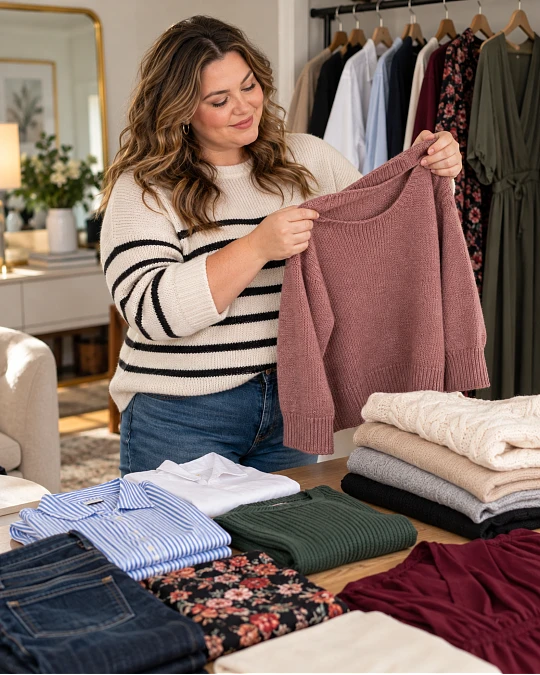
Not every top deserves a premium price. A simple cotton T-shirt can be an affordable wardrobe workhorse, especially if it washes well and keeps its neckline.
The pieces worth spending more on are usually those where fabric quality and construction affect the entire garment. Think of button-down shirts that stay smooth across the bust, knitwear that keeps its shape, and dresses you can wear in several settings.
A Button-Down Shirt Needs Proper Bust Room
A button-down shirt should close without gaping between the buttons or pulling across the upper arms. If the front fits but the shoulders feel oversized, try a style designed with additional bust room instead of automatically choosing a larger size.
Cotton poplin offers a crisp look for office wear, while softer cotton blends and Tencel lyocell fabrics can create a more fluid drape. The best material depends on how structured you want the shirt to look.
A relaxed white, pale blue, or striped shirt can work with wide-leg trousers, straight jeans, or a midi skirt. Worn open over a tank top, it can also serve as a lightweight layer during warmer weather.
Sweaters Should Feel Good After More Than One Wear
Good knitwear is not simply about thickness. A dense, well-constructed lightweight sweater can last better than a bulky knit made from loose yarn that stretches quickly.
Check the neckline, cuffs, and hem for stability. Gently pull the fabric and notice if it returns to shape, especially around areas that experience frequent movement.
Cotton knits are useful for mild weather and easy layering. Merino wool can offer warmth without excessive bulk, while cashmere and cashmere blends may feel luxurious but require careful evaluation and maintenance.
If you dislike high-maintenance clothes, choose a washable knit that suits your routine rather than an expensive sweater you rarely feel comfortable wearing.
One Great Everyday Dress Can Replace Several Forgettable Ones
A versatile dress deserves more attention than an occasional party outfit. Look for a style that works with different shoes and layers rather than a design that feels tied to one event.
A substantial jersey midi dress, tailored shirt dress, or softly structured wrap-style dress can move between work, weekends, and dinners. The fabric should hang smoothly without becoming transparent when stretched.
For wrap dresses, check that the neckline stays secure during movement. For shirt dresses, make sure the buttons do not pull when sitting, and that the waist seam falls comfortably at your preferred position.
A dress that works with sneakers, ankle boots, and a blazer offers more practical value than one requiring a completely separate set of accessories.
Wardrobe Swap: Before buying a new dress, try changing how you style an existing one. A different shoe, a cropped cardigan, or a structured jacket can make a familiar piece feel fresh without another purchase.
Everyday Shoes and Boots Are Worth Spending More On

Shoes are one of the few wardrobe categories where comfort should be evaluated before the outfit is complete. Beautiful footwear loses its appeal quickly when your toes feel cramped or your feet become uncomfortable during a normal day.
A higher price does not guarantee comfort, but good construction, an appropriate fit, and durable materials can make an investment more worthwhile.
Fit Matters More Than the Label
Look for enough room around the toes, a secure heel, and a sole suited to how you will use the shoes. The American Academy of Orthopaedic Surgeons recommends choosing footwear based on foot shape and intended activity rather than size alone. AAOS
For plus size women, there is no single shoe style that everyone needs. Foot width, arch shape, personal comfort, and daily activities matter more than following a rule about which footwear supposedly looks best on a certain body type.
If standard-width shoes feel tight, try a properly designed wide fit rather than simply buying a longer size. Boots should also have enough room through the ankle or calf when that part of the design covers those areas.
Pay Attention to Shoe and Hem Balance
The relationship between footwear and trouser length can change how an outfit looks and moves.
A wide-leg trouser usually works best when the hem falls cleanly over the shoe without dragging on the floor. Chunky loafers, platform sneakers, and block-heel boots can sit comfortably beneath a wider leg opening.
With cropped straight jeans, sleek loafers or ankle boots give the outfit a defined finish. A midi dress can look modern with tall boots in cooler months or simple leather sandals in summer.
The aim is not to make your legs appear a certain way. It is to create a deliberate relationship between the shape of your clothes and the footwear beneath them.
Do Not Overlook Your Everyday Bag
A bag can be worth a larger investment if you use it nearly every day. Look at the strap attachment, zipper quality, lining, stitching, and how comfortable it feels when carrying your regular belongings.
A medium structured tote, soft leather shoulder bag, or practical crossbody may work better for your lifestyle than a delicate designer-style bag. A comfortable strap length and easy access to your essentials often matter more than a recognizable logo.
Shopping Note: If you have limited money to spend, choose reliable everyday shoes before adding another statement bag. Footwear affects your daily comfort in a way that a decorative accessory usually does not.
Frequently Asked Questions About Plus Size Wardrobe Investments
What should a plus size woman invest in first?
Start with the pieces you wear most often and find hardest to replace. For many women, that means well-fitting jeans or trousers, comfortable everyday bras, and reliable shoes. If you work in a formal environment, a good blazer may move higher on the list.
Is expensive plus size clothing always better quality?
No. Higher prices can reflect branding, design, marketing, or materials without guaranteeing better fit or construction. Examine seams, fabric recovery, closures, lining, and care instructions before deciding if a piece is worth its price.
Are natural fabrics always better for a plus size wardrobe?
Not necessarily. Cotton, linen, wool, and other natural fibers have useful qualities, but fabric construction and blends also matter. A well-made ponte trouser may offer better stretch recovery for everyday office wear than a poorly constructed garment made entirely from natural fibers.
Should petite or tall plus size women spend more on tailoring?
Tailoring can be useful when a garment fits well in difficult-to-alter areas but needs a simple adjustment. Hemming trousers, shortening sleeves, or refining a waistband can improve pieces you already own. However, major shoulder, armhole, or bust alterations can be expensive and may not be worthwhile.
How can I build a quality wardrobe on a small budget?
Start by identifying the pieces you already wear repeatedly, then replace or upgrade them gradually. Shop carefully during sales, consider good-quality secondhand clothing, and use simple alterations when practical. Spending selectively is more valuable than buying an expensive capsule wardrobe all at once.
Build a Better Wardrobe One Useful Piece at a Time
The best plus size wardrobe staples are not necessarily the most expensive or fashionable pieces in the store. They are the clothes that fit your life, feel good on your body, and give you more outfit options without extra effort.
Choose quality where it makes a real difference, especially in everyday bottoms, supportive undergarments, structured layers, and footwear. Save on items you wear less often, and make better use of the clothes you already own.
A good place to begin is with one everyday staple that never fits quite right. Replace it with something that truly works, and build from there.

Katy McClain is the founder and senior editor of Bold Mellow, where she focuses on modern plus-size style that feels polished, wearable, and realistic. She created the site to make fashion advice more useful for women who want good clothes and thoughtful styling ideas without outdated rules about hiding, minimizing, or dressing for a certain body type.
Her editorial approach centers on proportion, fit, fabric, color, and the small details that can change how an outfit feels. Katy oversees Bold Mellow’s overall direction and works closely on its fashion guides, seasonal edits, and everyday outfit inspiration, with an emphasis on clothes that can work beyond a single photo or trend.