
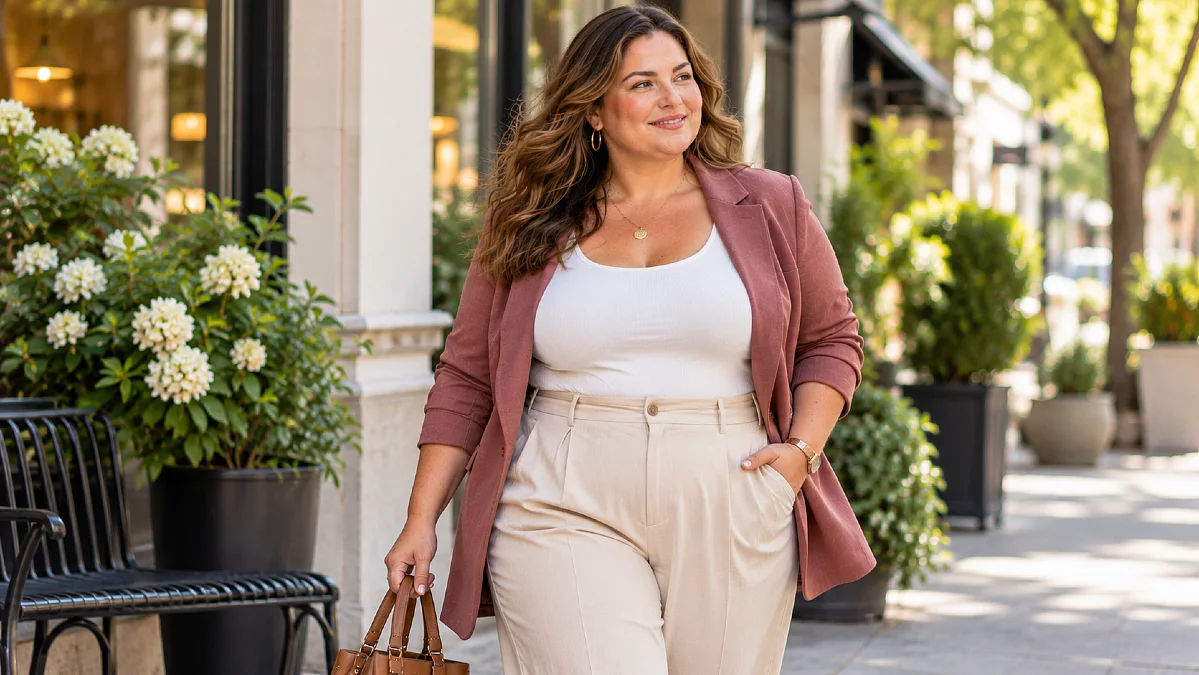
Getting dressed with a fuller stomach should not mean choosing between uncomfortable waistbands and oversized tops that swallow your style. Yet so much fashion advice still tells women to cover their middle, wear black, or avoid anything that shows their shape.
Learning how to dress a big stomach is really about understanding fit, fabric, and proportion. The right clothes can follow your curves, move comfortably when you sit, and create the kind of outfit you actually want to wear.
From jeans that stay comfortable all day to dresses that feel modern and feminine, a few thoughtful styling choices can make getting dressed much easier.
Start With Waistbands That Work With Your Stomach, Not Against It
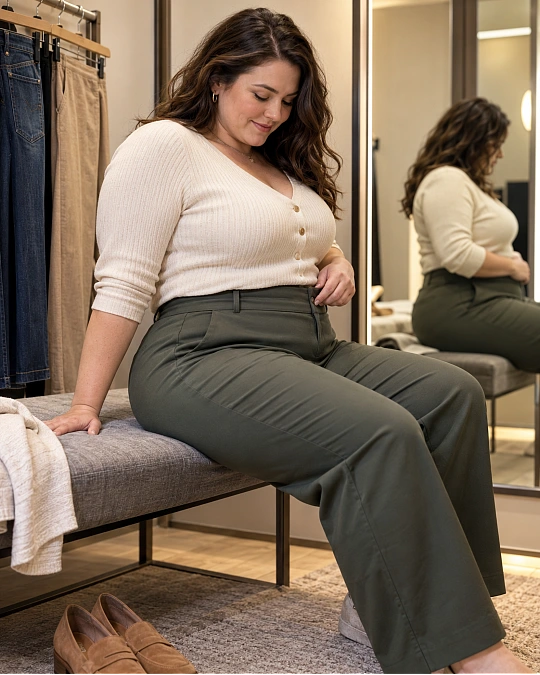
A beautiful outfit can become frustrating when the waistband starts digging in after an hour. This is especially common when trousers fit through the hips but feel tight across the lower stomach.
The answer is not always a bigger size. Often, you need a different rise, a more flexible waistband, or a cut that allows extra room through the front.
High Rise Is an Option, Not a Requirement
High-rise jeans can feel wonderfully secure when the waistband rests comfortably near your natural waist. They also pair well with cropped sweaters, tucked shirts, and fitted tops because the higher waist creates a clear starting point for the outfit.
However, high-rise does not automatically mean comfortable. A waistband that rolls down, presses into your ribs, or folds when you sit is probably not the right rise or construction for you.
Mid-rise jeans may feel better if you carry more fullness higher on your stomach. Some women also prefer lower waistbands designed to sit securely beneath a lower belly.
Fit Note: Try different rises while sitting, not just standing in front of a mirror. The most useful waistband is the one that stays comfortable throughout your day.
Look Beyond the Size Label
Straight-leg jeans, relaxed trousers, and wide-leg pants can all work beautifully with a fuller stomach. What matters is how the garment fits across your waist, hips, and front rise before the legs begin to fall.
For everyday comfort, consider trousers with elastic at the back, a wide pull-on waistband, or a small amount of stretch. These features allow the garment to move without making the entire outfit look casual.
| What you notice | What may be happening | What to try |
|---|---|---|
| Waistband rolls when sitting | Rise or waistband construction is not working for you | Another rise or a wider, softer waistband |
| Jeans pull across the front | Not enough room through the stomach or front rise | A roomier cut or different denim fit |
| Waist fits but hips feel tight | The trouser cut lacks hip ease | Relaxed straight-leg or wider-hip styles |
| Trousers fit standing but pinch sitting | Insufficient ease or stretch | Elastic-back trousers or flexible denim |
| Waist gaps while hips fit | Waist-to-hip proportions differ from the pattern | Contoured waistband or waist alteration |
One useful detail to remember is that pleated trousers should have enough room for their pleats to hang naturally. If the pleats pull open while you stand, the front fit may need adjusting.
Choose Tops That Follow Your Curves Without Feeling Restrictive
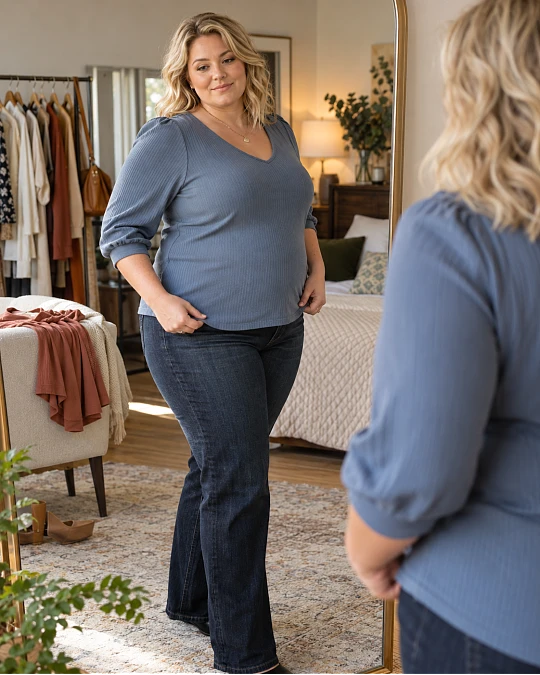
One of the biggest misconceptions about dressing a fuller stomach is that loose clothing always feels more comfortable or looks more polished. A very oversized top can actually make an outfit harder to style because it leaves little visible shape.
Instead of choosing extra fabric everywhere, look for tops with a well-fitted shoulder, comfortable bust, and enough ease through the middle. This gives the garment structure without asking it to fit tightly across every curve.
Pay Attention to Where the Top Ends
A top that ends just above the waistband can work beautifully with relaxed trousers or an A-line skirt. It creates a clear relationship between the upper and lower parts of the outfit.
A longer shirt can look equally stylish when it has side slits, a curved hem, or fabric that moves freely. These details stop the shirt from pulling across your stomach when you walk or sit.
Consider these simple combinations:
- Slightly cropped knit + wide-leg trousers: A shorter top keeps the trouser shape visible and creates a clean, modern silhouette.
- Relaxed button-down + straight jeans: A soft front tuck or open collar gives a casual outfit intentional shape.
- Fitted ribbed tee + flowing midi skirt: The closer fit of the top contrasts with the skirt’s movement.
- Untucked linen shirt + tailored shorts: A defined shoulder and open neckline give a relaxed summer outfit structure.
None of these combinations requires a flat stomach. They work because the garment shapes complement one another.
Stop Treating Tucking as Something You Cannot Do
Tucking a shirt does not need to be an all-or-nothing decision. A small front tuck can create a little waist definition while leaving the rest of the fabric relaxed.
For a softer effect, tuck the shirt slightly off center and let a little fabric fall over the waistband. This works especially well with fluid button-downs, fine-gauge sweaters, and relaxed cotton tees.
You can also skip the tuck entirely and choose a top that naturally ends near your preferred waistline. The goal is to create a balanced outfit, not force every top into the same shape.
Styling Note: If you love a fitted top, wear it. Try pairing a close-fitting tank or knit with relaxed jeans, a full skirt, or an open shirt for a look that feels current without covering your body.
Fabric Weight and Drape Matter More Than Most Styling Rules
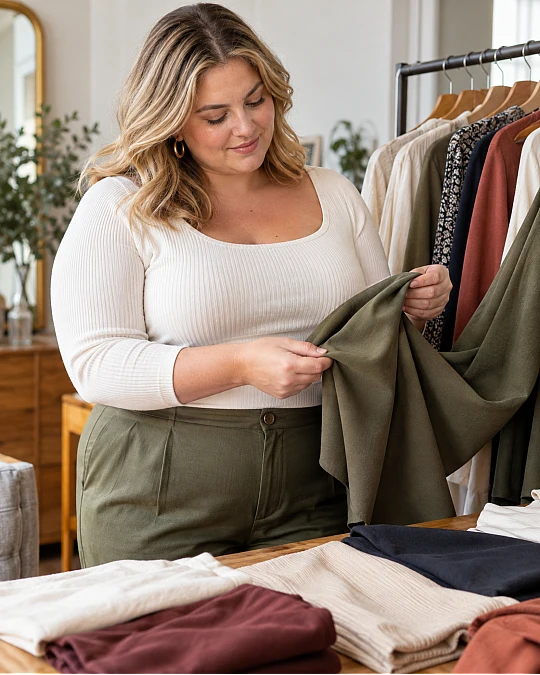
Two tops in the same size can look and feel completely different because of their fabric. One might stretch tightly across the stomach, while another follows your curves and falls smoothly when you move.
This comes down to three details: fabric weight, drape, and recovery. Weight affects how substantial the material feels, drape describes how it hangs, and recovery is its ability to return to shape after stretching.
A medium-weight knit often gives more stability than a very thin jersey. Meanwhile, soft woven fabrics can create movement without needing to stretch across your stomach.
Which Fabrics Are Worth Looking For?
| Fabric | How it behaves | Best uses |
|---|---|---|
| Ponte knit | Smooth, substantial, stretchy, and shape-holding | Tailored pants, knit dresses, structured skirts |
| Medium-weight cotton jersey | Soft and flexible with a casual finish | Everyday tees, fitted tops, casual dresses |
| Viscose or lyocell blends | Fluid drape with soft movement | Blouses, relaxed trousers, midi dresses |
| Cotton poplin | Crisp structure with limited natural stretch | Button-down shirts, shirt dresses |
| Crepe | Soft movement, with structure varying by weight | Dress trousers, blouses, occasion dresses |
| Linen blends | Breathable with relaxed texture and some creasing | Summer shirts, wide-leg trousers, warm-weather sets |
Watch How the Fabric Behaves When You Move
A stretchy top is not necessarily a comfortable top. If the material pulls tightly across your stomach whenever you sit, it may have insufficient ease even though it technically stretches.
Likewise, a stiff cotton shirt may look beautiful while standing but pull between the buttons when you reach forward. Choosing a roomier cut, adding a little stretch, or wearing the shirt open over a tank can solve the problem.
For dresses, pay attention to lining and fabric thickness. A beautifully draped dress can become less comfortable if the lining is too narrow or the fabric becomes transparent in daylight.
Fabric Note: You do not need to avoid thin or body-hugging fabrics. If you like the look of fine jersey, try a ruched style, a lined design, or a knit with better recovery.
Dresses and Skirts Can Celebrate Your Shape Without a Tight Waist
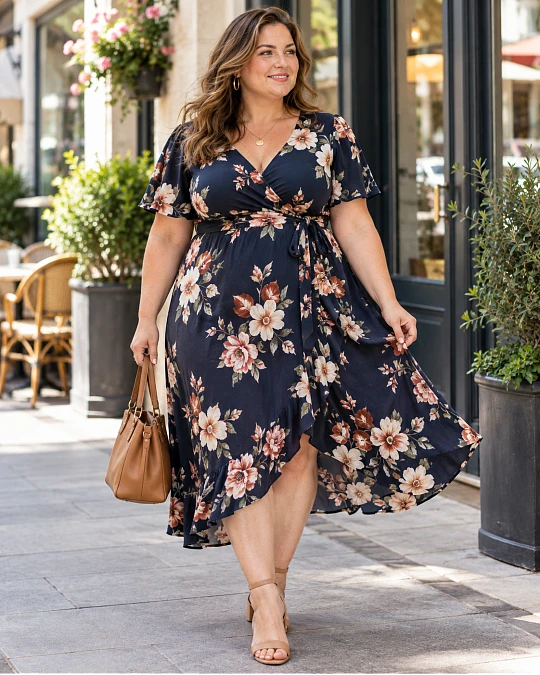
Dresses are often easier to style than separate tops and bottoms because they remove the problem of matching two different waistlines. They also allow you to play with shape, movement, and texture in one garment.
The key is choosing a design that feels comfortable across your stomach without losing the silhouette you enjoy.
Wrap Dresses Offer Adjustable Shape
A true wrap dress lets you adjust the waist closure, which can be helpful when your stomach changes slightly in size during the day. The diagonal neckline also creates an interesting design detail without requiring extra accessories.
Look for medium-weight jersey, soft crepe, or a woven fabric with enough movement. Check that the wrap stays secure across your bust when you sit or bend.
If the ties feel uncomfortable or the neckline opens too easily, a faux-wrap dress can offer a similar look with a fixed construction. You can also choose a wrap dress without tying it tightly.
A-Line and Shirt Dresses Make Everyday Styling Easier
An A-line dress creates shape through its cut, with a narrower upper section and a gradually wider skirt. It can feel especially comfortable in cotton poplin, linen blends, or soft woven fabrics that hold a little structure.
Shirt dresses offer another option because you can choose how much waist definition you want. Wear one without a belt for a relaxed shape, add a loose belt for definition, or leave a few buttons open at the neckline for a lighter look.
For a modern everyday outfit, pair a midi shirt dress with leather sneakers, a woven tote, and simple gold earrings. Switch to loafers and a structured bag when you want something more polished.
Do Not Rule Out Bodycon or Ribbed Dresses
Fitted dresses are not reserved for women with flat stomachs. A ribbed column dress, fitted knit midi, or softly ruched jersey dress can look beautiful on a fuller middle.
The trick is choosing a fabric that feels comfortable and allows you to move. Side ruching, thoughtful seaming, and substantial knits can add texture and dimension to a close-fitting dress.
Comfort Upgrade: If a fitted dress feels good but the fabric catches on your underwear, try smooth, comfortable undergarments or a lightweight slip. Shapewear is optional, not a requirement.
Use Layers, Color, and Shoes to Make the Whole Outfit Feel Intentional
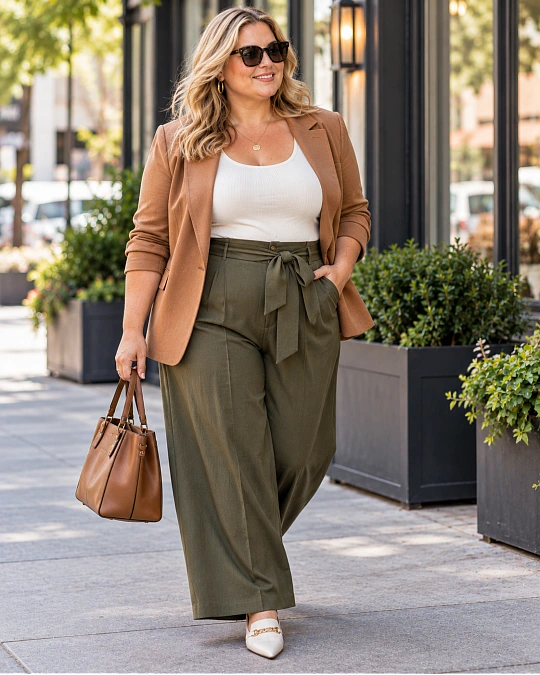
When an outfit feels unfinished, adding more fabric around your stomach is rarely the only answer. Sometimes the missing detail is a stronger shoulder, a better shoe shape, or a more thoughtful color combination.
Think about how the entire outfit works together instead of judging one area of your body.
Let Jackets Add Structure Without Closing Them
A relaxed blazer over a fitted tank and straight-leg trousers is a strong example of balanced styling. The blazer provides a defined shoulder, while the tank and trousers create a clean foundation underneath.
You can wear the blazer open, button it if it fits comfortably, or choose a cropped version that ends near your waist. Each option creates a different outfit, and none is automatically better for a fuller stomach.
For weekends, swap the blazer for a denim jacket, cotton overshirt, or lightweight bomber. These pieces can make a simple tee and trousers feel styled without becoming heavy cover-ups.
Use Color to Express Your Style
Black is versatile, but a fuller stomach is not a reason to wear it every day. Cream, chocolate brown, burgundy, olive, cobalt, and soft blue can all create striking outfits.
Try pairing chocolate trousers with a cream knit and cognac accessories for a warm, polished look. Or combine dark indigo jeans, a bright red fitted top, and a camel blazer for something more expressive.
Wearing similar shades from top to bottom can create a continuous visual line. Contrasting colors, meanwhile, can highlight individual pieces and make the outfit feel more playful.
Neither approach is better. Choose the one that matches your mood and the occasion.
Match Your Shoes to the Hem, Not Your Stomach
Shoes affect the visual balance of an outfit, especially when you are wearing fuller trousers or a midi-length skirt. A chunky sneaker, delicate flat, and pointed boot can make the same outfit feel completely different.
With wide-leg trousers, try a full-length hem that falls neatly over loafers, boots, or sneakers without dragging. Cropped wide-leg pants work well with slim sneakers, ballet flats, or loafers that leave the ankle visible.
For midi skirts, knee-high boots can create a continuous line in cooler weather. In summer, strappy sandals, slingbacks, or low-profile sneakers keep the outfit lighter.
Shoe Swap: If your wide-leg trousers feel too heavy with chunky trainers, try a sleeker sneaker or pointed flat before replacing the trousers. A small change at the hem can shift the entire outfit.
Build Real Outfits Around Your Life, Then Check How They Move
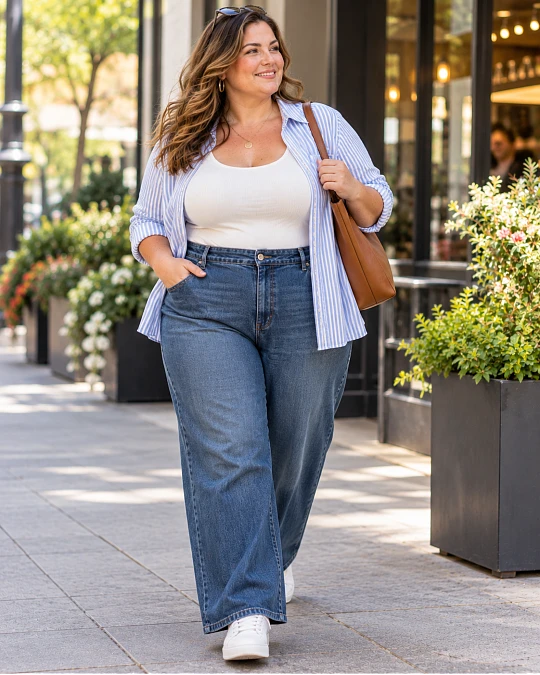
The most useful styling advice works on an ordinary Tuesday, not just in a fitting-room mirror. Your clothes should feel good during a commute, a long lunch, a shopping trip, or an evening out.
These four outfit formulas give you different ways to dress a fuller stomach while keeping your personal style at the center.
BOLD MELLOW | THE FIT GUIDE
The 3-Move Fitting Room Check
An outfit should feel as good in motion as it looks in the mirror. Try these three simple tests before deciding what fits.
SIT
Check your waistband
If you notice
Your waistband digs, folds, or rolls against your stomach.
Try instead
A different rise, a wider waistband, or elastic-back trousers that allow comfortable movement.
REACH
Check your top
If you notice
Your shirt rides up, buttons pull, or fabric feels restrictive.
Try instead
More room through the middle, a curved hem, side slits, or a softer fabric with better drape.
WALK
Check movement and hems
If you notice
Your skirt twists, trousers drag, or you constantly adjust your outfit.
Try instead
A more fluid cut, a suitable hem length, or different shoes to balance the outfit.
The Real Fit Test
Can you sit, reach, and walk comfortably without constantly fixing your clothes? That’s a strong sign your outfit works for your body and your everyday life.
For Work: Relaxed Tailoring With a Clean Finish
Outfit formula: Elastic-back tailored trousers + fitted fine-gauge knit + relaxed blazer + loafers.
Choose trousers that sit comfortably across your stomach, with enough room for the front to fall smoothly. A fitted knit creates a neat foundation, while the blazer adds structure through the shoulders.
If you prefer softer layers, replace the blazer with a cropped cardigan. Charcoal, cream, and deep burgundy make a polished color combination without feeling overly formal.
For Weekends: Denim That Does Not Demand Constant Adjusting
Outfit formula: Relaxed straight-leg jeans + substantial cotton tee + cropped denim jacket + retro sneakers.
Start with jeans that feel good when you sit, then choose a tee with enough ease through the stomach. A shorter denim jacket can add interest near the waist and keep the casual outfit feeling deliberate.
You can swap the jacket for a relaxed button-down or wear the tee alone. Add a leather belt only if the waistband feels comfortable with one.
For Dinner: A Fitted Dress With Personality
Outfit formula: Ruched midi dress + statement earrings + pointed boots + small shoulder bag.
Choose a dress with soft gathering through the side seams and fabric that moves easily. The ruching adds texture, while the accessories give the outfit an occasion-ready finish.
A rich chocolate, forest green, or wine-colored dress can feel especially striking with gold jewelry. In warmer weather, replace the boots with heeled sandals or sleek flats.
For Warm Days: Easy Pieces With Beautiful Drape
Outfit formula: Linen-blend wide-leg pants + fitted cotton tank + open short-sleeve shirt + flat sandals.
The tank provides a simple base, while the relaxed trousers move comfortably through the hips and legs. An open short-sleeve shirt adds texture and sun-conscious coverage when you want it, without becoming the main feature.
Try cream trousers with an olive tank and a striped shirt for a fresh summer combination. If you prefer one layer, wear a slightly cropped linen shirt buttoned instead.
Make the Fitting Room Work for You
Before buying something new, test how the garment behaves when your body moves. This is especially useful for waistbands, fitted dresses, and woven shirts.
- Sit down: Check whether the waistband digs in, rolls, or feels too tight.
- Walk around: See if the skirt twists, trousers slide, or the top rides up.
- Reach forward: Check for pulling through the stomach, bust, and shoulders.
- Try your usual shoes: Make sure the trouser or skirt hem works with footwear you actually own.
- Look at the whole outfit: Judge how the clothes work together instead of focusing on one body area.
Some fit problems also have simple solutions. A tailor may be able to adjust a loose waistband, shorten trousers, or change the length of a top, depending on how the garment is constructed.
There is no reason to replace an otherwise good piece when a small alteration can make it much more wearable.
Frequently Asked Questions
Can I wear crop tops if I have a big stomach?
Absolutely. A cropped tee or sweater can look stylish with high-rise trousers, a midi skirt, or relaxed jeans, and you can show as much or as little of your stomach as you like.
If you prefer less skin showing, choose a crop that meets the waistband. A boxy cropped shirt with wide-leg trousers is another modern combination.
Should I always wear high-waisted jeans with a fuller stomach?
No. High-waisted jeans work well for some women, but others feel better in mid-rise or lower-rise styles.
Pay attention to the front rise, waistband shape, and how the denim behaves when you sit. Comfort matters more than following a general rule about waist placement.
Is shapewear necessary when dressing a big stomach?
Shapewear is a personal choice, not a styling requirement. A well-fitting outfit should not depend on compression garments to look intentional.
If you enjoy wearing shapewear for certain occasions, choose the correct size and a level of compression that allows you to sit, breathe, and move comfortably.
What should I wear when my stomach feels fuller later in the day?
Choose clothes with flexible waistbands, adjustable closures, or comfortable ease through the middle. Pull-on ponte trousers, relaxed dresses, and elastic-back skirts can accommodate normal changes throughout the day.
If a waistband regularly becomes painful after eating or sitting, try a different construction rather than simply enduring the discomfort.
Can I wear a belt with a big stomach?
Yes, if you enjoy the look and the belt feels comfortable. Try a soft leather belt over a shirt dress, a belt through relaxed jeans, or a loose belt over a blazer.
You can also choose a belt-free outfit with built-in waist shaping. A belt should be a styling detail, not something you need to wear to change your body’s appearance.
Confidence Comes From Clothes That Let You Be Yourself
Dressing a big stomach does not mean giving up fitted dresses, beautiful trousers, playful colors, or the latest silhouettes. It means understanding how your clothes fit and choosing pieces that support your comfort and personal style.
The next time an outfit feels wrong, look at the waistband, fabric, hem, or proportions before deciding the entire look is not for you.
Start with one outfit you already own and change just one detail. Sometimes a different tuck, softer waistband, or better shoe pairing is all you need to feel more like yourself.
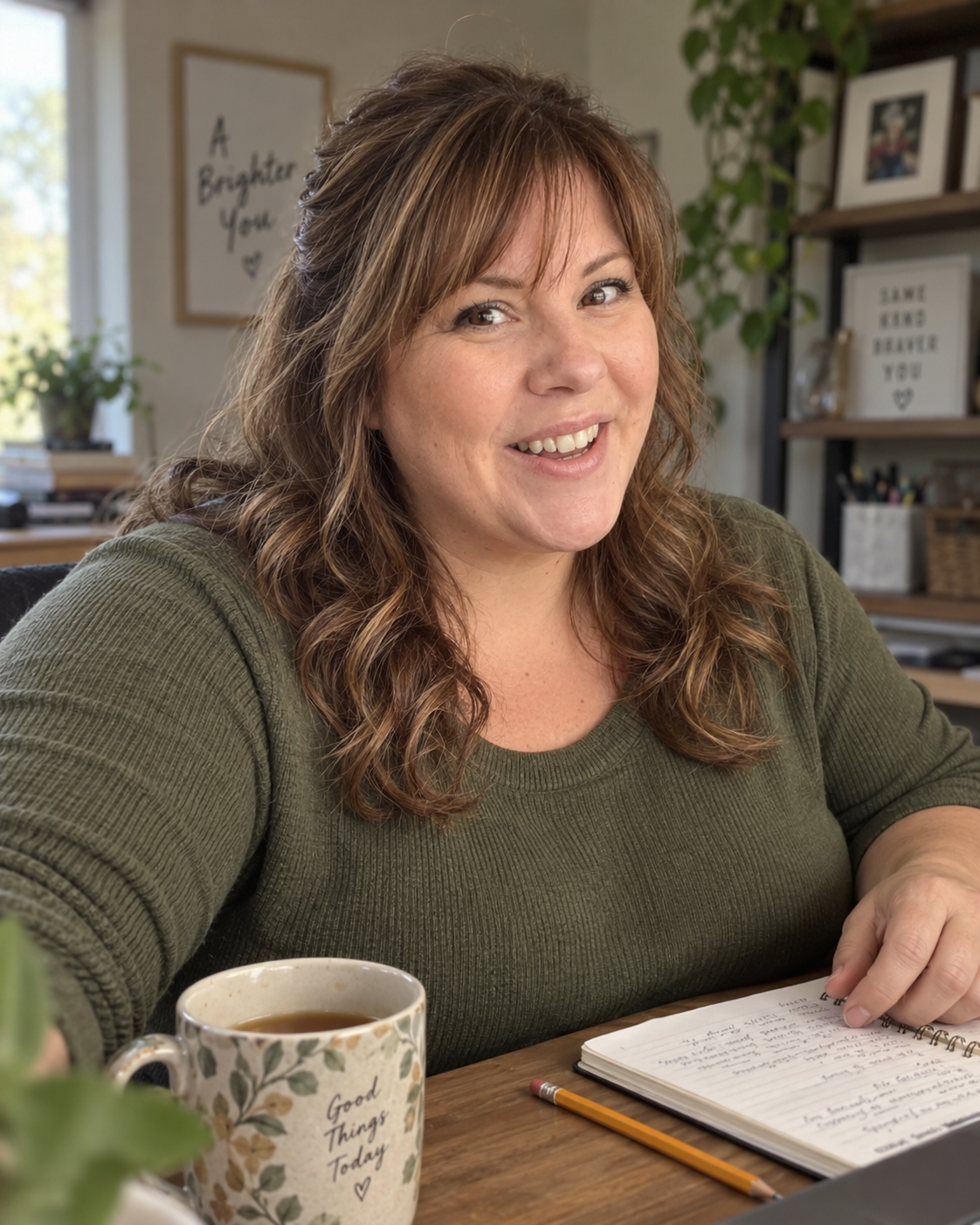
Tanya Bennett is the Chief Editor and an author at Bold Mellow, where she helps shape the site’s voice, editorial standards, and day-to-day fashion coverage. Her work focuses on plus-size style that feels current, wearable, and useful, with particular attention to fit, proportion, fabric, color, and the details that make an outfit work in real life.
As an editor, Tanya reviews stories for clarity, practicality, and consistency before publication, while also contributing fashion guides, seasonal styling ideas, and wardrobe-focused features.
She believes good style advice should help women understand their clothes better, not give them another list of rules to follow. Her approach at Bold Mellow is straightforward: start with the person, consider how the clothes actually fit and move, and build outfits that feel confident, modern, and genuinely wearable.