
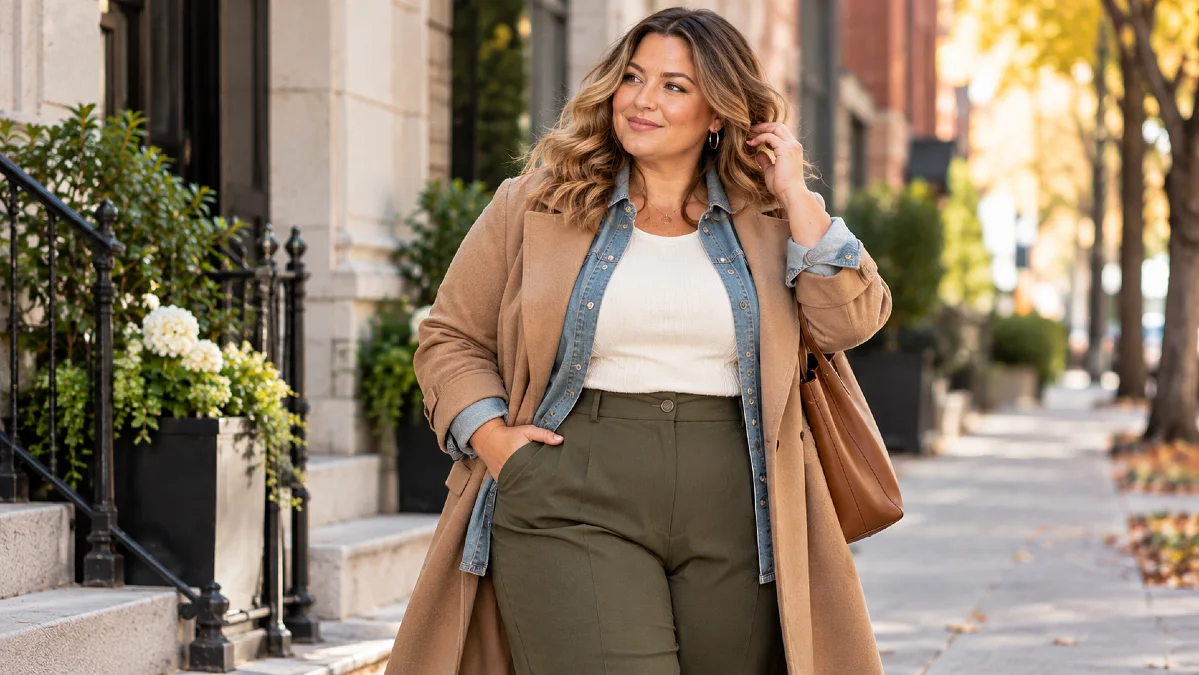
Layering should make your outfit more interesting, not leave you feeling buried under fabric. Yet finding the right balance can be frustrating when sweaters bunch beneath jackets, cardigans pull across the hips, or coats feel tight around the arms.
Learning how to layer clothes plus size without adding bulk starts with choosing pieces that work together rather than simply stacking them.
The secret is in fabric weight, fit, proportion, and where each garment ends. A fine knit, an open blazer, and straight leg trousers can create a completely different look from three loose pieces worn together.
Start With a Base Layer That Fits Smoothly Under Everything
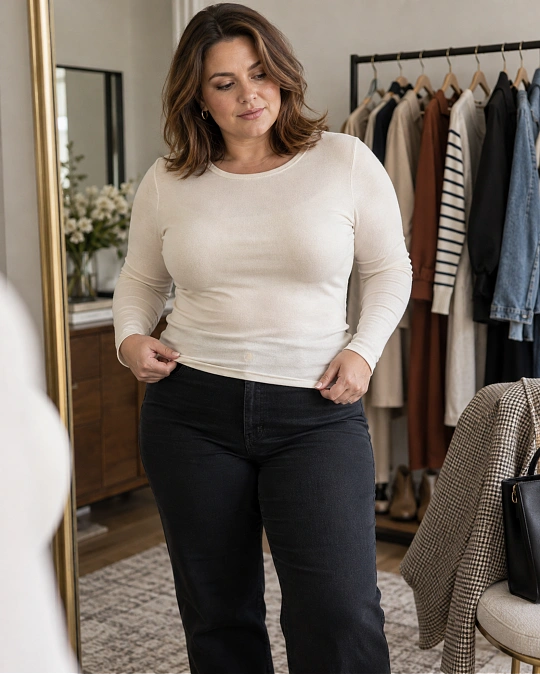
The first layer sets the foundation for the rest of your outfit. If it twists, bunches, or pulls when you move, adding a sweater or jacket will usually make those problems more noticeable.
A good base layer should follow your shape comfortably without feeling tight. It needs enough stretch for movement and a smooth surface that allows the next garment to slide over it.
Choose Fine Knits Instead of Thick First Layers
Cotton jersey tops, modal blend tees, and fine gauge knitwear are useful starting points.
Look for:
- Smooth crew neck tees: Easy to wear beneath blazers, cardigans, and denim jackets.
- Fine ribbed tops: Add texture without taking up much space beneath another garment.
- Lightweight turtlenecks: Work under coats, sleeveless dresses, and open shirts.
- Soft knit tanks: Create a comfortable foundation beneath shirts and lighter layers.
- Fitted long sleeve tops: Offer coverage without needing another thick sweater.
The goal is a close but comfortable fit. A base layer that stretches tightly across the bust may create tension beneath a jacket, while one with too much loose fabric can bunch around the waist.
𝗙𝗶𝘁 𝗡𝗼𝘁𝗲: Pay attention to the underarm area. Excess fabric beneath the arms can make a second layer uncomfortable, even when both garments fit well separately.
Make the Neckline Work With Your Outer Layer
Different necklines change how layered outfits look.
A scoop neck top beneath an open cardigan creates space around the neckline. A crew neck tee beneath a blazer gives a clean, casual finish.
A fine turtleneck beneath a structured coat creates a more polished winter outfit.
Try to avoid stacking several bulky collars unless you want that dramatic effect. Two thick collars can compete for space around the neck and shoulders.
Choose Fabrics That Layer Well Instead of Simply Choosing Thin Clothes
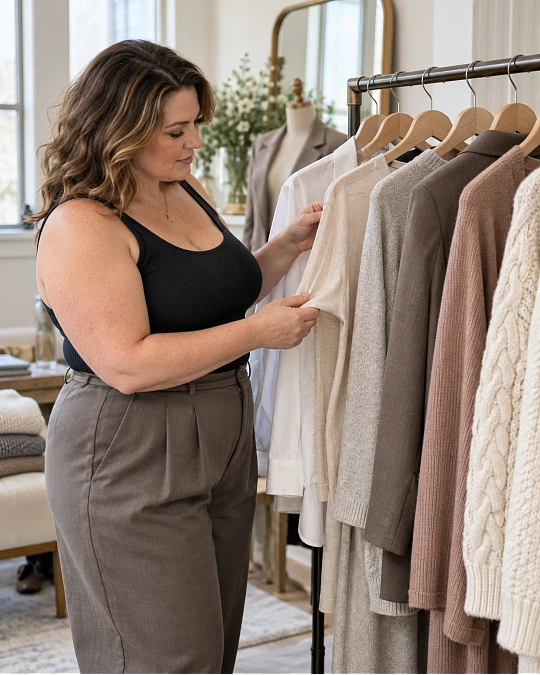
Thin fabric is not always the answer to bulky layering.
Some lightweight fabrics cling, wrinkle, or collect around the waist. Others hang smoothly and move well beneath jackets.
The important difference is how the fabric behaves when another garment sits on top of it.
Know Which Fabrics Work Best at Each Layer
| Fabric | How It Behaves | Best Layering Use |
|---|---|---|
| Modal blend jersey | Soft, stretchy, and usually smooth | Base tops beneath jackets |
| Fine merino wool | Lightweight with useful warmth | Winter base and middle layers |
| Cotton poplin | Crisp and holds its shape | Shirts beneath sweaters or blazers |
| Ponte knit | Dense, smooth, and structured | Blazers, jackets, and trousers |
| Fine gauge cardigan knit | Flexible with little added thickness | Middle layers |
| Chunky cable knit | Thick with raised texture | Main sweater or visible outer layer |
A chunky sweater is not a poor choice. It simply needs enough room around it.
For example, a thick cable knit sweater can look beautiful with straight leg jeans and a relaxed wool coat. However, squeezing that same sweater beneath a fitted blazer may cause bunching around the shoulders and arms.
The Smart 3-Layer System
Less bunching. Better drape. More comfort. Give each clothing layer a different job instead of stacking three heavy pieces.
Base Layer
Choose
Modal jersey, fine ribbed cotton, or lightweight merino.
Fit Goal
Close to the body, never tight. No extra folds beneath the arms or around the waist.
Example
Smooth cream long sleeve top.
Middle Layer
Choose
Fine gauge cardigan, soft sweater, or crisp cotton shirt.
Fit Goal
Enough room to move over the base. Fabric should fall smoothly without gathering.
Example
Lightweight open cardigan.
Outer Layer
Choose
Lined blazer, structured trench, or roomy wool coat.
Fit Goal
Comfortable through the upper arms, bust, and hips with your actual layers underneath.
Example
Relaxed camel coat.
The 30-Second Layering Fit Test
Combine Different Fabric Textures
An outfit often looks more intentional when each layer has a different texture.
Try a smooth cotton tee beneath a soft cardigan, finished with a structured trench coat. The contrast adds visual interest without requiring extra accessories.
Another option is a fine black knit beneath a leather jacket, paired with fluid wide leg trousers.
The knit creates a smooth foundation. The jacket adds shape, while the trousers bring movement.
𝗙𝗮𝗯𝗿𝗶𝗰 𝗡𝗼𝘁𝗲: Check the inside of your outer layers. Smooth linings can make jackets easier to wear over knitwear, while rough seams or textured interiors may catch on delicate fabrics.
Get Your Layer Lengths Right So the Outfit Has Clear Proportions
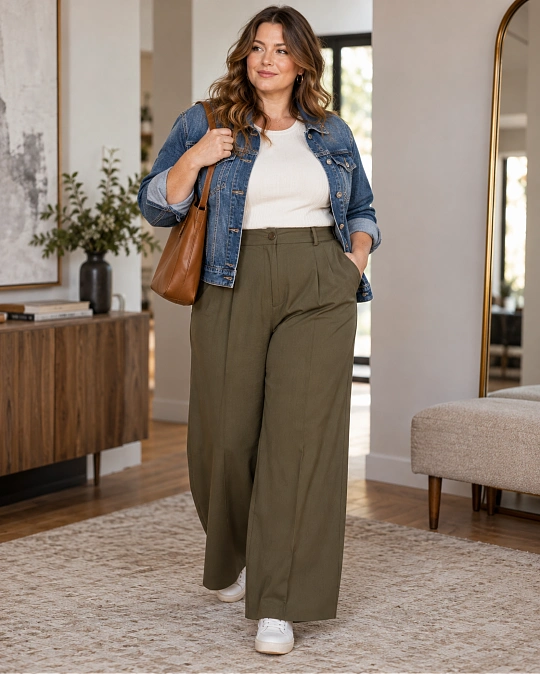
One reason layered outfits sometimes feel crowded is that every garment ends at a different, unplanned point.
A long shirt beneath a short cardigan, followed by a jacket that ends at the widest part of the shirt, can create several competing edges.
There is nothing wrong with different lengths. The trick is making those lengths feel deliberate.
Use a Shorter Outer Layer With Longer Bottoms
A waist length denim jacket can work especially well with high rise wide leg trousers or a flowing midi skirt.
Because the jacket ends higher on the outfit, more of the trousers or skirt remains visible. This creates a clear difference between the upper and lower parts of the look.
For example:
Outfit Formula: Fine knit top + cropped denim jacket + high rise wide leg trousers + low profile sneakers.
The fitted knit sits smoothly beneath the jacket. The shorter jacket leaves room for the wider trousers to become the main silhouette.
You can use the same idea with a cropped cardigan and an A line skirt.
If you prefer longer jackets, wear the cardigan open over a tucked or neatly fitted top.
Let Long Cardigans Fall Naturally Over Straight Leg Bottoms
Long cardigans can be excellent layering pieces for plus size wardrobes.
Choose one that falls smoothly from the shoulders without gathering heavily at the hips.
A cardigan ending around mid thigh often works well over straight leg jeans, slim trousers, or a simple knit dress.
The straight shape beneath the cardigan keeps the outfit from feeling crowded.
For a more relaxed look, try a long cardigan with wide leg trousers. Choose a cardigan that hangs cleanly and keep the base top simple so the fabric layers have room to move.
Decide Which Hem Should Be Visible
A shirt hem showing beneath a sweater can add interest. But a small strip of bunched fabric may look accidental.
Try either keeping the shirt neatly contained beneath the sweater or allowing a clear section of the hem to show.
You can also leave the shirt untucked beneath an open jacket for a more relaxed appearance.
𝗣𝗿𝗼𝗽𝗼𝗿𝘁𝗶𝗼𝗻 𝗧𝗶𝗽: Take a quick mirror photo before leaving home. It is often easier to see where hems meet and where fabric gathers in a photograph than while adjusting clothes in the mirror.
Give Your Outfit Shape With One Structured Layer
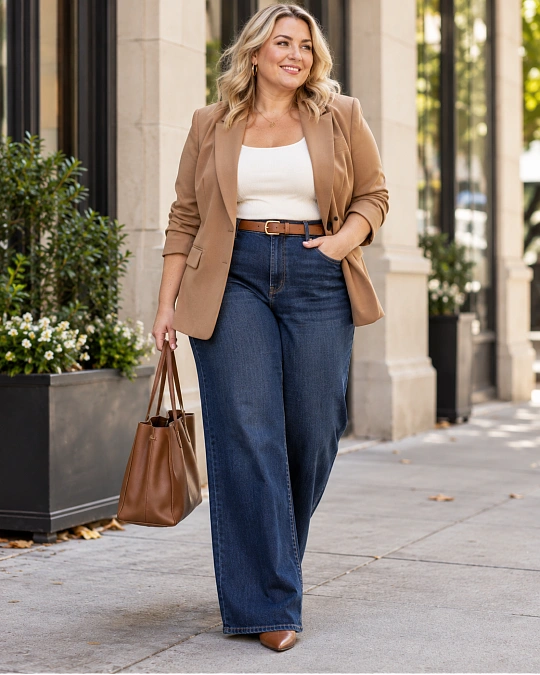
Wearing loose clothes is not what creates unwanted bulk. Problems usually appear when several loose pieces gather in the same areas or compete for space.
A relaxed outfit can look polished when one garment provides a clear outline.
This is where blazers, denim jackets, tailored coats, and structured overshirts become useful.
Wear a Relaxed Blazer Over a Simple Fitted Top
A blazer is one of the easiest pieces to use when building a layered plus size outfit.
Look for a style with enough room across the bust and upper back, sleeves that allow movement, and a hem that sits comfortably around the hips.
The shoulder seam should sit near your natural shoulder unless the blazer has an intentional dropped shoulder design.
Try this combination:
Outfit Formula: Black fitted tee + relaxed camel blazer + dark straight leg jeans + loafers.
The tee creates a smooth first layer, while the blazer gives the outfit a defined outer shape.
Straight leg jeans balance the blazer without adding another oversized garment.
For a softer look, replace the tee with a fine knit tank or a lightweight blouse.
Wear Oversized Pieces With Intention
Oversized clothing can be stylish, comfortable, and modern on plus size figures.
An oversized shirt worn open over a tank is an easy casual outfit. A roomy sweater with flowing trousers can also look beautiful when the fabric falls well.
The important detail is where the volume sits.
For example, an oversized poplin shirt with straight leg jeans creates a different silhouette from a bulky fleece worn over a thick sweatshirt.
Both may be comfortable, but the poplin shirt usually takes up less physical space.
When you want to wear several relaxed pieces, use smooth fabrics, clear hemlines, and an accessory such as a structured bag to finish the look.
Use Color to Connect Your Layers
Similar colors can make separate garments feel like one coordinated outfit.
Try combining chocolate brown trousers, a cream knit top, and a camel cardigan. The shades relate to each other while still providing contrast.
Another combination is charcoal trousers, a grey top, and a black blazer.
You do not need to dress entirely in one color. A contrasting jacket, scarf, or pair of shoes can make a simple outfit more interesting.
The purpose is coordination, not making your body appear smaller.
Make Sure Jackets and Coats Fit Over Your Actual Layers

A jacket that fits over a tank top may feel completely different when worn over a sweater.
This is especially important for plus size shoppers because fit can change across the bust, upper arms, back, and hips, even when the size label stays the same.
Before buying outerwear, think about what you will wear beneath it most often.
Check These Areas Before Buying a Coat
| Fit Area | What to Check | Why It Matters |
|---|---|---|
| Upper arms | Can you bend and lift your arms? | Tight sleeves compress the layers beneath |
| Bust | Does the coat close without pulling? | Prevents strain across buttons and seams |
| Upper back | Can you reach forward comfortably? | Important for driving and daily movement |
| Hips | Can you sit with the coat fastened? | Reduces pulling and bunching |
| Shoulders | Does the coat sit correctly with a sweater underneath? | Helps the sleeves and collar hang properly |
If possible, try on coats while wearing the kind of sweater you expect to use during winter.
Move your arms forward, sit down, and fasten the buttons or zipper.
If the coat feels restrictive, a different cut may work better than automatically choosing a much larger size.
Choose the Right Winter Layering System
Cold weather makes layering harder because warmth often requires thicker clothing.
Instead of relying on several bulky sweaters, try combining layers that serve different purposes.
A practical winter outfit might include:
- A fine merino or thermal base top for warmth.
- A smooth wool blend sweater or cardigan as the middle layer.
- A lined wool coat or insulated jacket to protect against the weather.
The amount of insulation you need depends on the temperature, wind, rain, and how long you will be outdoors.
A winter coat should be roomy enough for these layers without squeezing them together.
𝗖𝗼𝗺𝗳𝗼𝗿𝘁 𝗨𝗽𝗴𝗿𝗮𝗱𝗲: If your coat sleeves constantly catch on sweaters, check the lining and sleeve shape. A smooth lined sleeve with adequate room can make more difference than changing your entire outfit.
Use Accessories Instead of Another Heavy Garment
A scarf, gloves, or warm hat can provide extra comfort without adding another sweater beneath your coat.
Choose a scarf that can lie flat around your neck or tuck neatly inside your coat.
A bulky blanket scarf can still look beautiful, but it works better when the neckline and shoulders of the coat have enough space.
For milder weather, a lightweight woven scarf can add color without much physical thickness.
Build Plus Size Layered Outfits That Work for Your Daily Life
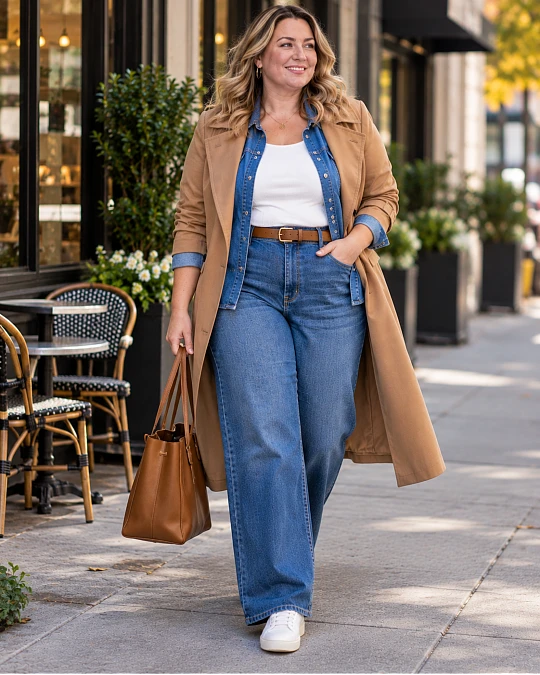
The best layering system is one you can repeat with clothes already in your wardrobe.
You do not need a large collection of jackets or cardigans. A few pieces with different weights and shapes can create outfits for several occasions.
Try These Easy Outfit Combinations
| Occasion | Outfit Formula | Why It Works |
|---|---|---|
| Casual weekend | White tee + open denim shirt + straight leg jeans + sneakers | The shirt adds a layer without heavy fabric |
| Office | Fine knit tank + relaxed blazer + tailored trousers + loafers | Structured outer layer with a smooth base |
| Dinner | Black knit top + cropped jacket + satin midi skirt + ankle boots | Mixes structure with fluid fabric |
| Cool weather errands | Long sleeve tee + fine cardigan + trench coat + jeans | Adjustable layers for changing temperatures |
| Winter outing | Thermal top + wool blend sweater + lined coat + straight leg trousers + boots | Keeps warmth in separate, useful layers |
These combinations are starting points, not fixed rules. Change the colors, trouser cuts, or shoes to suit your wardrobe.
Match Your Shoes to the Weight of Your Outfit
Shoes can change how layered outfits feel.
A heavy coat, thick sweater, and wide leg trousers create a substantial amount of fabric. A pair of sturdy ankle boots or sleek leather sneakers can give the outfit a balanced finish.
For lighter layers, ballet flats, loafers, and low profile trainers often work well.
Pay attention to where your trousers end.
With wide leg trousers, the hem should fall neatly over your shoes without dragging on the floor. Cropped trousers can leave enough space to show ankle boots clearly.
You can also wear chunky sneakers with relaxed layers when you want a more casual streetwear look.
The aim is to make the shoes feel connected to the rest of the outfit.
Adjust Your Layers Throughout the Day
A layered outfit should stay comfortable after several hours of sitting, walking, and moving.
For work, choose a blazer that you can remove easily without pulling your top out of place.
For travel, an open cardigan over a smooth tee is often more practical than a complicated outfit with several tucked layers.
For dinner, a lightweight jacket worn over a knit dress provides extra coverage when needed and can be removed without changing the main outfit.
If you get warm easily, focus on breathable fabrics and outerwear that is easy to carry.
𝗪𝗮𝗿𝗱𝗿𝗼𝗯𝗲 𝗦𝘄𝗮𝗽: Before buying another cardigan, try wearing a button down shirt open over a fitted tee. It creates a similar layered effect with a different texture and often less thickness.
Frequently Asked Questions About Plus Size Layering
Can Plus Size Women Wear Oversized Layers Without Looking Bulky?
Yes. Oversized layers can create stylish outfits when the fabric hangs well and the pieces have enough room to move. Try combining an oversized shirt or blazer with a smoother base layer, then adjust the bottoms and shoes to suit the look you want.
Is It Better to Wear Long or Short Cardigans When You’re Plus Size?
Both lengths can work well. Short cardigans pair nicely with high rise trousers and skirts, while long cardigans offer a relaxed look over jeans, trousers, and dresses. Choose based on your outfit proportions, comfort, and where the cardigan hem falls.
What Is the Best Way to Layer Clothes Over a Plus Size Dress?
Start with a dress that fits comfortably through the bust, waist, and hips. Add a cropped jacket, open blazer, or fine cardigan depending on the occasion. A structured jacket works particularly well with a fluid dress because the contrasting shapes create interest.
How Do You Layer Clothes in Winter Without Wearing Too Many Thick Pieces?
Use a lightweight thermal base, a warm middle layer, and a properly insulated coat. Fine merino wool and smooth thermal fabrics can provide useful warmth without requiring several chunky sweaters. Make sure your outerwear allows comfortable movement and suits the outdoor temperature.
Can You Layer Loose Tops With Wide Leg Pants?
Absolutely. A loose shirt and wide leg trousers can create a modern, relaxed silhouette. Try an open shirt over a simple knit top, or choose a shorter loose sweater so the trousers remain visible. Fabrics with a soft drape help the layers move naturally.
Tanya Bennett is the Chief Editor and an author at Bold Mellow, where she helps shape the site’s voice, editorial standards, and day-to-day fashion coverage. Her work focuses on plus-size style that feels current, wearable, and useful, with particular attention to fit, proportion, fabric, color, and the details that make an outfit work in real life.
As an editor, Tanya reviews stories for clarity, practicality, and consistency before publication, while also contributing fashion guides, seasonal styling ideas, and wardrobe-focused features.
She believes good style advice should help women understand their clothes better, not give them another list of rules to follow. Her approach at Bold Mellow is straightforward: start with the person, consider how the clothes actually fit and move, and build outfits that feel confident, modern, and genuinely wearable.
1 thought on “How to Layer Clothes Plus Size Without Adding Bulk”