
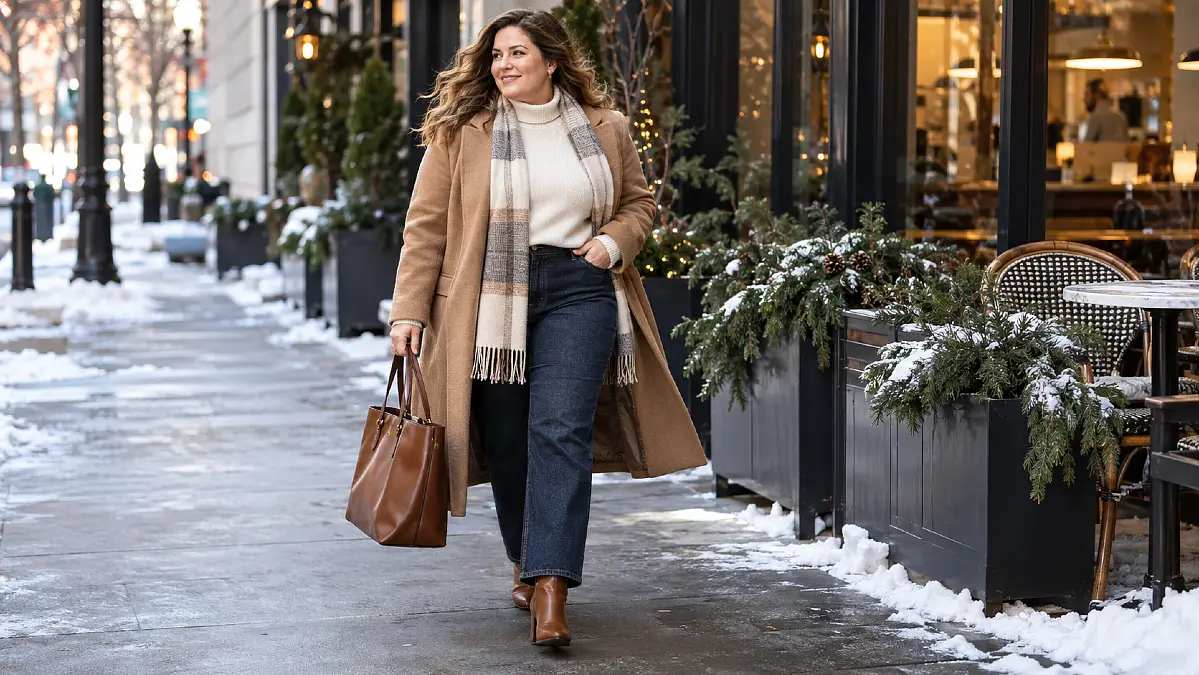
Winter dressing gets harder when every cold morning seems to require another sweater, jacket, scarf, and pair of thick boots.
For plus size women, the problem is rarely the body itself. It is usually too many heavy fabrics, similar layer lengths, and oversized pieces competing for space.
Learning how to dress plus size in winter without looking bulky starts with smarter layering rather than fewer clothes. The goal is to stay warm while keeping the outfit clear and intentional.
Fabric weight, layer length, coat shape, trouser volume, and shoe choice can all make winter outfits feel polished without giving up warmth or comfort.
Build Warmth With Better Fabrics, Not More Layers
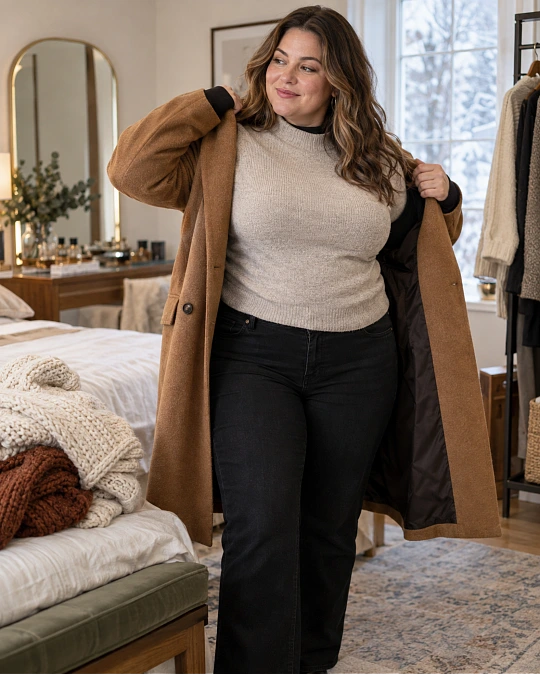
Three thin, useful layers usually work better than piling two thick knits on top of each other. The right fabrics trap warmth while still letting the outfit move naturally with your body.
Start close to the skin with a smooth base layer. Fine merino wool, heat-retaining jersey, cotton blends, modal, or lightweight thermal fabric can add warmth without taking up much room beneath a shirt or sweater.
Your middle layer can then provide texture and insulation. Fine-gauge knitwear, brushed jersey, cashmere blends, fleece-backed pieces, or medium-weight cardigans tend to layer more cleanly than very chunky sweaters.
The outer layer should handle weather. A wool-blend coat, quilted jacket, insulated parka, or trench with a removable lining can do more work than adding another thick top underneath.
| Winter Layer | Look For | Be Careful With |
|---|---|---|
| Base layer | Smooth, thin, stretchy fabric | Thick cotton tees that bunch |
| Knit layer | Fine or medium gauge knit | Very chunky knits under fitted coats |
| Jacket | Light structure through shoulders | Stiff fabric that pushes away from body |
| Coat | Enough room for one knit underneath | Buying extremely oversized just for layering |
| Scarf | Soft wool, cashmere blend, brushed knit | Very stiff oversized blanket scarves |
Fabric Note: Thickness and warmth are not always the same thing. A thin wool base layer can sometimes keep you warmer than a much heavier cotton top while creating less volume.
Stop Making Every Layer the Same Length
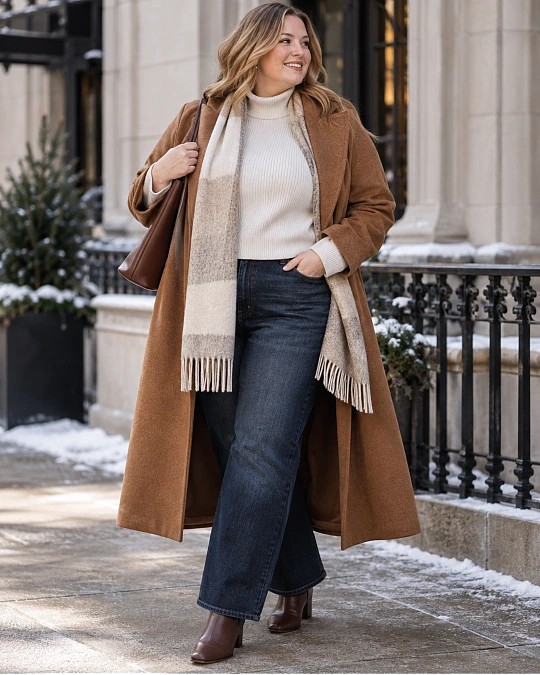
Winter outfits can start to feel heavy when the sweater, cardigan, coat, and top all finish around the same area. Instead, use different lengths so each piece has a clear job.
A hip-length knit beneath a longer coat creates a clean vertical break. A shorter jacket over a midi dress can also give the outfit shape while keeping the lower half simple.
If you prefer longer tops, avoid automatically adding an equally long cardigan over them. Try a slightly shorter cardigan, a coat that clearly extends beyond both pieces, or leave the cardigan open so the layer underneath stays visible.
This is not about making the body look smaller. It is about making the clothing easier for the eye to read.
Try This
Wear a fitted thermal top under a slightly relaxed crew-neck sweater, then add a knee-length coat. The three pieces perform different jobs without creating three thick layers around the same part of the body.
If the sweater is already long and relaxed, skip the long cardigan underneath the coat. A thinner vest or shorter jacket may keep the proportions cleaner.
Let One Part of the Outfit Carry the Volume
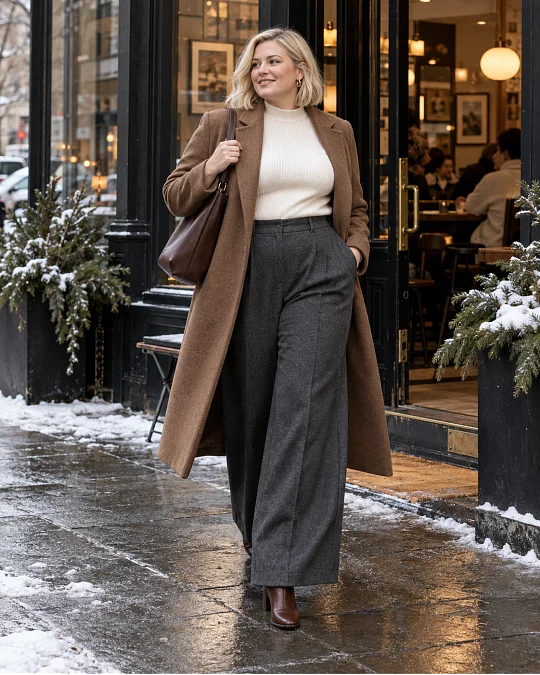
Volume can look very stylish in winter. Problems usually begin when the coat, sweater, trousers, scarf, and boots are all visually heavy at the same time.
If you wear wide-leg trousers, try a neater knit or a sweater that finishes close to the waistband. A slightly tucked sweater can also give the trousers more visual space without requiring a tight top.
With leggings or slim straight jeans, a longer sweater, oversized shirt jacket, or relaxed coat can carry more volume. The contrast between the pieces keeps the outfit from becoming one large shape.
The same principle works with coats. A roomy cocoon or puffer coat often looks strongest with a simpler trouser shape underneath, while a straighter wool coat works easily over wider trousers or flowing skirts.
| Main Volume | Balance It With | Why It Works |
|---|---|---|
| Wide-leg trousers | Neater knit or shorter jacket | Keeps the waist and hip area readable |
| Oversized sweater | Straight jeans or tapered trousers | Gives the sweater room without competing volume |
| Long full skirt | Fitted knit or defined jacket | Keeps fabric from stacking through the whole outfit |
| Relaxed puffer | Straight-leg bottoms | Creates contrast between outerwear and trousers |
| Chunky boots | Structured or straight hem | Prevents the lower half from feeling visually crowded |
Fit Note: A garment can be relaxed without being several sizes too large. Check the shoulder seam, armhole, sleeve length, and where the fabric begins to fold. Those details often matter more than the number on the label.
Bold Mellow Winter Styling Guide
Let One Piece Carry the Volume
Winter outfits feel less bulky when one garment provides the main volume and the surrounding pieces stay simpler, smoother, or more structured.
Keep the Top Cleaner
Pair full trousers with a fine knit, shorter jacket, or lightly tucked sweater so the lower half can carry the movement.
Simplify the Bottom Half
Let the knit provide texture and weight, then use straight jeans, tapered trousers, or a clean midi skirt underneath.
Reduce Competing Bulk
A fuller coat already creates strong volume. Straighter bottoms and smoother layers help the outfit stay visually clear.
Add Definition Above
Use a fitted knit, waist-length jacket, or neat cardigan so the skirt keeps its movement without competing with another loose layer.
Quick check: If your sweater, coat, trousers, scarf, and boots all feel visually heavy, change just one or two pieces. The goal is not less warmth. It is clearer proportion.
Choose Coats That Leave Enough Room Without Swallowing the Outfit
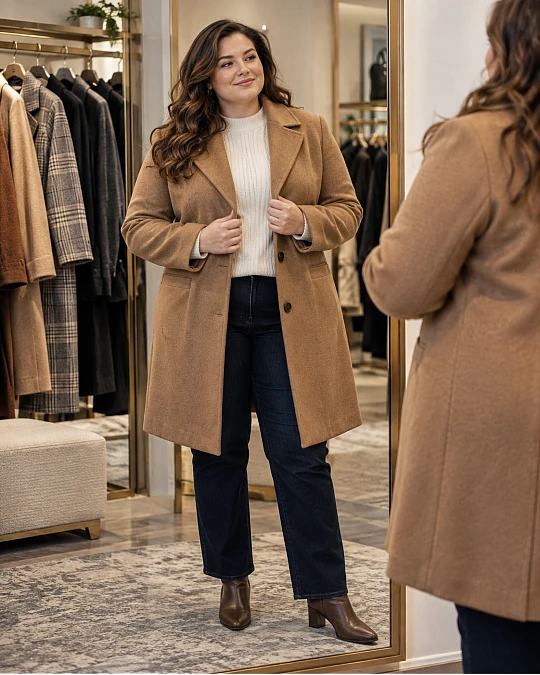
A winter coat should close comfortably over the clothes you actually wear. If the buttons pull across the bust, the sleeves grip the upper arms, or the back feels tight when you reach forward, the coat is too small for winter layering.
Going dramatically oversized creates a different problem. Dropped shoulders, extra-wide sleeves, and large collars can add more fabric than you need, especially when paired with other relaxed pieces.
Look for coats with enough room through the bust, upper arms, and back while keeping some structure through the shoulder line. Straight coats, softly shaped wrap coats, single-breasted wool coats, and lightly tailored car coats are useful options.
Belted coats can also work beautifully, but the belt should sit where it feels comfortable rather than being forced onto a predetermined waist position. Wearing the coat open is another option when the weather allows.
What to Check in the Fitting Room
- Wear a sweater when trying on winter coats rather than a thin T-shirt.
- Cross your arms and reach forward to test the back and shoulders.
- Sit down to check whether the coat pulls across the stomach or hips.
- Make sure sleeves still move comfortably with knitwear underneath.
A small alteration can sometimes make a coat far more useful. Moving a button, shortening sleeves, or adjusting a belt position may improve the fit without replacing the whole coat.
Use Fine Knits Where You Need Flexibility
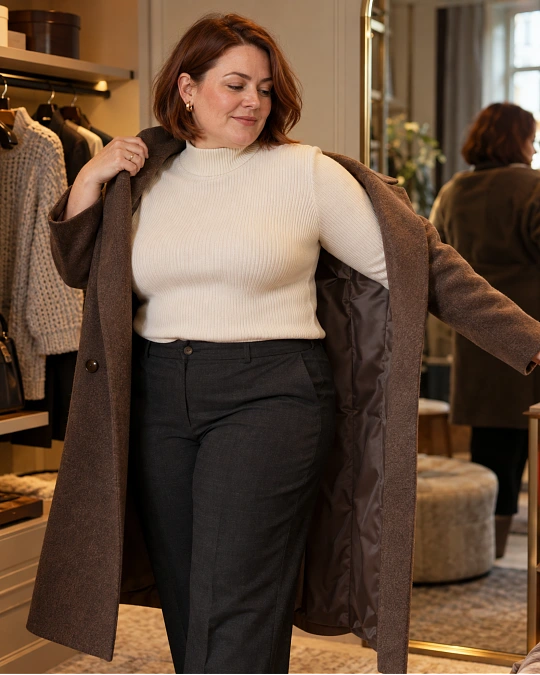
Chunky sweaters are not off limits for plus size women. They simply need enough room to be the main texture in the outfit rather than being squeezed beneath several fitted layers.
For everyday layering, fine-gauge knits are often easier. Merino crew necks, ribbed mock necks, smooth V-necks, and lightweight cardigans fit beneath jackets and coats without gathering heavily at the shoulders or waist.
Ribbing deserves a little attention. Soft ribbed fabric with good recovery can follow the body comfortably, while stiff wide ribbing may create thick folds when tucked or layered.
If you love a chunky knit, give it breathing room. Pair it with straight jeans and a simple coat, or wear it as the outer layer on milder winter days.
Comfort Upgrade: If wool feels itchy, wear a thin cotton-modal or thermal layer underneath instead of abandoning the sweater. You get warmth and texture without the fabric sitting directly against your skin.
Use Strategic Tucking Instead of Stuffing Thick Sweaters Into Waistbands
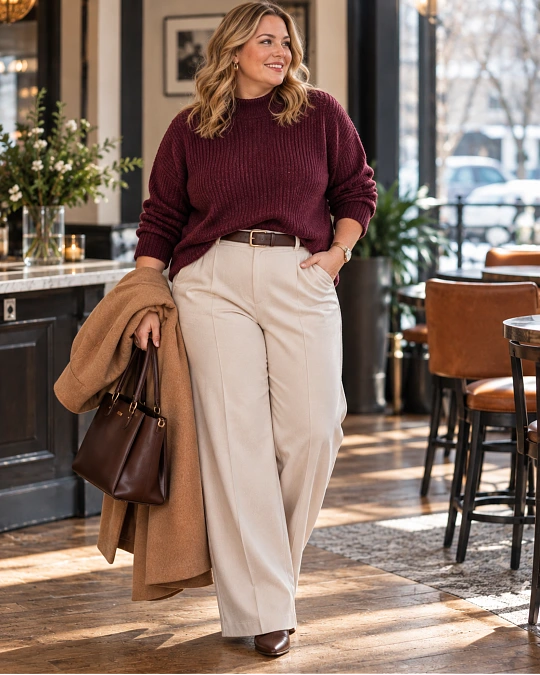
A full tuck with a thick sweater can create extra fabric around the waistband and make sitting uncomfortable. It can also stretch the knit out of shape.
A small front tuck often works better. Tuck only a few inches near the front waistband, then let the sides fall naturally.
You can also choose sweaters that already finish near the top of the hip. This creates a similar proportion without any tucking.
Another option is a slightly cropped knit worn with high-rise trousers or a high-rise skirt. Cropped does not have to mean exposing skin. It can simply mean the sweater ends near the waistband instead of extending halfway down the thigh.
Winter Outfit Formula
Fine-knit mock neck + high-rise straight jeans + knee-length wool coat + ankle boots
The fitted knit keeps the coat comfortable, while the straight jeans give the outfit a clear line from hip to ankle. A knee-length coat adds warmth without every garment finishing around the same point.
For a softer version, replace the jeans with wide-leg knit trousers and choose a shorter coat. The proportions change, but the same idea remains: give each piece its own shape.
Match Boots to the Weight and Length of the Hem
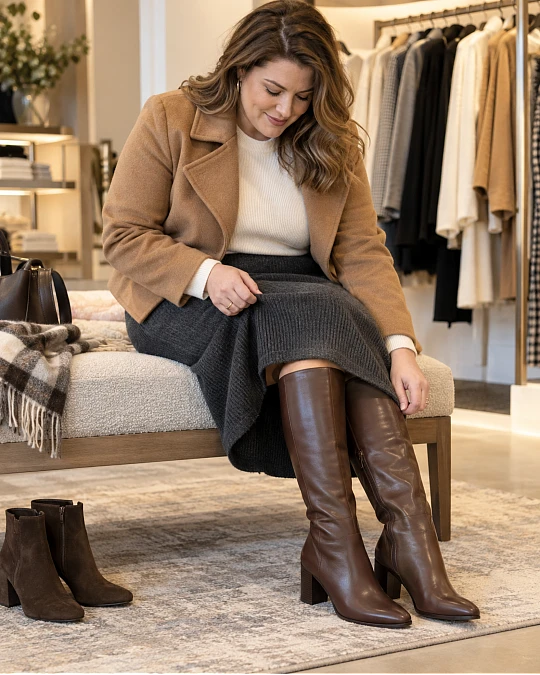
Shoes have a bigger effect on winter proportions than many people expect. Heavy winter clothing usually needs footwear with enough visual weight to support it.
Very delicate flats can sometimes look disconnected beneath a long wool coat and thick trousers. A loafer with a substantial sole, ankle boot, Chelsea boot, sleek sneaker, or knee-high boot often feels more connected to the rest of the outfit.
Trouser length matters too. Straight jeans can finish just above an ankle boot or lightly touch the top of it, while wide-leg trousers often look cleaner when they fall close to the shoe without dragging.
With midi skirts, tall boots can reduce the awkward strip of exposed leg between the skirt and shoe. Ankle boots also work, especially when the boot shaft sits neatly under or close to the hem.
Shoe Swap
If chunky combat boots feel too heavy for your style, try a smooth leather Chelsea boot with a medium sole. You still get enough weight for winter clothing without making the footwear the main feature.
For dressier outfits, a pointed or softly almond-shaped ankle boot can give wool trousers and midi dresses a cleaner finish than a very rounded snow boot.
Use Color and Texture to Separate Winter Layers
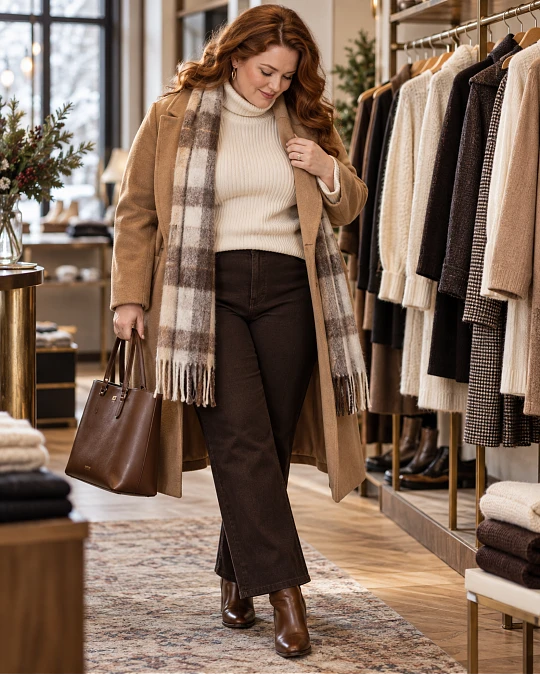
Winter outfits often become visually heavy because everything is dark, thick, and similar in texture. Adding contrast can make the same amount of clothing look more considered.
You do not need bright color from head to toe. A cream knit beneath a charcoal coat, a burgundy scarf with camel outerwear, or chocolate boots with dark denim can create enough separation.
Texture works the same way. Smooth trousers with a brushed sweater, denim beneath a wool coat, or a satin midi skirt with a knit cardigan gives each garment a distinct surface.
Monochrome outfits can still work well. Instead of matching every piece exactly, use several shades or textures within the same color family.
For example:
Chocolate ribbed knit + espresso trousers + camel coat + dark brown boots
The colors are related, but the change in tone and fabric prevents the outfit from becoming one flat block.
Keep Winter Comfort in the Outfit Plan
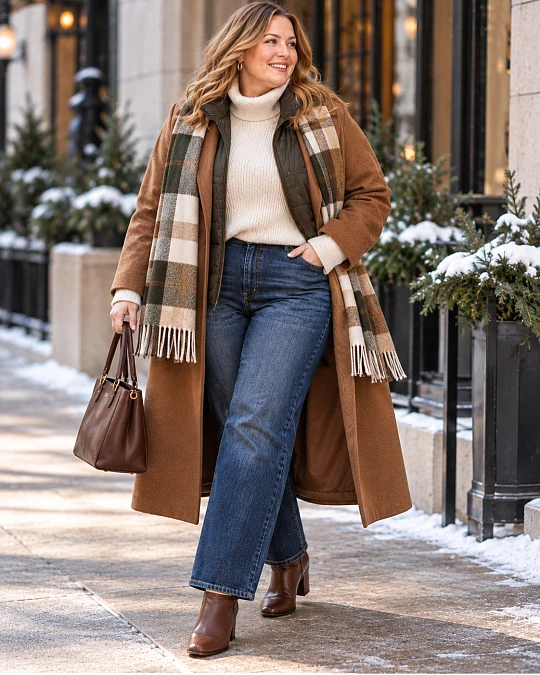
An outfit that looks good while standing still may behave very differently after an hour of commuting, driving, shopping, or sitting at work. Winter clothing needs enough ease for real movement.
Check how waistbands feel when seated, whether sweater sleeves bunch inside a coat, and whether a scarf becomes uncomfortable once the coat is zipped. These small issues often determine whether an outfit actually gets worn.
Layering should also be easy to adjust indoors. If you become overheated as soon as you enter a café or office, one removable middle layer is usually more useful than several pieces that depend on each other.
For very cold days, keep warmth close to the body with thermal tights, base layers, wool socks, and lined boots. That lets the visible outfit stay cleaner without asking one giant sweater to provide all the warmth.
Three Winter Outfit Formulas That Avoid Too Much Fabric
For Everyday Errands
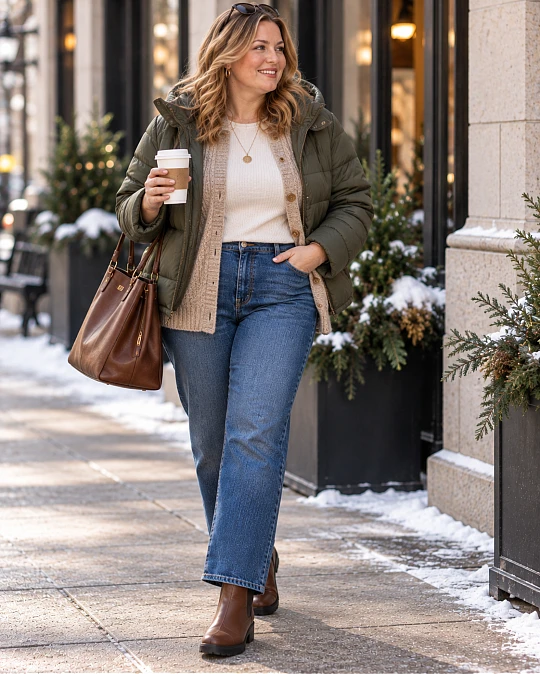
Thermal long-sleeve top + straight jeans + relaxed cardigan + hip-length puffer + Chelsea boots
The base layer handles warmth, so the cardigan and coat do not both need to be extremely thick. Straight jeans also work well with the slightly fuller upper layers.
For Work
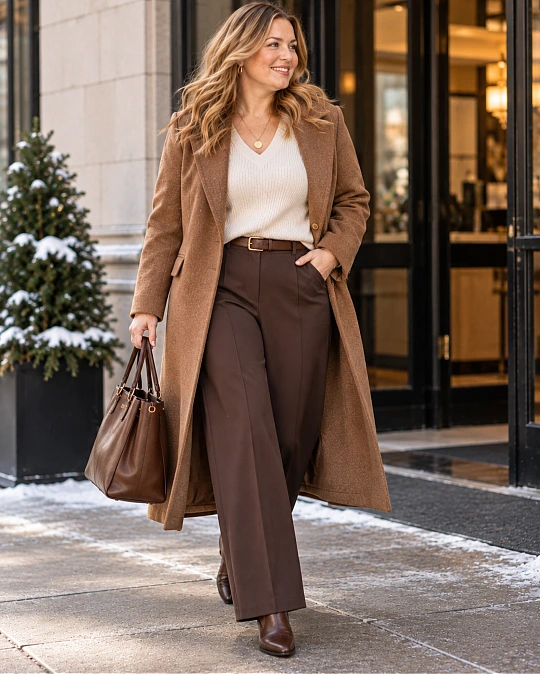
Fine-knit V-neck + wide-leg trousers + structured wool coat + loafers or ankle boots
The wide trousers bring movement to the lower half, while the smoother knit fits easily under the coat. Keep the coat straight or lightly shaped rather than pairing very wide trousers with extremely oversized outerwear.
For Dinner or a Casual Event
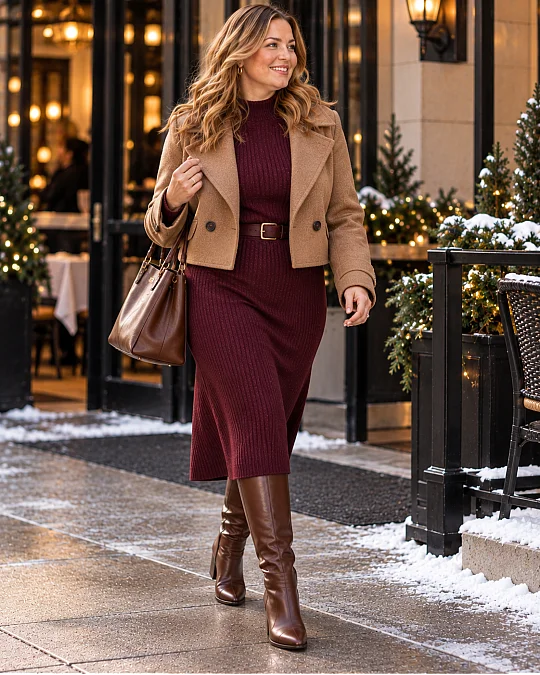
Knit midi dress + cropped jacket or waist-length coat + tall boots
The shorter outer layer keeps the dress visible instead of covering it with another long shape. Tall boots give the lower half enough visual weight for winter while reducing exposed skin.
Common Winter Styling Problems and Simple Fixes
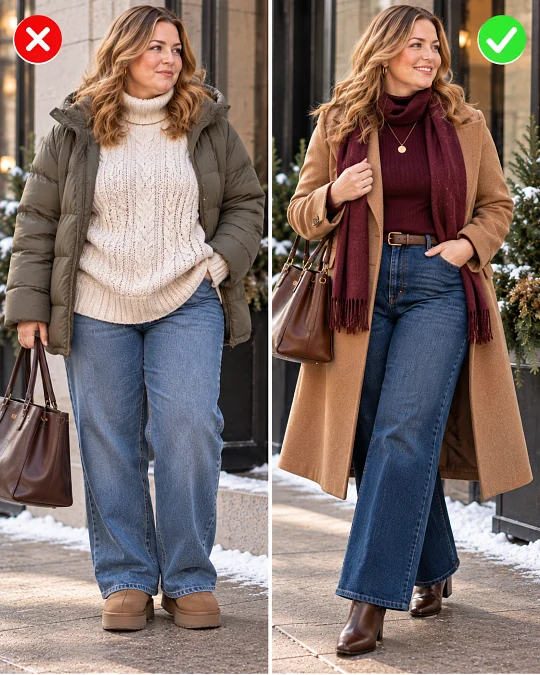
Some winter outfits do not need new clothes. They only need one piece adjusted.
If a sweater looks heavy beneath a coat, try a finer knit before replacing the coat. If wide trousers feel overwhelming with a long cardigan, shorten the top layer or switch to a straighter cardigan.
If the whole outfit looks dark and dense, changing one texture can make a large difference. A smooth scarf, lighter knit, polished leather boot, or denim layer may provide enough contrast.
The goal is not to remove personality from winter dressing. It is to let the coat, knit, trousers, and shoes work together instead of competing for attention.
Frequently Asked Questions
Can plus size women wear puffer coats without looking bulky?
Yes. Look for a puffer with enough room through the bust and arms without excessive extra width through the whole coat. Smaller quilting, a clean front closure, and a length that works with your usual trousers or skirts can make the coat easier to style.
Pairing a fuller puffer with straighter bottoms is one simple way to create contrast. You can also wear wide trousers, but keep the layers underneath relatively smooth.
Are oversized sweaters good for plus size winter outfits?
They can be. An oversized sweater works best when its volume looks intentional rather than simply several sizes too large.
Check that the sleeves and shoulders still look purposeful, then pair it with a simpler bottom such as straight jeans, leggings, or a clean midi skirt. If the knit is very chunky, let it be the main textured piece.
What winter fabrics are easiest to layer?
Fine merino wool, modal blends, lightweight thermals, cashmere blends, smooth jersey, and fine-gauge knits usually layer well. They provide warmth without requiring a large amount of fabric.
Very stiff fleece, thick cable knits, and bulky sweatshirts can still work, but they may need more room in the coat worn over them.
Should plus size women avoid long coats?
No. Long coats can create a strong, polished winter silhouette and offer useful protection from cold weather.
The important part is movement and proportion. Make sure the coat has enough room through the hips and legs for walking, and choose footwear with enough weight to sit comfortably beneath the longer hem.
How can I make my current winter wardrobe feel less bulky without shopping?
Start by changing the order and length of your layers. Replace two thick middle layers with one thinner knit, leave a cardigan open, try a small front tuck, or pair your roomiest top with your simplest trousers.
You can also remove unnecessary fabric, such as an oversized scarf indoors or a second thick knit under a warm coat. Often the solution is better coordination, not more clothes.

Katy McClain is the founder and senior editor of Bold Mellow, where she focuses on modern plus-size style that feels polished, wearable, and realistic. She created the site to make fashion advice more useful for women who want good clothes and thoughtful styling ideas without outdated rules about hiding, minimizing, or dressing for a certain body type.
Her editorial approach centers on proportion, fit, fabric, color, and the small details that can change how an outfit feels. Katy oversees Bold Mellow’s overall direction and works closely on its fashion guides, seasonal edits, and everyday outfit inspiration, with an emphasis on clothes that can work beyond a single photo or trend.
2 thoughts on “How to Dress Plus Size in Winter Without Looking Bulky”