
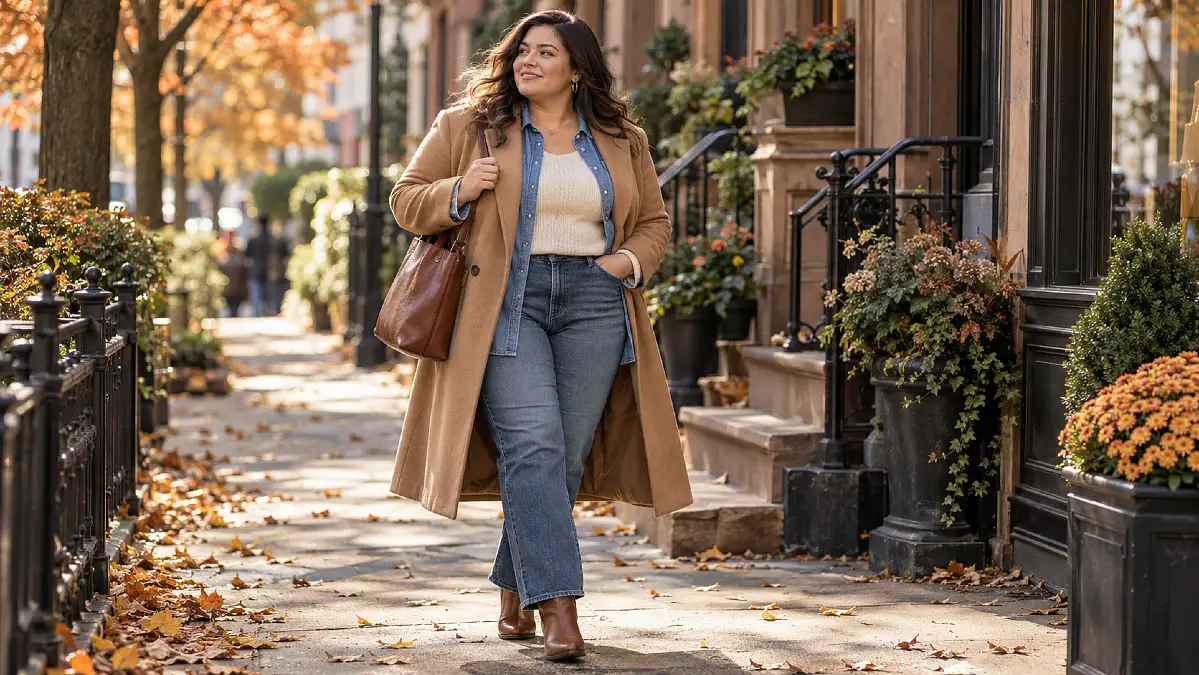
Fall dressing gets tricky when mornings feel cold, afternoons turn warm, and every outfit seems to need one more layer. For plus size women, bulky knits, stiff jackets, and too many long pieces can also make an outfit feel heavy before the weather is even that cold.
Learning how to dress plus size in fall is less about avoiding layers and more about choosing the right weight, length, and shape for each one. The goal is comfortable warmth with enough structure to keep the outfit looking intentional.
This guide explains how to build fall layers that move well, work together, and make better use of clothes already hanging in the closet.
Start With a Base Layer That Can Carry the Outfit Alone
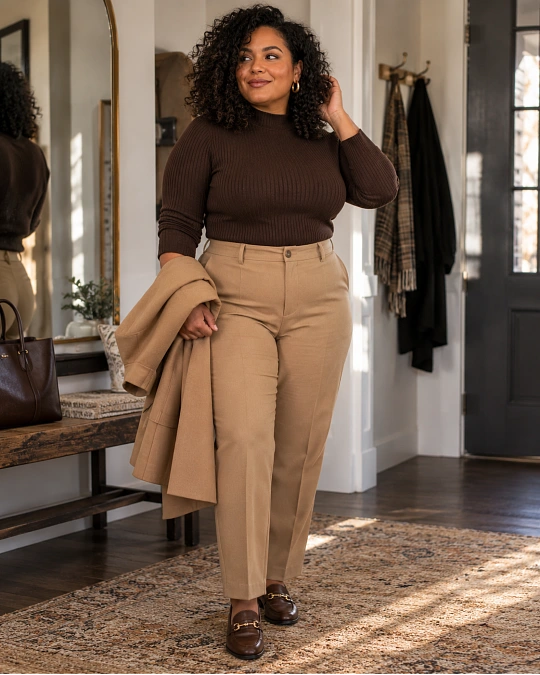
A good fall outfit should still work after the jacket or cardigan comes off.
That makes the first layer more important than it may seem. Choose a base that sits smoothly under clothing without bunching at the waist, shoulders, or sleeves.
Fine gauge knits, soft cotton tees, lightweight ribbed tops, button front shirts, and thin turtlenecks are useful starting points.
A fitted base does not need to be tight. Look for enough room to move your arms and sit comfortably without extra fabric gathering under the next layer.
Pay Attention to Sleeve Bulk
Wide sleeves can look great on their own, but they often fight with fitted jacket sleeves.
If the outer layer has narrow arms, wear a closer fitting knit or tee underneath. Save balloon sleeves, thick cuffs, and heavier sweaters for coats with more room through the shoulder and arm.
A simple test helps. Put both layers on and bend your elbows several times. If the inner sleeve twists or pulls toward the shoulder, the combination may become annoying after an hour.
Use Necklines to Create Separation
Layering becomes more interesting when each piece remains slightly visible.
A crew neck under a blazer gives a clean finish. A mock neck adds height above a cardigan. An open collar under a sweater gives the outfit more texture near the face.
These small differences keep multiple layers from looking like one heavy block of fabric.
Build Warmth With Fabric Weight Instead of Adding More Clothes
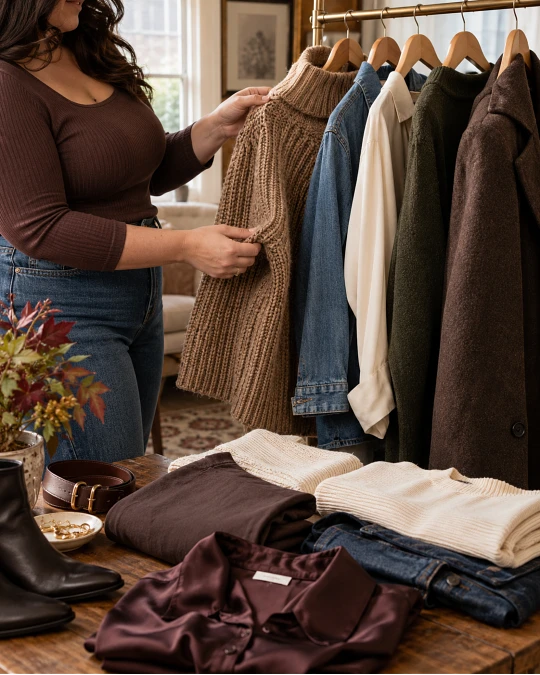
Three thin, useful layers often feel better than two bulky ones.
Fabric weight matters because fall outfits need warmth without becoming difficult to move in. Thick acrylic knits can add a lot of volume while still feeling less practical indoors.
Merino blends, cotton knits, ponte, brushed jersey, denim, corduroy, lightweight wool blends, and compact sweater knits tend to give more control over how much warmth each layer adds.
| Fabric or Layer | How It Behaves | Best Fall Use |
|---|---|---|
| Fine gauge knit | Soft and easy to layer | Under blazers, coats, and cardigans |
| Ponte | Smooth with some structure | Trousers, skirts, dresses, light jackets |
| Denim | Holds its shape | Jackets, overshirts, jeans |
| Chunky knit | Warm with more visual weight | Best as the main visible layer |
| Lightweight wool blend | Warm without extreme bulk | Coats, trousers, tailored layers |
| Satin or fluid woven fabric | Light and draped | Shirts and skirts under heavier layers |
When one layer is thick, let the pieces around it become lighter.
A chunky cardigan works more easily over a thin tee than over another thick sweater. A substantial wool coat needs less bulk underneath than a lightweight trench.
Fabric Note: Stretch helps with movement, but too much stretch can cause a garment to collapse or cling. A little structure is useful when several soft pieces are worn together.
Mix Short and Long Layers Instead of Making Everything the Same Length
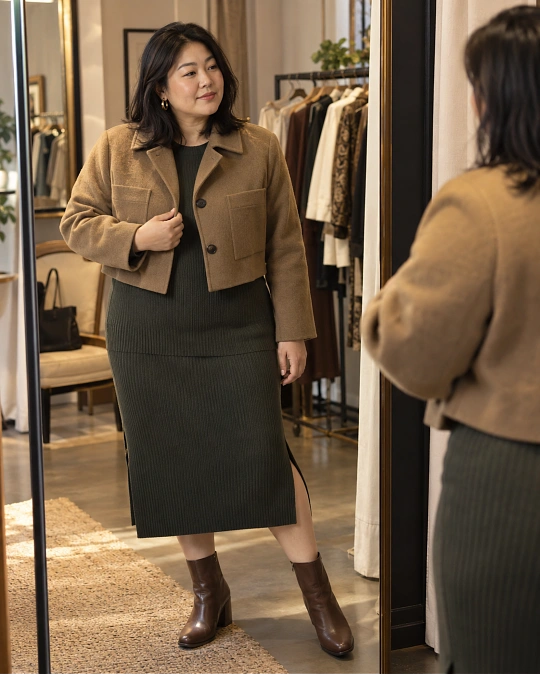
Layering becomes difficult when every garment finishes at the same point.
A long top under a long cardigan with a long coat can create a large column of fabric. That may be the look someone wants, but it can also make the outfit feel visually heavy.
Changing one length usually gives the outfit more shape.
Try a waist length jacket over a longer knit dress. Wear a hip length cardigan with straight jeans and a tucked or semi tucked top. Pair a longer coat with a cleaner, shorter layer underneath.
The point is not to make the body look smaller. It is to make each garment visible as part of the outfit.
Think About Where the Eye Meets the Hem
Hem placement changes the rhythm of an outfit.
A jacket ending around the natural waist puts more attention on the trousers or skirt. A jacket ending around the hip creates a longer upper layer and often works well with straight or gently tapered bottoms.
Long coats create one strong outer line. They usually look cleanest when the garments underneath are less complicated.
Let One Layer Control the Volume
An outfit is often easier to balance when only one area carries a lot of volume.
Wide leg trousers can work with a fitted knit and structured coat. A full midi skirt can work with a neat sweater and shorter jacket. An oversized coat can sit over a simple column of jeans and a knit top.
This is not a rule against volume on volume. It is simply an easier starting point when a layered outfit feels too busy.
Use Jackets and Cardigans for Different Jobs
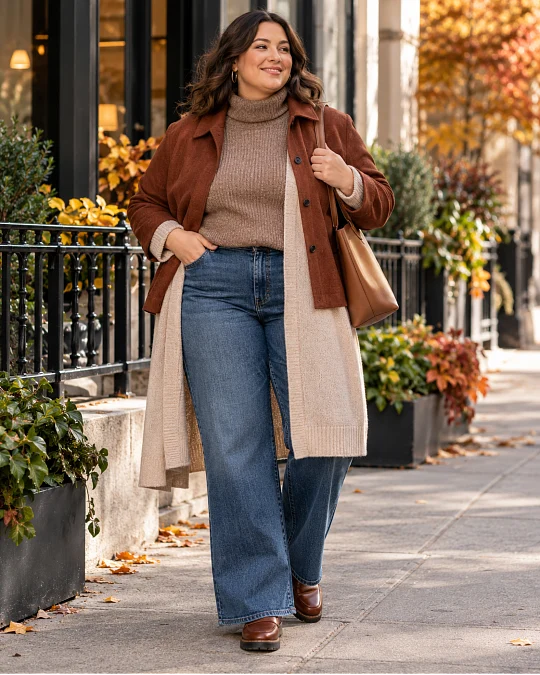
Cardigans and jackets may both count as layers, but they change an outfit in different ways.
A cardigan adds softness and movement. A blazer, utility jacket, denim jacket, or leather style jacket adds clearer edges and more structure.
Choose based on what the rest of the outfit needs.
If wide trousers and a soft knit already create plenty of movement, a structured jacket can give the outfit more definition.
If the outfit includes rigid denim or tailored trousers, a draped cardigan can make the combination feel more relaxed.
| If the Outfit Already Has | Try Adding | Why It Works |
|---|---|---|
| Wide leg trousers | Cropped or hip length jacket | Adds a clearer upper shape |
| Straight jeans | Long cardigan | Creates movement without fighting the denim |
| Soft knit dress | Structured jacket | Gives the outfit sharper edges |
| Tailored trousers | Relaxed cardigan | Softens a more formal base |
| Midi skirt | Short jacket | Keeps the skirt shape visible |
Do Not Ignore the Shoulder Fit
Outer layers need enough room to fit over actual clothes.
If a blazer fits beautifully over a sleeveless top but becomes restrictive over a sweater, it may not be a useful fall layer.
Check the upper back, shoulder seam, and armhole while wearing the type of base layer you plan to use most.
Raise both arms forward. The jacket can move slightly, but it should not pull hard across the back or force the shoulders upward.
Fit Note: Buying a much larger size does not always solve layering problems. Sometimes the issue is a narrow armhole or sleeve rather than the overall garment size.
Keep Fall Layering Intentional With Simple Outfit Formulas
When a closet is full but getting dressed still feels difficult, repeatable outfit formulas can help.
They reduce decision making while leaving plenty of room for different colors, fabrics, and accessories.
Formula 1: Clean Casual Layers
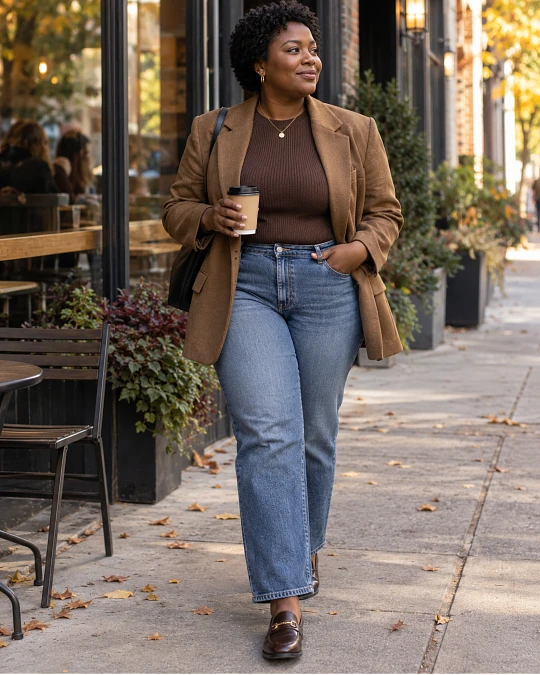
Fitted knit + straight leg jeans + relaxed blazer + loafers
The fitted knit keeps the middle layer smooth. Straight jeans create a simple lower line, while the blazer adds enough structure for errands, casual offices, or lunch.
Swap loafers for sneakers when more walking is involved.
Formula 2: Soft Weekend Layers

T shirt + open cardigan + wide leg trousers + low profile sneakers
The cardigan brings movement while the trousers provide the main volume.
Choose a tee that ends around the waistband or tuck a small section at the front if a long tee competes with the cardigan.
Formula 3: Dress With a Shorter Outer Layer
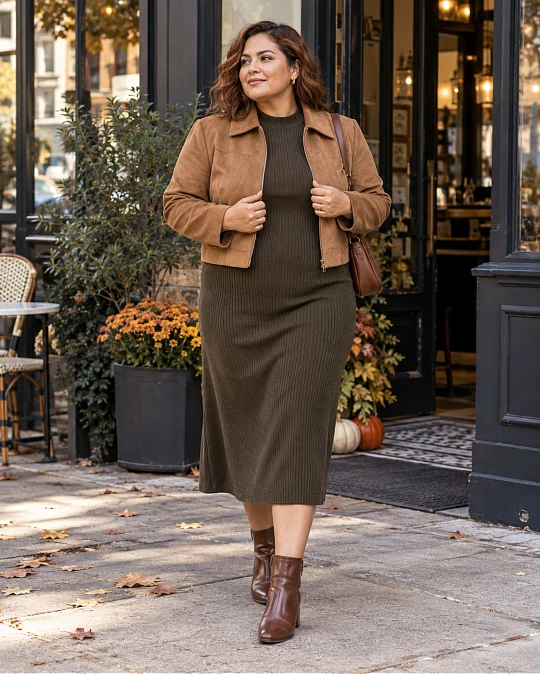
Knit midi dress + cropped jacket + ankle boots
The shorter jacket leaves most of the dress visible instead of dividing it into several long sections.
A denim jacket, suede style jacket, moto jacket, or short blazer can all work depending on the dress.
Formula 4: Cold Morning, Warm Afternoon
Lightweight turtleneck + button front shirt worn open + jeans + trench
This combination gives three removable levels of warmth.
The turtleneck works alone, the shirt becomes a light middle layer, and the trench handles wind or cool mornings without requiring a heavy coat.
Choose Shoes That Match the Weight of the Layers
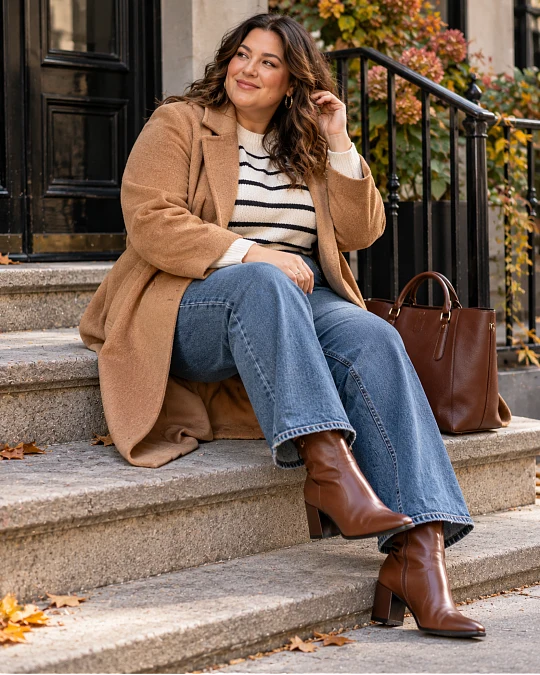
Shoes may sit at the bottom of the outfit, but they affect how layered fall clothes look as a whole.
Heavier outerwear often works well with footwear that has enough visual presence to hold its own.
A long wool coat can pair naturally with loafers, ankle boots, sleek sneakers, or a substantial flat. A delicate shoe can still work, but the contrast should look deliberate.
Match Boots to the Trouser Hem
Straight and slim trousers usually work easily with ankle boots when the trouser hem meets or slightly overlaps the boot shaft.
Wide leg trousers need enough length to fall cleanly rather than stopping several inches above a heavy boot unless a cropped shape is intentional.
With skirts and dresses, consider the gap between the hem and the top of the boot.
A midi dress with ankle boots leaves more leg visible. A taller boot creates a more continuous fall line and adds warmth.
Shoe Swap: If a chunky boot makes a soft outfit feel too heavy, try a pointed or almond toe ankle boot. The narrower front changes the visual weight without requiring a heel.
Use Color and Texture to Stop Layers From Blending Together
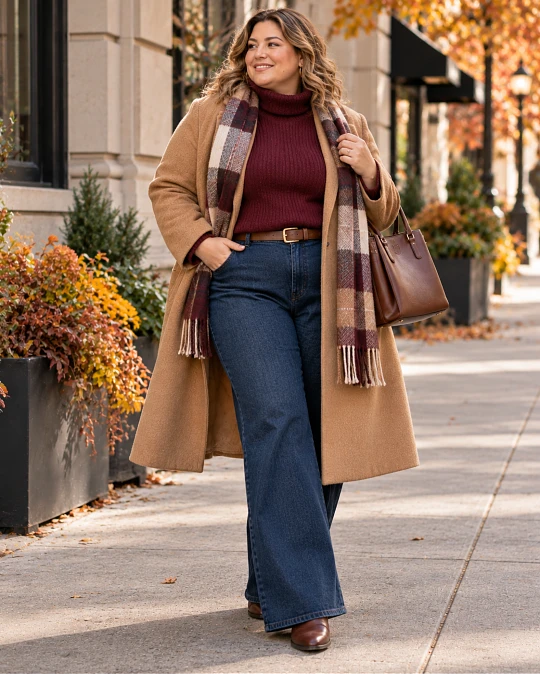
Fall wardrobes often lean heavily on black, brown, camel, cream, olive, navy, and burgundy.
Those colors layer well, but several similar shades can lose definition when the fabrics are also similar.
Texture can separate them.
Pair smooth trousers with a ribbed knit. Add denim over a soft jersey dress. Wear a wool coat over a satin blouse. Combine dark jeans with a brushed cardigan instead of matching every piece in the same flat finish.
Tonal dressing also works well when the shades are slightly different.
Try chocolate trousers with a lighter brown knit and camel coat. Burgundy can sit beside wine, dusty rose, cream, or charcoal without requiring an exact color match.
Use Contrast Where It Helps the Outfit
A lighter top under a darker jacket makes the layers immediately visible.
A dark base under a camel or cream cardigan creates the opposite effect.
Neither approach is more flattering. The choice simply changes which part of the layering becomes more noticeable.
Plan Layers Around Real Fall Weather
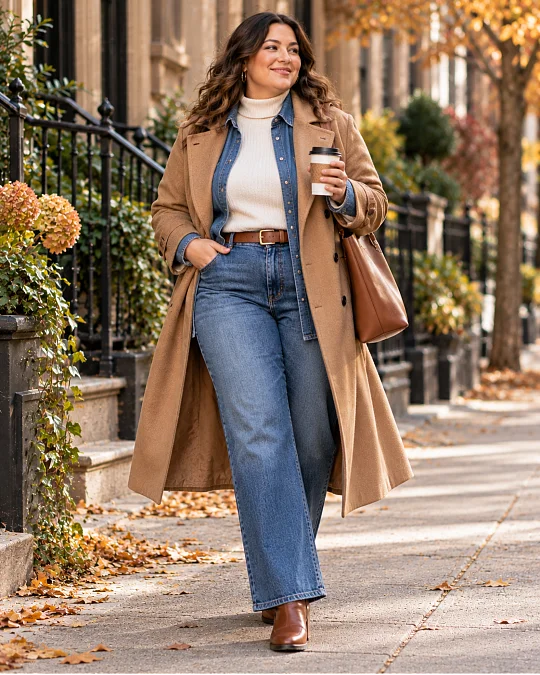
Fall does not always mean coat weather.
Some days begin at jacket temperatures and end warm enough for short sleeves. An outfit that only works with every layer attached can become uncomfortable fast.
Choose removable layers that still leave a complete outfit underneath.
For mild days, try a tee with a cotton cardigan or overshirt. When temperatures drop further, replace the tee with a fine knit and add a coat.
Scarves can provide warmth without adding another full garment. A light scarf also fits easily into a tote when it is no longer needed.
Bold Mellow Fall Layering Guide
The 4-Part Fall Layering System
Build warmth one job at a time. Start with a comfortable base, add only the layer the weather needs, then check proportion and footwear before leaving.
Base
Choose a layer smooth enough to wear under other clothes but polished enough to stand on its own indoors.
Middle
Add softness or light warmth without crowding the sleeves or creating several bulky layers.
Outer
Let the jacket or coat supply structure, weather protection, or the strongest silhouette in the outfit.
Balance
Check hem lengths, overall volume, and shoe weight so every layer stays visually distinct.
Adjust the System to the Day
Base + light middle layer. Keep the jacket optional for early morning or evening.
Use three removable layers so the outfit still works after the coat and shirt come off.
Choose warmer fabrics rather than stacking several thick garments that restrict movement.
For Work
Choose outer layers that come off easily at a desk.
A smooth knit under a blazer usually works better indoors than a thick sweater under a heavy coat.
For Weekends
Flexible layers matter more than polished structure.
Try a long sleeve tee, quilted jacket, straight jeans, and sneakers or boots.
For Travel
Avoid pieces that become uncomfortable when sitting for several hours.
Soft trousers, a breathable base, an open cardigan, and a light coat give more control over changing temperatures.
For Dinner or Events
Make the indoor outfit the priority.
A satin blouse with tailored trousers and a coat works better than building the entire look around a thick sweater that becomes uncomfortable in a warm restaurant.
Fix the Layering Problem Before Buying Another Jacket
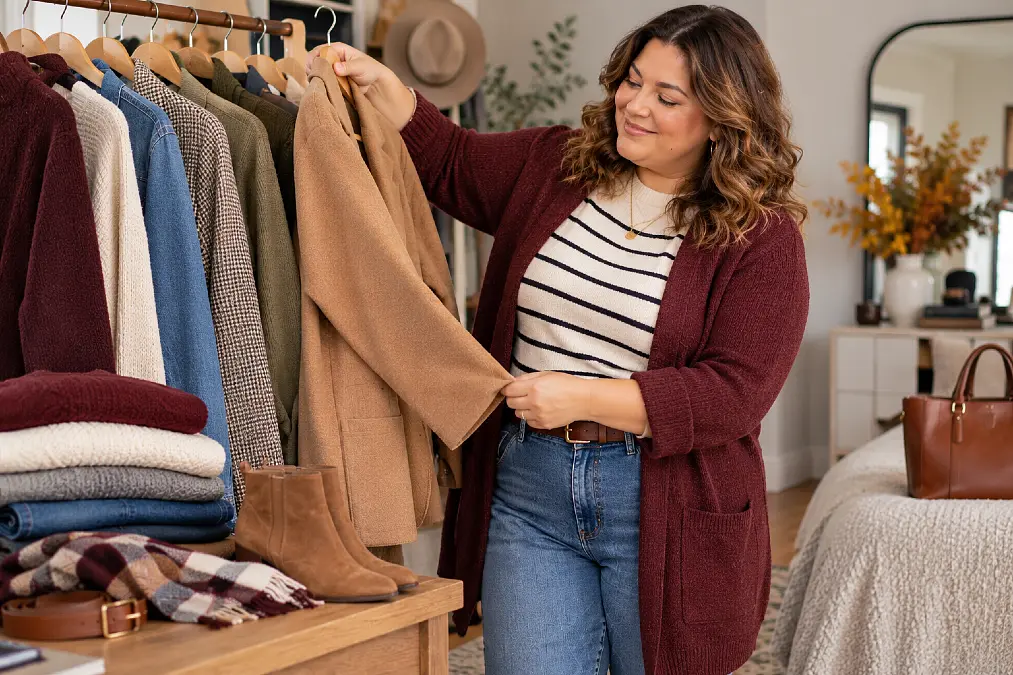
When fall outfits feel wrong, buying another coat is not always the answer.
First identify the actual problem.
If jackets feel tight through the arms, look at sleeve and armhole cut. If outfits look bulky, check whether several layers are all thick. If everything feels long, change one hem length.
If the outfit feels shapeless, add structure through one garment rather than tightening everything.
Small changes can make existing clothes work much harder.
Try cuffing a cardigan sleeve so the shirt underneath shows. Leave a jacket open instead of forcing it to close over a bulky knit. Tuck a fine sweater into trousers if the combination needs a clearer break between top and bottom.
A simple alteration can also help.
Shortening a jacket sleeve, adjusting trouser length, or moving a coat button can sometimes improve how several existing outfits sit together.
Frequently Asked Questions
How many layers should a plus size fall outfit have?
There is no set number. Two or three functional layers are often enough for changing fall temperatures.
Start with a comfortable base, add one visible middle layer if needed, then use a jacket or coat for weather protection.
Can plus size women wear oversized layers?
Yes. Oversized clothing can look modern and intentional when the garment has a clear shape and the rest of the outfit supports it.
An oversized coat, for example, can work well over a simpler knit and straight trousers. The goal is comfortable proportion, not avoiding oversized pieces.
Should a cardigan be longer than the shirt underneath?
It can be, but it does not have to be.
If a shirt hangs several inches below a cardigan, check the outfit from the side as well as the front. Sometimes the extra hem adds interest, while other combinations look cleaner when the base layer is tucked or shorter.
What is the easiest fall jacket to layer in plus sizes?
The most useful choice depends on the wardrobe.
A relaxed blazer works well for polished outfits, while a denim or utility jacket is easier for casual dressing. Look for enough room through the back and arms to fit over the tops worn most often.
How do I layer without feeling too hot indoors?
Use thinner layers that can be removed separately.
A breathable tee or fine knit with a cardigan and light coat gives more temperature control than one thick sweater under a heavy jacket.
Make Each Layer Earn Its Place
Good fall layering is not about covering the body with more fabric. It is about giving every piece a clear job.
Start with one comfortable base, then add warmth, structure, or texture only where the outfit needs it. The next time a layered look feels too heavy, change one thing first: the fabric weight, the garment length, or the amount of volume. That small adjustment can make an existing fall wardrobe feel much easier to wear.

Katy McClain is the founder and senior editor of Bold Mellow, where she focuses on modern plus-size style that feels polished, wearable, and realistic. She created the site to make fashion advice more useful for women who want good clothes and thoughtful styling ideas without outdated rules about hiding, minimizing, or dressing for a certain body type.
Her editorial approach centers on proportion, fit, fabric, color, and the small details that can change how an outfit feels. Katy oversees Bold Mellow’s overall direction and works closely on its fashion guides, seasonal edits, and everyday outfit inspiration, with an emphasis on clothes that can work beyond a single photo or trend.
5 thoughts on “How to Dress Plus Size in Fall: The Layering Guide”