
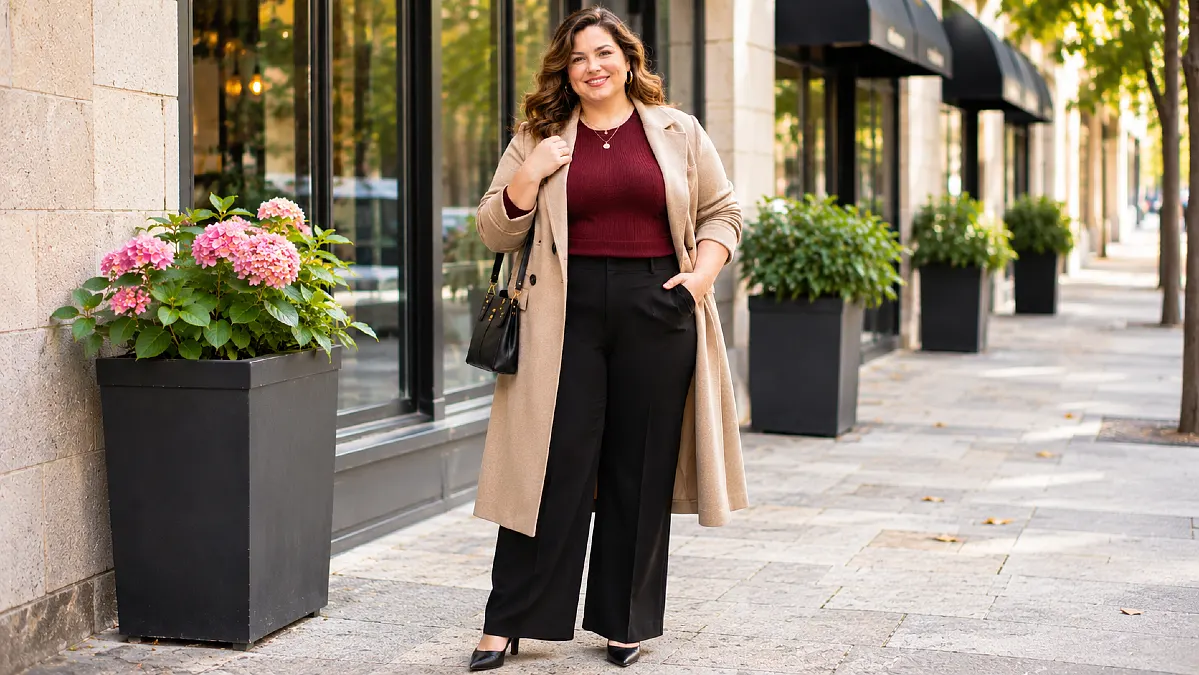
Looking slimmer in clothes is often less about your body size and more about how your outfit fits, falls, and moves. Even beautiful clothes can create unwanted bulk when the fabric pulls across the hips, gathers at the waist, or ends at an awkward length.
If you want to know how to look slimmer in clothes when you’re plus size, the answer is not wearing black every day or squeezing into smaller sizes.
The right combination of fit, fabric, color, and proportion can create a smoother, more streamlined appearance. These styling techniques help you shape the look you want while keeping your curves, comfort, and personal style.
Start With Clothes That Follow Your Shape Without Clinging
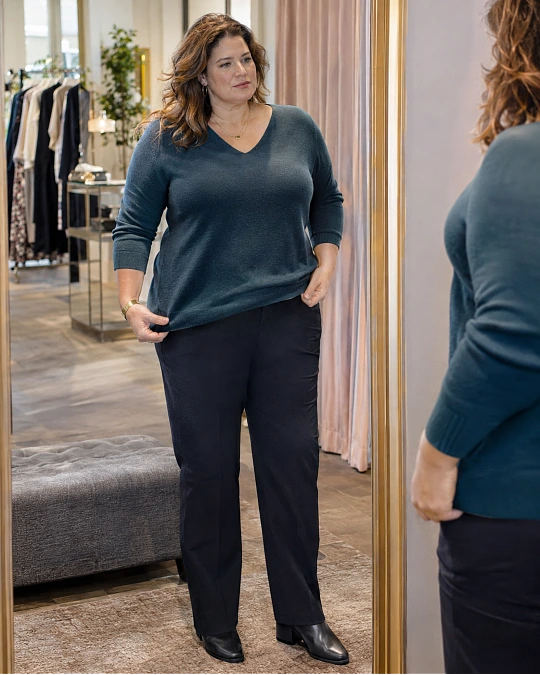
One of the biggest differences between a streamlined outfit and a bulky one is how the fabric sits against your body. Clothes that are too tight can create pulling and bunching, while oversized pieces may add volume where you do not want it.
The goal is to find garments that follow your natural shape without gripping every curve. A little breathing room around the stomach, hips, and thighs allows fabric to fall more smoothly.
For example, a fitted T-shirt with a slightly relaxed waist often creates a cleaner outline than a very tight stretch tee. Similarly, straight leg trousers with room through the hips can look more fluid than pants that pull across the front.
Pay attention to these fit details when getting dressed:
- Shoulder seams: Look for seams that sit near your natural shoulder unless the garment is designed with dropped shoulders.
- Bust fit: Buttons and seams should lie smoothly without pulling when you move.
- Waist fit: Waistbands should stay in place without digging in or rolling down.
- Hip room: Pants and skirts should allow you to sit comfortably without fabric pulling across the front.
- Garment length: Check where tops and jackets end, especially when worn with wider bottoms.
Fit Note: Try sitting, walking, and raising your arms before deciding an outfit works. Clothes that look smooth only when you stand still may need a different size, cut, or fabric.
Create Waist Definition Without Tightening Everything
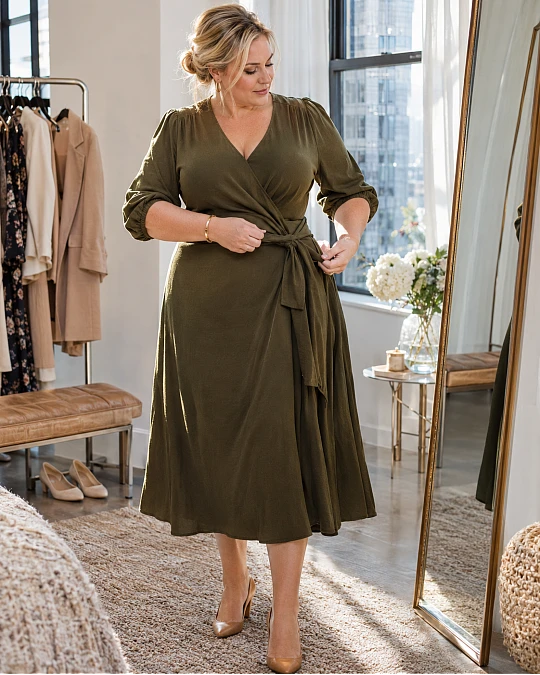
Waist definition can make an outfit look more intentional because it gives the eye a clear point where the top and bottom connect. However, that does not mean every plus size outfit needs a tight belt or a sharply cinched waist.
A soft waist shape often works better for everyday dressing. High-rise trousers, wrap-style tops, gently shaped blazers, and dresses with adjustable ties can create structure without feeling restrictive.
The placement matters more than following one fixed rule. Some women prefer a natural waist, while others feel more comfortable with a slightly higher or lower waistline.
Use a Half Tuck to Control Extra Fabric
A half tuck works particularly well with relaxed shirts, lightweight sweaters, and soft blouses. Tucking a small section into the front of your jeans shows the waistband while allowing the remaining fabric to fall naturally.
This can prevent an oversized top from forming one continuous block over the hips. If tucking feels uncomfortable, try a shorter top that ends near the waistband instead.
Choose Dresses With Shape and Movement
A wrap dress, softly shaped shirt dress, or A-line midi dress can create a clear silhouette while leaving room through the hips. Look for fabric that moves rather than sticking to the body.
A straight dress can work just as well when it has thoughtful seams, a comfortable fit through the middle, and enough structure to hold its shape.
Styling Tip: Before adding a belt, check whether the dress already has a defined waist seam. Sometimes a simple seam creates all the shape the outfit needs.
Choose Fabrics That Drape Instead of Adding Unwanted Bulk
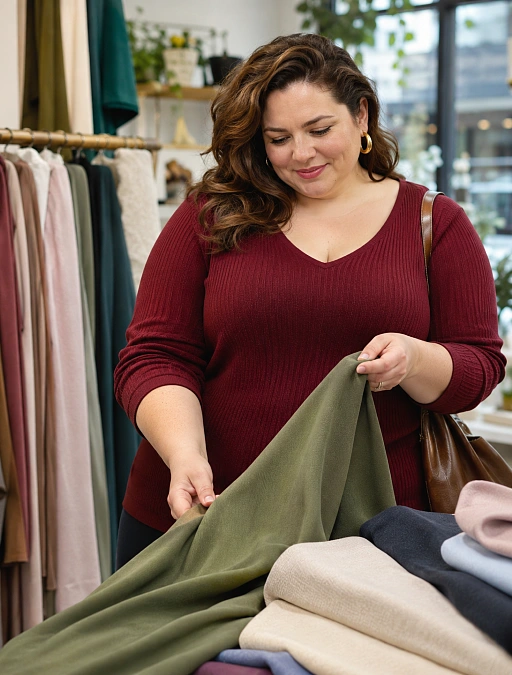
Fabric can change how slim or bulky an outfit appears, even when the cut stays exactly the same. Two pairs of identical trousers may look completely different if one is made from thin clingy jersey and the other from medium-weight crepe.
Thin fabrics can highlight every fold or undergarment seam, while very stiff fabrics may stand away from the body. Materials with a little weight and fluid movement often create cleaner lines.
The best choice depends on the garment, the weather, and how much structure you want.
| Fabric | How It Looks and Feels | Best Use |
|---|---|---|
| Ponte knit | Smooth, supportive, with comfortable stretch | Fitted trousers, skirts, structured dresses |
| Medium-weight crepe | Fluid drape with less cling | Wide leg trousers, blouses, midi dresses |
| Cotton poplin | Crisp and holds its shape | Button-down shirts and shirt dresses |
| Soft viscose blends | Lightweight with gentle movement | Relaxed tops, flowing skirts |
| Lightweight jersey | Comfortable but may cling or show seams | Layering tops and casual dresses with enough room |
When shopping, hold the fabric up and watch how it falls. If it collapses into every fold or feels stiff enough to stand away from your body, consider trying another material.
Also check transparency, especially in lighter colors. A fabric that becomes sheer when stretched may need a different size or a lining.
Fabric Note: You do not need thick clothing to create a smooth outline. A breathable, medium-weight material with good drape often works better than several bulky layers.
Use Color and Layering to Create a Longer Visual Line
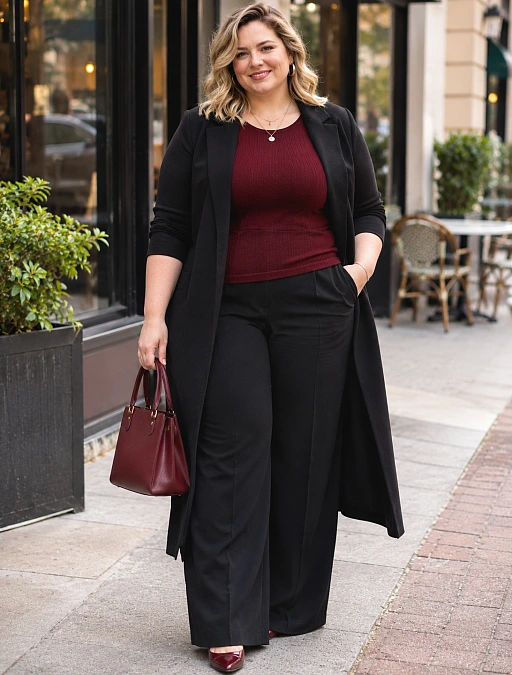
Wearing similar colors from top to bottom can create a continuous visual line. When there is less contrast between your top and trousers, the eye moves across the outfit with fewer interruptions.
This does not mean you have to dress in black. Chocolate brown, navy, charcoal, olive, burgundy, and cream can all create a streamlined outfit when the shades work together.
Try dark indigo jeans with a navy knit top, or chocolate trousers with a cocoa blouse. Mixing slightly different shades and textures keeps the outfit interesting without breaking its overall flow.
Make an Open Layer Work for Your Outfit
An open blazer, long cardigan, or lightweight coat can add two vertical lines down the front of an outfit. This often creates a sleek, structured appearance, especially when the layer falls smoothly over the hips.
However, length and fabric matter. A very thick cardigan that bunches around the waist may add more volume than a lighter, straight-cut layer.
For a practical combination, try a fitted burgundy knit, matching dark trousers, and an open charcoal blazer. Finish with simple loafers or ankle boots.
Keep Contrast Where You Want Attention
You can still wear bright colors, prints, and bold accessories. The trick is to decide where you want the strongest visual contrast.
A cobalt blue blouse with navy trousers draws attention toward the upper outfit. A bright skirt with a simple knit creates a different focal point, and both approaches can look polished.
Color should help you build the outfit you enjoy, not limit the shades you feel confident wearing.
Match Trouser Cuts, Hem Lengths, and Shoes for a Cleaner Silhouette
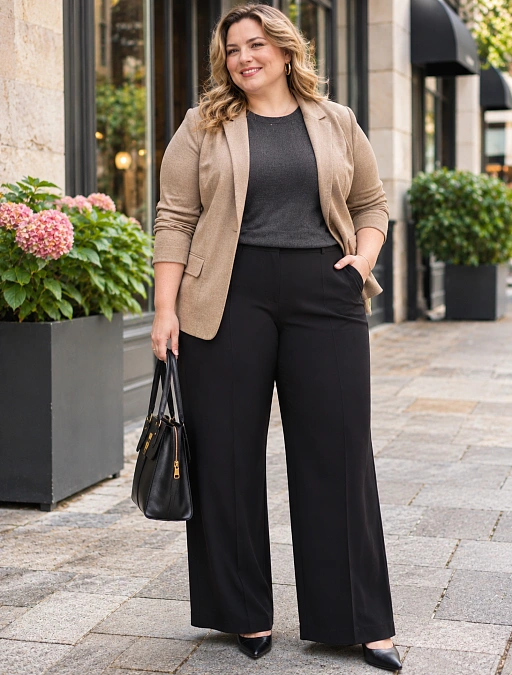
The relationship between your trousers and shoes can change the entire appearance of an outfit. Even well-fitting pants may look awkward when the hem stops at the wrong point or bunches heavily over the shoe.
Straight leg trousers are a useful starting point because they create a consistent line from the hip toward the ankle. Wide leg trousers can also create a long, flowing shape when the fabric falls from the hip without unnecessary gathering.
The best trouser length depends on both the cut and the shoes you plan to wear.
| Bottom Style | What to Look For | Shoe Pairing |
|---|---|---|
| Straight leg jeans | Smooth hip fit and a clean ankle break | Loafers, pointed flats, sleek sneakers |
| Wide leg trousers | Fluid fabric and a hem that nearly reaches the shoe | Low heels, platforms, streamlined boots |
| Bootcut jeans | Gentle flare with no heavy bunching | Ankle boots or block heels |
| Cropped trousers | A deliberate hem above the ankle | Low-profile flats or sleek sandals |
| A-line midi skirt | Smooth waistband and soft movement | Knee-high boots or pointed flats |
Shoes with a slightly tapered or pointed toe can extend the visual line of an outfit. However, round-toe flats and sneakers can look just as balanced when their shape works with the trouser hem.
For example, wide leg trousers with chunky sneakers create a more relaxed, grounded look. The same trousers with a streamlined shoe produce a cleaner, dressier finish.
Do Not Ignore Skirt Length
Midi skirts can look particularly polished when the fabric moves freely over the hips. Bias-cut skirts, gently flared styles, and structured A-line skirts each create a different shape.
Try adjusting the hem length in front of a mirror rather than assuming one midi length works for everyone. A small change in where the skirt meets your leg can affect how the whole outfit flows.
Shoe Swap: If you want a more continuous line, choose shoes close in color to your trousers or tights. This reduces the visual break between the hem and footwear without requiring heels.
Put Together Streamlined Outfits Using Clothes You Already Own
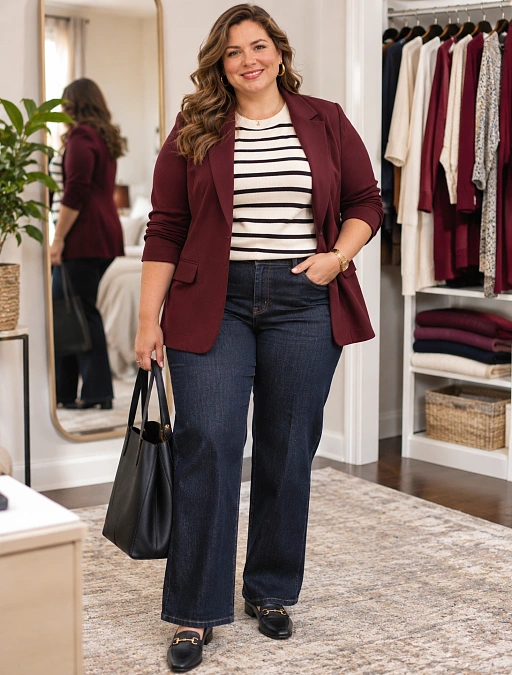
Looking slimmer in clothes does not require replacing your entire wardrobe. Often, changing one garment length, adding structure, or switching shoes can make an existing outfit feel more balanced.
Start with a simple foundation and adjust the volume, neckline, and finishing pieces until the outfit feels right.
The 4-Point Outfit Check
A smoother, more streamlined look starts with four small adjustments. Check these before replacing anything in your wardrobe.
Seams pull, buttons gap, or the waistband digs in when you sit.
Try: A cut with more room through the bust or hips. Keep the shoulders and waist properly fitted.
Fabric clings to every fold or stands stiffly away from your shape.
Try: Medium-weight crepe for fluid trousers or ponte for smooth, structured pieces.
A long top covers the waistband and makes the outfit feel shapeless.
Try: A soft half tuck, a shorter top, or an open structured jacket. No tight belt required.
Trouser hems bunch over shoes or stop at an unintended length.
Try: A light break for straight legs, a near-shoe-top hem for wide legs, or a shoe swap.
For Casual Days: Straight Jeans and a Relaxed Blazer
Outfit Formula: Dark straight leg jeans + scoop-neck T-shirt + open blazer + loafers.
A scoop neckline creates some open space around the neck, while the blazer adds structure through the shoulders. Straight jeans keep the lower half simple without requiring a tight fit.
If your blazer feels bulky, try a lighter jacket or an open button-down shirt. Rolling the sleeves to reveal the wrists can also make a layered outfit feel less heavy.
For Work: Fluid Trousers and a Defined Top
Outfit Formula: High-rise crepe trousers + softly fitted blouse + structured jacket + pointed flats.
The trousers should fall smoothly from the hips while the blouse sits comfortably near the waistband. A jacket that follows the shoulders gives the outfit a defined outer shape.
Try a square, V, or open crew neckline depending on what works with your bust and bra. The amount of open space at the neckline can change how the top looks without changing its size.
For Dinner: A Draped Midi Dress and Simple Accessories
Outfit Formula: Solid-color wrap-style midi dress + sleek boots + small structured bag.
A dress with a soft waist shape and fluid skirt creates movement without relying on tight fabric. Sleek footwear and a small bag keep the finishing details from competing with the dress.
If wrap dresses do not stay closed comfortably, choose a faux-wrap design or a midi dress with gentle waist shaping. You can also add a cropped jacket that ends near the waist seam.
Small Adjustments That Make a Noticeable Difference
Before buying anything new, check the clothes you already wear regularly. A few minor changes may be enough to improve the fit and overall line.
- Hem trousers so they sit correctly over your most-worn shoes.
- Move a shirt button or replace a button-down that pulls across the bust.
- Try a smooth, well-fitting bra if the shape of your tops changes throughout the day.
- Swap a thick cardigan for a lighter layer when you want less bulk.
- Compare a full tuck, half tuck, and untucked hem to see which placement feels best.
You can also visit a tailor for simple adjustments. Shortening sleeves, changing a trouser hem, or taking in a loose waist may make an existing garment more comfortable and polished.
Frequently Asked Questions
Do black clothes really make you look slimmer?
Black can create a continuous visual line, especially when worn from top to bottom. However, navy, dark brown, burgundy, and other similar-toned outfits can create the same effect, and good fit matters more than color alone.
Should plus size women wear loose or fitted clothes to look slimmer?
Neither extreme is necessary. Clothes that follow your shape without pulling or excessive bunching usually create a cleaner silhouette, although intentional oversized pieces can look stylish when balanced with the rest of the outfit.
Can plus size women wear horizontal stripes?
Yes, horizontal stripes can work beautifully on plus size figures. Stripe width, fabric stretch, garment fit, and the rest of the outfit matter more than the direction of the stripes alone.
Do high-waisted pants make you look slimmer?
High-waisted pants can create a longer lower-body line and make tucked tops look more structured. The waistband should sit comfortably without rolling, digging in, or creating excess fabric around the stomach.
Is shapewear necessary to look slimmer in clothes?
No, shapewear is optional. A properly fitted garment, suitable fabric, and comfortable underwear can create a smooth outline without compression, and there is no need to wear restrictive layers to look polished.
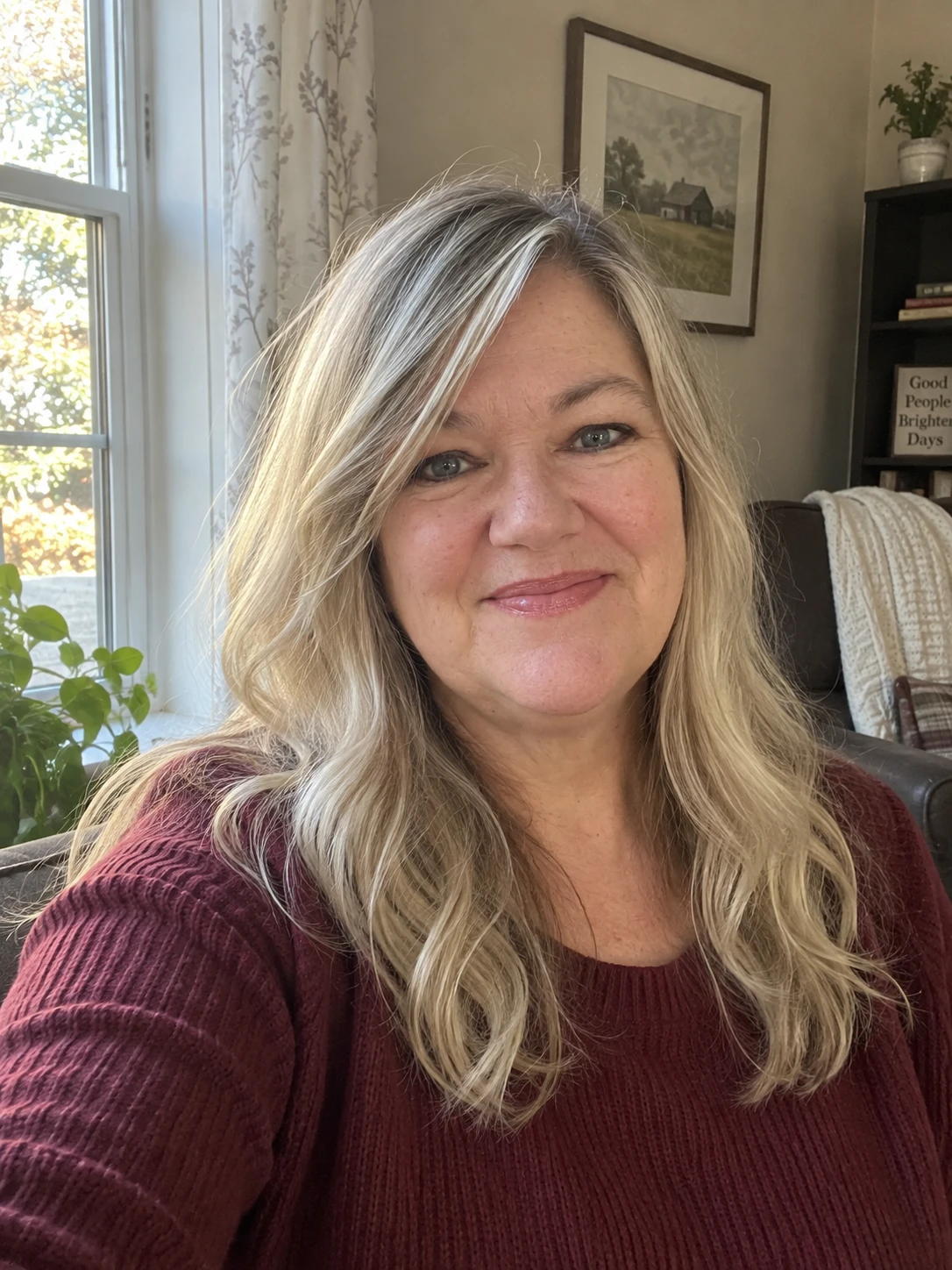
Katy McClain is the founder and senior editor of Bold Mellow, where she focuses on modern plus-size style that feels polished, wearable, and realistic. She created the site to make fashion advice more useful for women who want good clothes and thoughtful styling ideas without outdated rules about hiding, minimizing, or dressing for a certain body type.
Her editorial approach centers on proportion, fit, fabric, color, and the small details that can change how an outfit feels. Katy oversees Bold Mellow’s overall direction and works closely on its fashion guides, seasonal edits, and everyday outfit inspiration, with an emphasis on clothes that can work beyond a single photo or trend.