
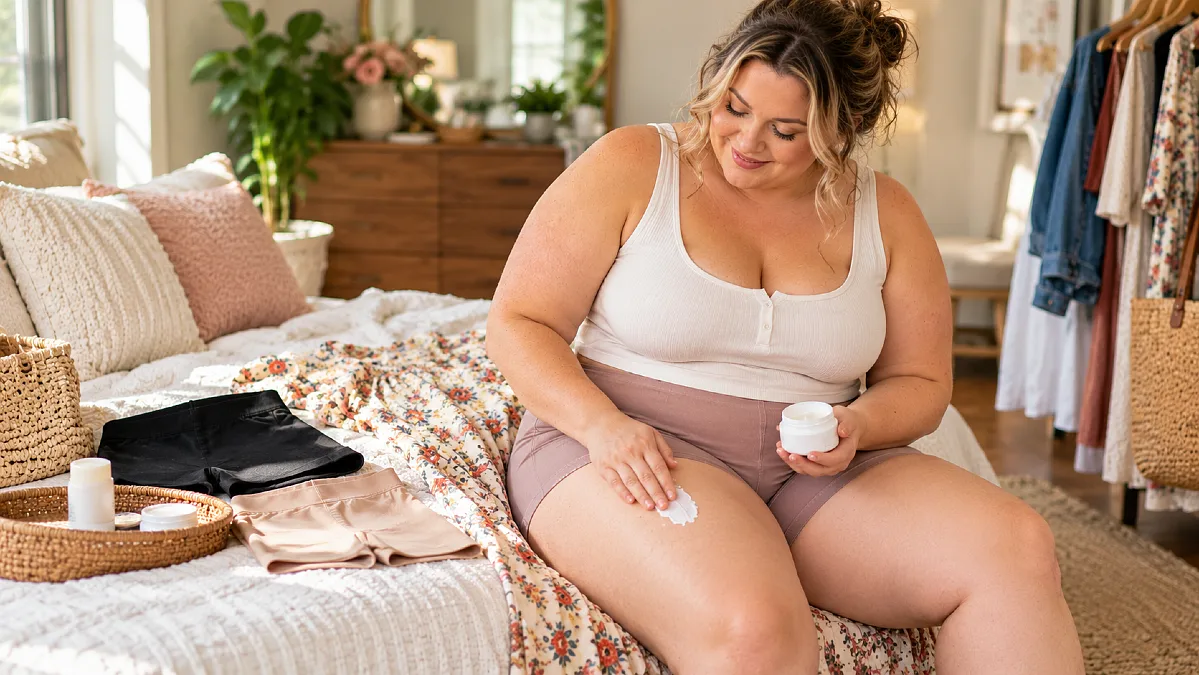
A beautiful summer outfit can become uncomfortable fast when your inner thighs start burning with every step. That familiar sting can turn a simple walk, shopping trip, or afternoon outdoors into something you want to end early.
Thigh chafing is common, especially during warm weather when sweat and repeated friction irritate the skin. Yet many women struggle to find solutions that work with dresses, skirts, jeans, and their everyday wardrobe.
Learning how to treat and prevent chafing between your thighs can make getting dressed much easier.
From soothing irritated skin to choosing breathable shorts and protective products, a few practical changes can help you stay comfortable without giving up the clothes you love.
Why Your Inner Thighs Chafe Even When Your Clothes Fit Well

Inner thigh chafing happens when repeated rubbing irritates the skin. That friction may come from skin touching skin, clothing rubbing against your thighs, or a combination of both.
Sweat makes the problem worse because damp skin becomes more vulnerable to irritation. Walking, climbing stairs, exercising, or spending several hours in warm clothing can increase the amount of rubbing.
And thigh chafing is not limited to plus size women. It can happen at any body size, depending on natural anatomy, movement, clothing, and weather.
Bold Mellow | Comfort Guide
Thigh Chafing: Find the Cause, Choose the Fix
Not all thigh irritation starts the same way. Match what you notice to a practical next step for your skin and your outfit.
Burning, tenderness, or mild redness after walking.
Gently clean and pat dry. Use a thin layer of plain petroleum jelly for minor chafing, and give the skin a break from rubbing.
Skin-to-skin friction while wearing skirts or flowing dresses.
Try anti-chafing balm for shorter outings. For longer days, wear smooth shorts that extend below the rubbing area.
Irritation appears near denim seams, tight hems, or leg openings.
Try relaxed-thigh cuts, flat seams, and soft leg hems. Choose shorts that stay in place when walking and sitting.
Discomfort increases during hot weather, travel, or exercise.
Choose breathable, quick-drying underlayers. Change out of damp clothing and refresh protection when needed.
Sit down, take a short walk, and step up onto a stair. Check whether your shorts roll, seams pull, or skin rubs below the fabric. Adjust before leaving home.
When to seek care: Spreading redness, pus, increasing pain, fever, or irritation that does not improve needs medical attention.
Why certain outfits make the irritation worse
A lightweight summer dress may feel airy everywhere except between your thighs. With no fabric separating the skin, every step can create friction in the same sensitive area.
Tight denim shorts can cause a different problem. Thick inseams, stiff fabric, and hems that ride upward may rub repeatedly against the upper thighs.
Even leggings can contribute when they have bulky seams or fabric that stays damp after sweating. The issue is not simply how tight or loose the clothing feels, but how it moves against your skin throughout the day.
Fit Note: Before blaming the size of your outfit, check where the irritation starts. Chafing directly between the thighs may need a protective barrier, while irritation along a seam may need a different garment cut.
Treat Chafed Thighs Gently Before the Irritation Gets Worse
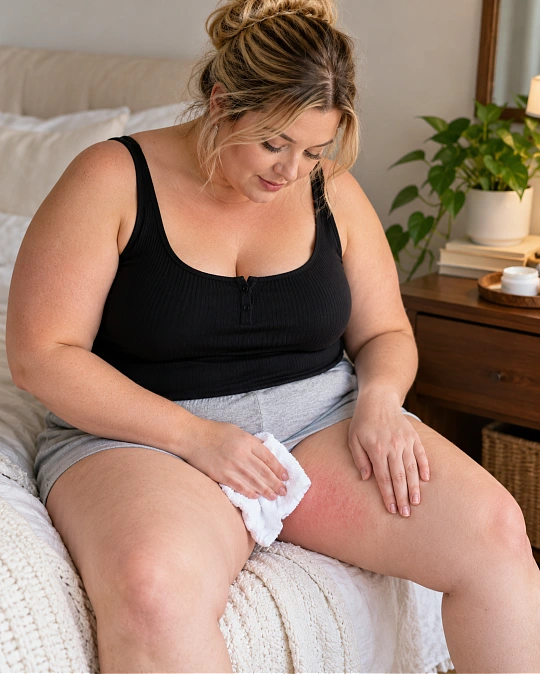
Once your thighs begin to sting, the priority should be calming the skin rather than covering up the discomfort and carrying on.
Mild chafing often improves with simple home care. However, continuing to walk in the same irritating clothing can make the soreness worse and may eventually cause cracked skin or blisters.
Clean the irritated area without scrubbing
Wash your inner thighs gently using lukewarm or cool water and a mild, fragrance-free cleanser. Avoid exfoliating gloves, rough washcloths, and strongly scented body washes.
After cleaning, pat the skin dry with a soft towel. Rubbing with a towel can create more friction when the skin is already tender.
Soothe the burning and protect the skin
A cool, clean compress may provide temporary relief when the area feels hot or uncomfortable. Once the skin is clean and dry, apply a thin layer of plain petroleum jelly to minor chafing to protect the irritated surface.
An unscented moisturizer may also help with mild irritation. Avoid experimenting with strong skincare ingredients, fragranced products, or harsh deodorants on sore skin.
These basic measures are consistent with guidance from Cleveland Clinic and the American Academy of Dermatology.
Give the skin a break from rubbing
For the next day or two, choose clothing that does not press directly against the sore area. Relaxed lounge trousers, soft pajama bottoms, or loose cotton clothing may feel more comfortable while the irritation settles.
Avoid tight shapewear, thick denim seams, and restrictive exercise shorts until the tenderness improves. If you must walk around, use a gentle protective layer that does not stick to or pull at damaged skin.
Comfort Upgrade: Change out of sweaty clothing as soon as possible. Leaving damp fabric against already irritated skin can make healing more difficult.
Choose the Right Anti-Chafing Protection for Your Outfit
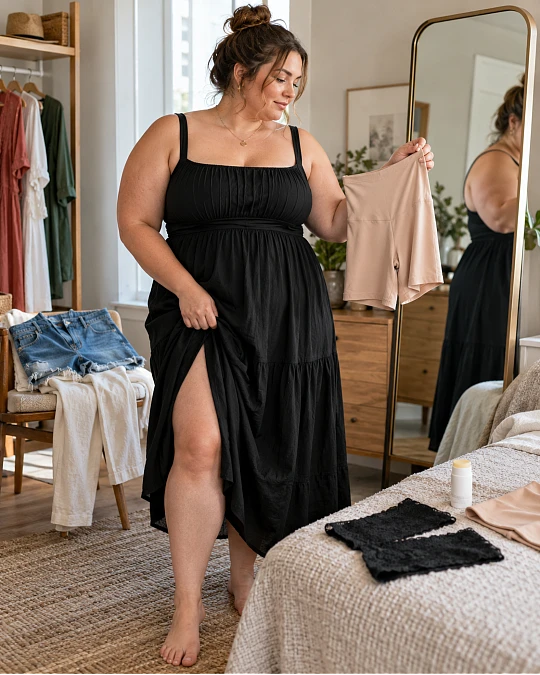
Preventing chafing works best when you reduce friction before it starts. The most useful solution may depend on your clothing, the weather, and how much walking you expect to do.
Some women prefer an anti-chafing balm because it leaves their outfits unchanged. Others find that a comfortable pair of thigh-length shorts provides more reliable separation during longer days.
| Protection option | Works well with | What to consider |
|---|---|---|
| Petroleum jelly | Casual walks, everyday outfits | Inexpensive and accessible, but can transfer onto fabric |
| Anti-chafing balm or stick | Dresses, skirts, outdoor errands | Convenient application; may need refreshing after sweating |
| Seamless anti-chafe shorts | Dresses, skirts, loose trousers | Creates a fabric barrier; fit and breathability matter |
| Soft thigh bands | Shorter skirts and some dresses | Covers the rubbing area without a full short, but may slide |
| Moisture-wicking bike shorts | Active days, travel, long walks | Offers coverage and sweat management when properly fitted |
There is no reason to buy every option. Start with the outfit you wear most often and the situations that regularly cause discomfort.
Use anti-chafing balm before your skin becomes sore
Apply an appropriate anti-friction product to clean, dry, intact skin before getting dressed. Cover the areas where your thighs usually touch, rather than spreading product across your entire legs.
If you will be walking for hours, consider carrying the product in your bag. Sweat, clothing contact, and movement can gradually wear down the protective layer.
Choose fragrance-free options when your skin is sensitive, and test an unfamiliar product on a small area first. A product that feels comfortable on healthy skin may sting when applied to an existing rash.
Consider a fabric barrier for longer days
An anti-chafing balm can be useful for short errands, but a physical fabric barrier may be more convenient for long walks or events.
Soft anti-chafe shorts create separation between the thighs without changing the outside appearance of a dress. For some outfits, this can be more practical than repeatedly applying a balm.
The goal is to select protection that supports your actual plans, not something you have to keep adjusting every few minutes.
Find Anti-Chafe Shorts That Stay in Place on Fuller Thighs
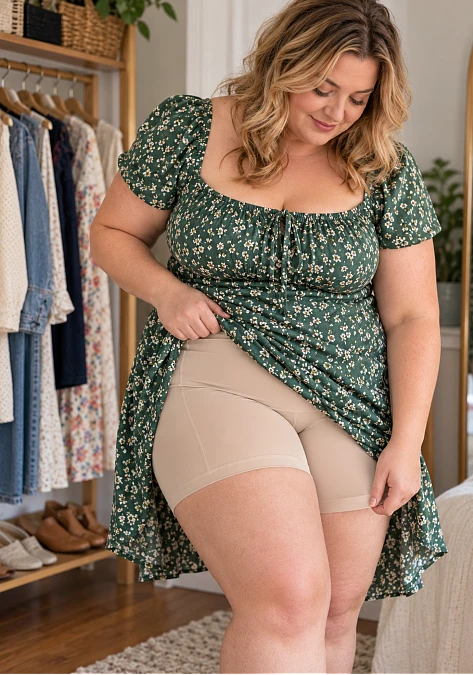
One of the biggest frustrations with anti-chafe shorts is that they sometimes create new problems. The waistband rolls, the legs creep upward, or the material squeezes tightly around the thighs.
The right pair should feel like a comfortable underlayer, not a restrictive garment.
Look for enough length to cover the rubbing area
Shorts that end above the point where your thighs touch may offer little protection. As you walk, the exposed skin below the hem can continue rubbing.
Choose a leg length that extends slightly below your usual friction zone. Depending on your proportions, a mid-thigh or longer bike-short style may work better than very short slip shorts.
Try sitting, walking, and taking several steps upstairs before deciding whether the length is right. Shorts that stay put while standing in front of a mirror may move differently during an active day.
Choose stretch without excessive compression
Look for soft, flexible material that moves with your hips and thighs. A blend containing elastane can provide stretch, while the overall fabric should feel smooth and comfortable against your skin.
Very firm compression is not necessary for chafing prevention. Tight leg openings may create pressure lines or shift upward during walking.
A wide, comfortable waistband can also be helpful, especially under dresses. It should remain secure without folding or pressing into your waist when sitting.
Pay attention to seams and sweat management
Flat seams or seamless construction can reduce irritation along the inner thighs. A soft gusset and breathable fabric are useful details, particularly during hot weather.
Moisture-wicking nylon or polyester blends often work better for sweaty activities than thick cotton jersey, which may hold moisture longer. The fabric should also have enough coverage that you feel comfortable if a dress moves in the wind.
Shopping Note: Before purchasing another pair, check the leg hem, inseam, and waistband of shorts you already own. Sometimes lightweight bike shorts from your wardrobe can do the same job.
Keep Dresses, Jeans, and Summer Outfits Comfortable All Day
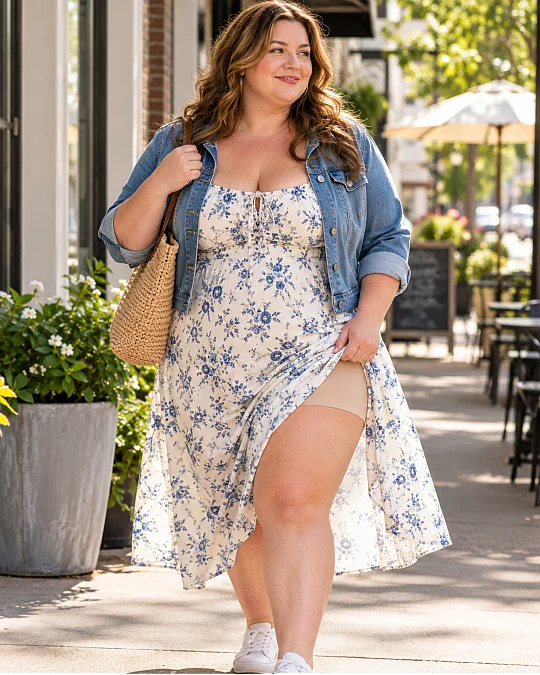
You do not need to build an entirely different wardrobe to manage thigh chafing. A few smart outfit adjustments can make your existing clothes more comfortable.
The key is to consider what happens when you move, rather than judging an outfit only by how it looks when standing still.
Dresses and skirts need a comfortable layer underneath
Flowy midi dresses, satin skirts, and lightweight maxis are often comfortable in warm weather, but they may leave the inner thighs in direct contact.
Try wearing thin anti-chafe shorts underneath a cotton poplin dress or a relaxed linen-blend skirt. Choose a smooth pair that does not create visible ridges beneath lighter fabrics.
For dresses with high side slits, check the shorts’ length while walking and sitting. A shorter protective layer or discreet thigh bands may work better when the slit exposes more of your leg.
Outfit Formula: Cotton midi dress + lightweight anti-chafe shorts + cushioned sandals + crossbody bag.
The dress allows movement, while the shorts provide a protective layer. Supportive sandals make the combination practical for shopping, sightseeing, or a casual summer afternoon.
Jeans should move with your thighs instead of pulling at the inseam
Denim can contribute to irritation when the inseam pulls tightly across the upper thighs. This is particularly noticeable during extended sitting, commuting, or walking.
Look for jeans with enough room through the thigh and a comfortable rise that stays in place. Straight-leg, relaxed straight, and wide-leg cuts offer different fits, so focus on the actual thigh measurements rather than the style label.
Denim with a little stretch may feel more comfortable during movement, but it should still recover its shape. Fabric that stretches out quickly can bunch around the crotch and create additional rubbing.
Fit Note: If your jeans fit through the waist but pull across the thighs, try a different cut before sizing up. A curvy-cut or relaxed-thigh design may give you better proportions without an oversized waistband.
Athletic outfits need fabric that handles sweat
For walking, gym sessions, or active weekends, choose leggings or bike shorts with smooth inner seams and moisture-wicking fabric.
Check that the shorts stay below your usual chafing area when moving. Tight shorts that constantly ride upward can leave the most sensitive skin exposed.
If your workout clothing becomes soaked with sweat, change into clean, dry garments afterward. Even comfortable performance fabric can become irritating when it remains damp against the skin.
Work outfits can combine structure and comfort
Tailored trousers, shirt dresses, and midi skirts can all work well when the fabric and underlayers are chosen carefully.
For office days, consider lightweight wide-leg trousers with a smooth inner seam. Under a tailored midi skirt, thin anti-chafe shorts may offer more comfort than traditional underwear alone.
A simple formula is a relaxed blazer, breathable knit top, wide-leg trousers, and supportive loafers. The trousers provide coverage without requiring a restrictive underlayer, while the structured blazer keeps the outfit polished.
Control Sweat and Friction Without Overcomplicating Your Routine
Preventing chafing is not just about the product you apply in the morning. Sweat, fabric choices, and how long you stay in damp clothing all affect your comfort.
A small routine before leaving home can reduce the need for constant adjustments.
Match your fabric to the weather
| Fabric | Useful qualities | Potential drawback |
|---|---|---|
| Moisture-wicking nylon blend | Smooth and often quick-drying | Dense fabric may feel hot |
| Lightweight polyester blend | Moves sweat away when designed for performance | Poorly ventilated styles may trap heat |
| Cotton jersey | Soft and comfortable for relaxed wear | Can stay damp after heavy sweating |
| Linen blend | Airy for outer garments | Coarse seams or stiff weaves may irritate |
| Lightweight stretch microfiber | Smooth under dresses and skirts | Very thin versions may roll or cling |
The fabric touching your inner thighs matters more than the fiber name alone. A soft material with bulky seams can still cause irritation, while a well-made synthetic blend may feel comfortable for hours.
For especially sweaty days, prioritize breathable construction and fabric that dries quickly. For quiet days at home, loose cotton clothing may be perfectly comfortable.
Make a small prevention routine part of getting dressed
- Start with clean, thoroughly dry skin, paying attention to areas where moisture collects.
- Apply your preferred anti-chafing barrier before the day’s activities, if using one.
- Check that shorts, underwear, or trouser seams do not sit directly on your usual friction points.
- Carry a spare underlayer or anti-chafing product for long days away from home.
- Change out of sweaty clothes after exercise, commuting, or spending time outdoors.
These habits are especially helpful during summer travel, outdoor festivals, shopping trips, and busy workdays.
Seasonal Swap: In cooler weather, soft leggings or tights beneath a skirt may provide enough separation. During humid months, lighter moisture-wicking shorts can feel more comfortable than thick tights.
Recognize When Thigh Chafing May Need Medical Treatment
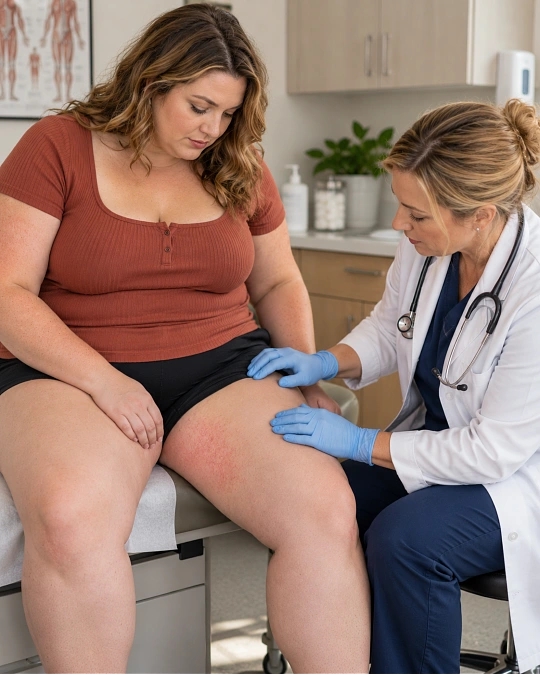
Most mild thigh chafing settles after you reduce the rubbing and care for the skin. However, not every rash between the thighs is caused by simple friction.
An irritated area may sometimes develop a fungal or bacterial infection. Skin folds can also develop a condition called intertrigo, where heat, moisture, and friction contribute to inflammation.
Watch for signs that suggest more than ordinary irritation
Mild chafing often causes stinging, tenderness, or a visibly irritated patch in an area that has been rubbing. More concerning changes include spreading redness, increasing pain, cracked or weeping skin, pus, or an unpleasant smell.
On darker skin tones, inflammation may look brown, purple, or darker than the surrounding skin instead of bright red. Persistent itching, peeling, or new bumps can also suggest a condition other than uncomplicated friction.
A healthcare professional can assess the area and determine if treatment for infection or another skin condition is needed.
Avoid treating every thigh rash with the same cream
An antifungal cream will not solve ordinary friction by itself, and a steroid cream may be inappropriate for certain infections. Using multiple medicated products without knowing the cause can make a sensitive area more irritated.
Seek medical advice if the rash is getting worse, is severely painful, develops pus or spreading warmth, or is not improving after a few days of gentle care. Fever or rapidly spreading redness warrants prompt medical attention.
If chafing happens repeatedly despite wearing comfortable clothing and using protective barriers, a dermatologist can help identify other contributing skin conditions.
Frequently Asked Questions
How long does thigh chafing take to heal?
Mild thigh chafing often improves within a few days after the rubbing stops. More severe irritation or broken skin may take longer, especially if the area stays damp or continues experiencing friction.
If your skin is not improving after several days, or the pain is worsening, seek medical guidance.
Can petroleum jelly prevent inner thigh chafing?
Yes. Petroleum jelly can create a protective barrier that helps reduce friction between your thighs. It is a simple option for everyday walks, although it may feel greasy or transfer onto clothing.
Apply a small amount to clean skin and refresh it when needed.
Is baby powder good for thigh chafing?
Some powders can absorb moisture, but they are not always the best option for sensitive inner thighs. Powder may clump when mixed with sweat, and certain products can irritate damaged skin.
A smooth anti-friction barrier or moisture-wicking shorts may be easier to manage, particularly if chafing is a recurring problem.
Can you wear anti-chafe shorts under tight dresses?
Yes, provided the shorts are thin enough to sit smoothly beneath the fabric. Look for seamless or flat-seam styles with comfortable hems that do not dig into the thighs.
Under a body-skimming dress, try the full outfit in natural light to check for visible lines and make sure the shorts do not roll when sitting.
Does thigh chafing mean your clothes are too tight?
Not necessarily. Thigh chafing can occur even when clothing fits correctly because skin-to-skin friction is enough to cause irritation.
However, tight seams, restrictive leg openings, and fabrics that trap sweat may make the problem worse. Consider both your clothing fit and the protection your skin needs.
Make Thigh Comfort Part of Your Everyday Style
Preventing thigh chafing should not mean avoiding summer dresses, giving up skirts, or changing how you want to dress. The right combination of gentle skincare, comfortable fabric, and practical underlayers can make a noticeable difference.
Start with one outfit that usually causes discomfort. Check where the friction happens, test a protective barrier or soft shorts, and see how everything feels after walking and sitting.
Your clothes should work with your body and your daily routine, leaving you free to enjoy wearing them.
Health note: This article offers general skincare and clothing guidance. It is not a substitute for a medical diagnosis or personalized treatment, especially for persistent, worsening, or infected skin.

Tanya Bennett is the Chief Editor and an author at Bold Mellow, where she helps shape the site’s voice, editorial standards, and day-to-day fashion coverage. Her work focuses on plus-size style that feels current, wearable, and useful, with particular attention to fit, proportion, fabric, color, and the details that make an outfit work in real life.
As an editor, Tanya reviews stories for clarity, practicality, and consistency before publication, while also contributing fashion guides, seasonal styling ideas, and wardrobe-focused features.
She believes good style advice should help women understand their clothes better, not give them another list of rules to follow. Her approach at Bold Mellow is straightforward: start with the person, consider how the clothes actually fit and move, and build outfits that feel confident, modern, and genuinely wearable.