
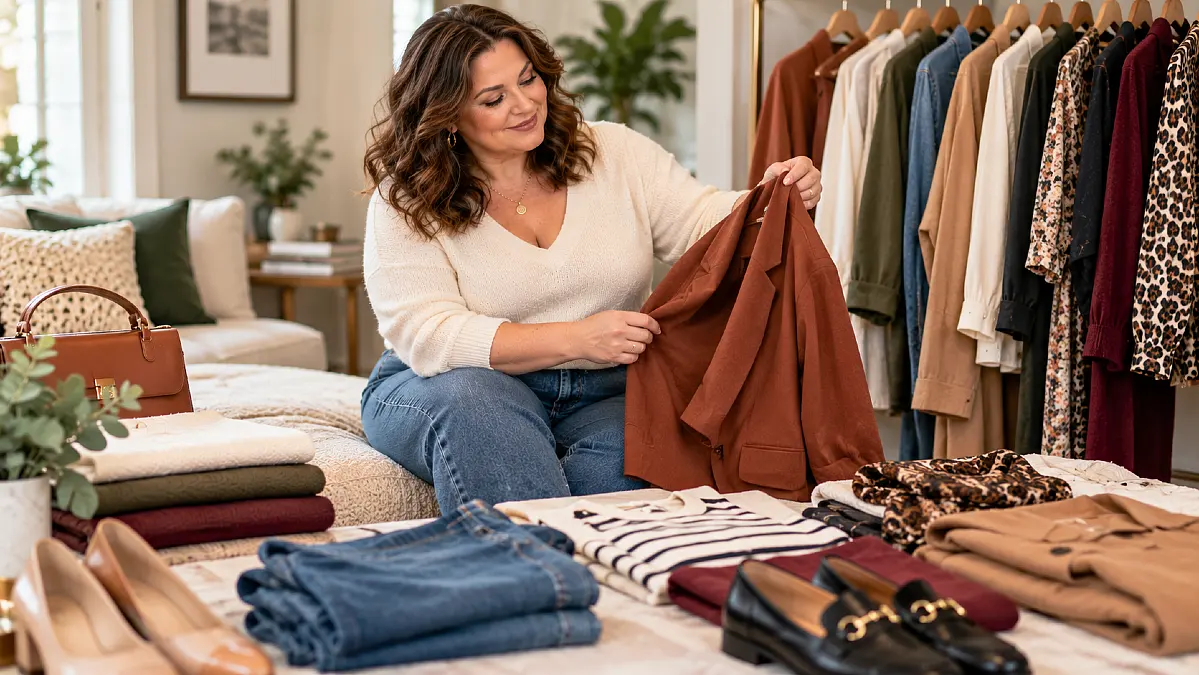
Wear dark colors. Avoid horizontal stripes. Cover your arms. Define your waist. Never wear oversized clothing. Do not wear anything cropped.
Those instructions can make an outfit feel technically “appropriate” while still feeling completely wrong for the person wearing it.
Personal style works better when you think about shape and intention, rather than trying to make your body appear smaller.
An oversized shirt, for example, can look sharp with straight trousers and substantial loafers when the proportions are deliberate. A fitted knit can work beautifully with a fuller skirt because the contrast in volume gives the outfit structure.
Neither approach is universally better.
The question is what kind of silhouette feels most like you.
| Old Rule | More Useful Style Question |
|---|---|
| Avoid oversized clothes | Do I like relaxed volume, and what should I pair with it? |
| Always define the waist | Do I prefer waist definition or a straighter silhouette? |
| Wear dark colors | Which colors make my wardrobe easier and more enjoyable? |
| Avoid bold prints | Do I enjoy print as a focal point or prefer texture instead? |
| Wear “flattering” shapes | Which silhouettes make me want to wear the outfit again? |
Your body does not need to qualify for a style.
The clothes simply need to fit the look, comfort, and life you want.
Build a Style Vocabulary Instead of Choosing One Aesthetic
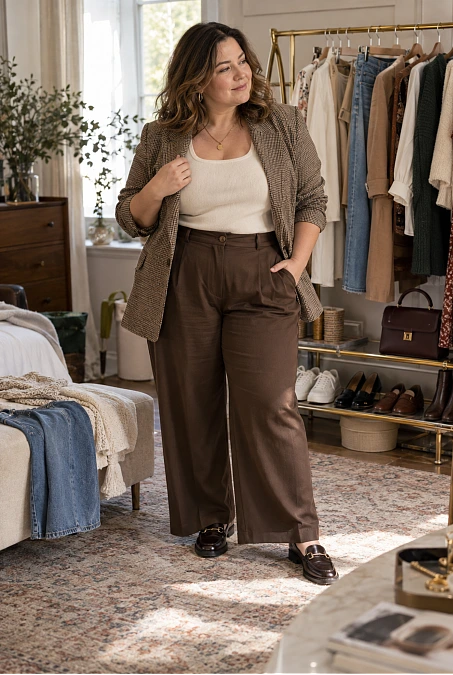
Trying to choose one aesthetic can make personal style harder than it needs to be.
You do not have to decide that you are permanently “classic,” “boho,” “minimalist,” “romantic,” or “edgy.”
Real wardrobes are usually combinations.
A woman might like classic tailoring, soft fabrics, modern sneakers, deep neutral colors, and slightly dramatic jewelry. That mixture is far more useful than trying to squeeze her wardrobe into one label.
Choose three to five words that describe how you want your clothes to feel.
For example:
Polished + relaxed + modern + rich
That could translate into wide-leg trousers, soft knits, clean sneakers, oversized blazers, burgundy, chocolate brown, gold jewelry, and structured bags.
Another woman may choose:
Feminine + easy + colorful + vintage-inspired
Her wardrobe may lean toward printed midi dresses, cropped cardigans, ballet flats, soft blouses, pleated skirts, and interesting earrings.
Bold Mellow Style Guide
Your Personal Style Compass
Skip the pressure to choose one aesthetic. Build your style from the details you repeatedly enjoy wearing.
Notice What You Repeat
Start with the clothes you already wear most. Look for repeated shapes, fabrics, colors, shoes, and layering choices.
Look for: straight jeans, soft knits, oversized shirts, midi hems, loafers, tonal outfits, structured jackets.
Choose 3–5 Style Words
Describe how you want your clothes to feel instead of forcing yourself into one fashion category.
Example: polished + relaxed + modern + rich
Translate Words Into Details
Turn abstract style words into real wardrobe choices you can recognize while dressing or shopping.
Polished: defined shoulders + trousers + loafers
Relaxed: soft knits + fluid shirts + easy denim
Test the Whole Outfit
Check proportion, fabric, shoes, comfort, and real-life use before deciding that a piece belongs in your style.
Ask: Would I wear this for a real day in my actual life?
The 5-Part Style Filter
Personal style is not one aesthetic.
It is the pattern created by the choices you enjoy repeating.
Turn Style Words Into Clothing Details
Abstract words become useful only when you connect them to actual garments.
| Style Word | Clothing Details That May Support It |
|---|---|
| Relaxed | Draped shirts, wide-leg trousers, knit dresses, soft jackets |
| Polished | Defined shoulders, pressed trousers, loafers, structured bags |
| Feminine | Soft necklines, flowing skirts, delicate knits, satin textures |
| Modern | Clean lines, monochrome outfits, bold shoes, simple jewelry |
| Creative | Unusual color combinations, layered textures, statement accessories |
| Classic | Straight jeans, trench coats, button-downs, simple leather shoes |
Your style words should guide decisions, not become another set of rules.
Pay Attention to Proportions You Enjoy Wearing
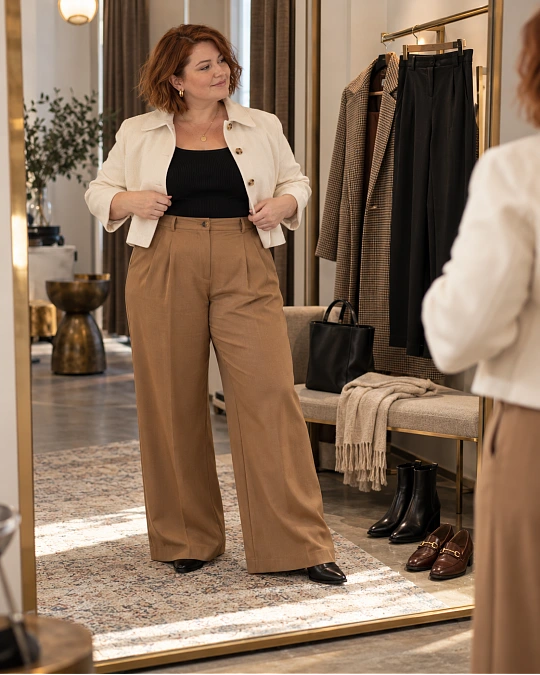
Personal style is often less about specific garments and more about how those garments relate to each other.
You may discover that you prefer a shorter top with wide-leg trousers. Someone else may feel more comfortable in a longer shirt worn over straight jeans.
Both can look intentional.
The important part is understanding the proportions that consistently make outfits feel balanced to you.
Try Three Basic Volume Combinations
A useful place to start is by testing these combinations with clothes you already own.
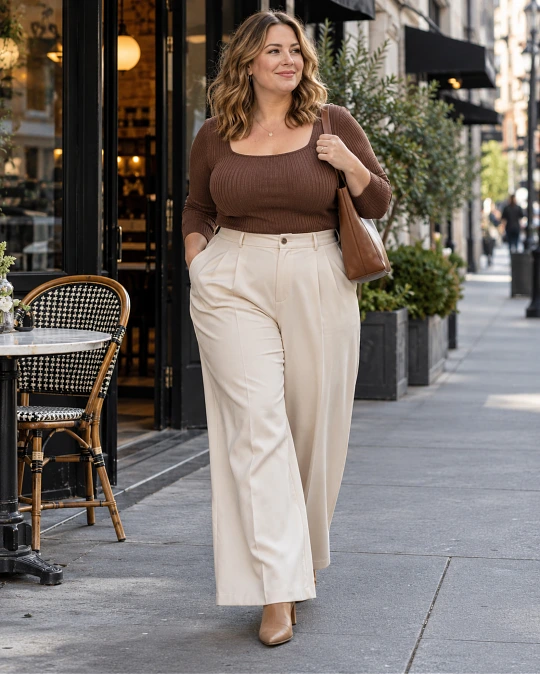
Fitted top + fuller bottom
Try a fitted knit or tucked tee with wide-leg trousers, an A-line midi skirt, or relaxed jeans.
This creates contrast between the upper and lower halves of the outfit.
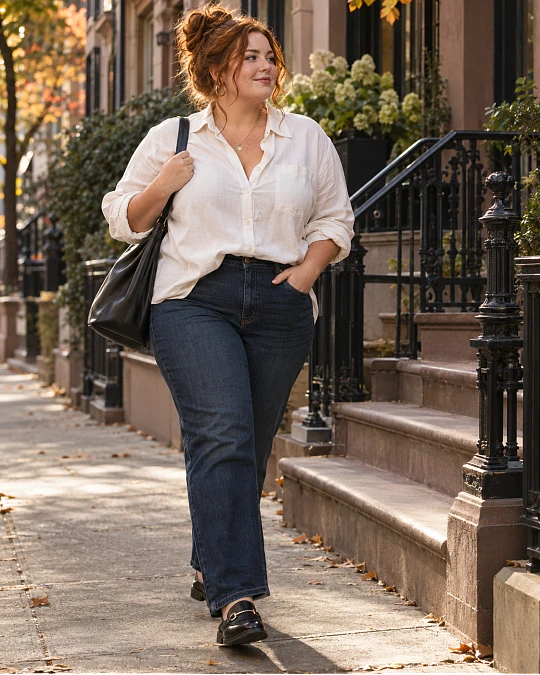
Relaxed top + straighter bottom
Try an oversized button-down, loose sweater, or soft blazer with straight-leg jeans or slim trousers.
The cleaner lower half gives the relaxed top some structure.
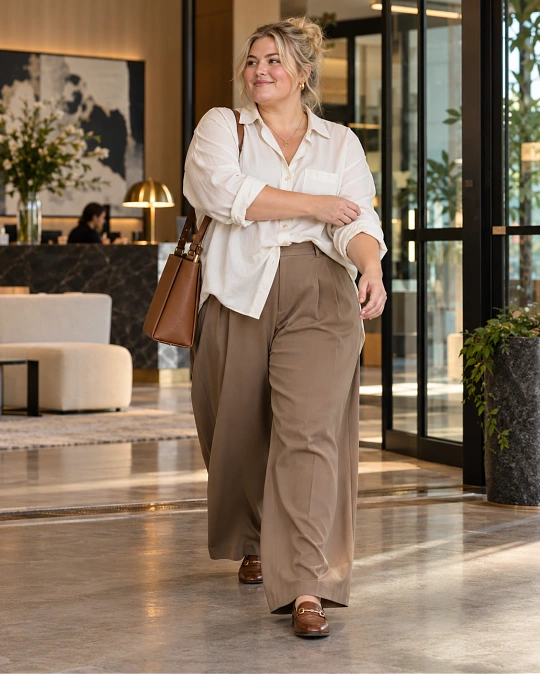
Relaxed top + relaxed bottom
This combination can work well too, but fabric and length matter more.
Try a fluid shirt with wide-leg trousers, then add a defined shoe, rolled sleeve, tucked section, or structured bag so the outfit still has clear points of interest.
Fit Note
Do not confuse “fitted” with tight.
A fitted garment should follow your shape without pulling badly at buttons, cutting into the body, or forcing the fabric to stretch beyond what it was designed to do.
Learn Which Fabrics Match Your Style
Fabric can completely change how a garment behaves on a fuller figure.
A black dress made from thin clingy jersey creates a very different look from a black dress made from substantial ponte or fluid crepe.
Understanding fabric helps you shop for the effect you want.
If You Like Structure
Look for materials such as:
- Ponte
- Denim
- Twill
- Suiting wool blends
- Cotton poplin
- Structured knit
- Medium-weight linen blends
These fabrics hold a clearer shape and work well for tailored or architectural outfits.
If You Prefer Soft Movement
Consider:
- Viscose
- Modal
- Crepe
- Soft jersey
- Tencel or lyocell
- Fine-gauge knits
- Satin with enough weight to drape rather than cling
These fabrics move more easily and work well for softer, more fluid silhouettes.
If You Like Relaxed Layering
Medium-weight fabrics usually give you more styling options than very thin ones.
A cardigan with enough body to hang cleanly over a tee will often feel more intentional than a very thin knit that catches on every layer underneath.
Fabric Note: Always judge stretch together with recovery. A fabric may stretch comfortably but still bag badly at the knees, elbows, or seat after a few hours.
Create Outfit Formulas Before You Buy More Clothes
Personal style becomes easier when you have a few outfit structures that repeatedly work for you.
These are not uniforms. Think of them as templates.
You can change the fabrics, colors, shoes, and accessories while keeping the basic proportions familiar.
Formula 1: Relaxed Tailoring
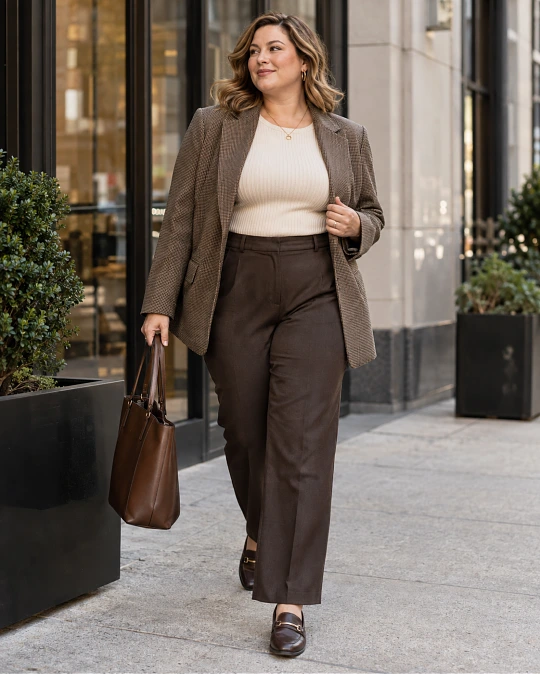
Straight-leg trousers + fitted knit + relaxed blazer + loafers
The fitted knit keeps the center of the outfit clean while the blazer brings structure without needing to be tightly fitted.
For a softer version, replace the blazer with a knit jacket or open cardigan.
Formula 2: Modern Weekend
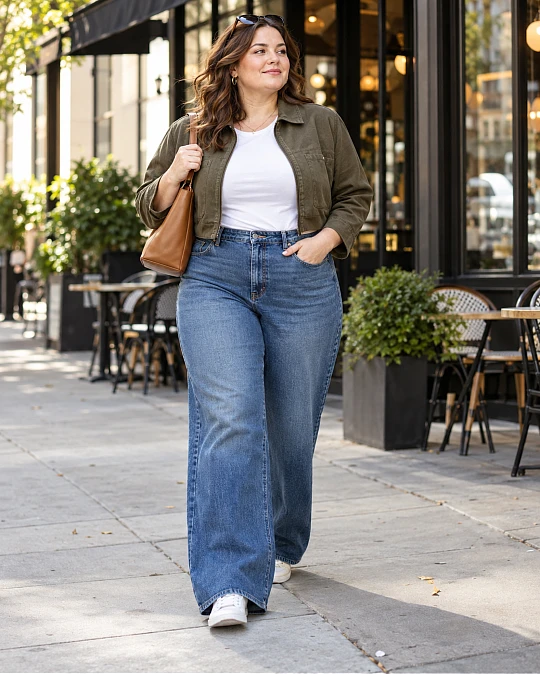
Wide-leg jeans + tucked tee + cropped jacket + low-profile sneakers
The shorter jacket lets more of the trouser line show, which keeps the wider denim from feeling visually heavy.
If cropped jackets are not your thing, use a hip-length jacket and wear the tee tucked or semi-tucked.
Formula 3: Soft and Polished
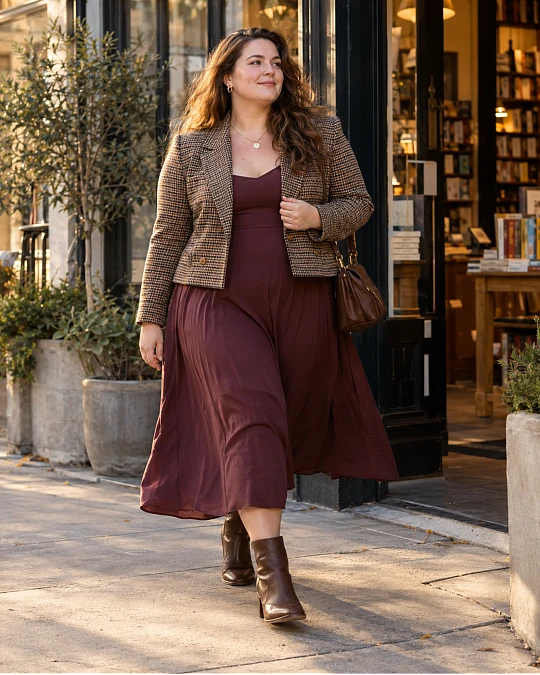
Midi dress + structured jacket + ankle boots
A fluid dress paired with a firmer outer layer creates useful contrast.
If ankle boots feel too heavy with the hem, try loafers, pointed flats, or a sleek sneaker.
Formula 4: Easy Monochrome
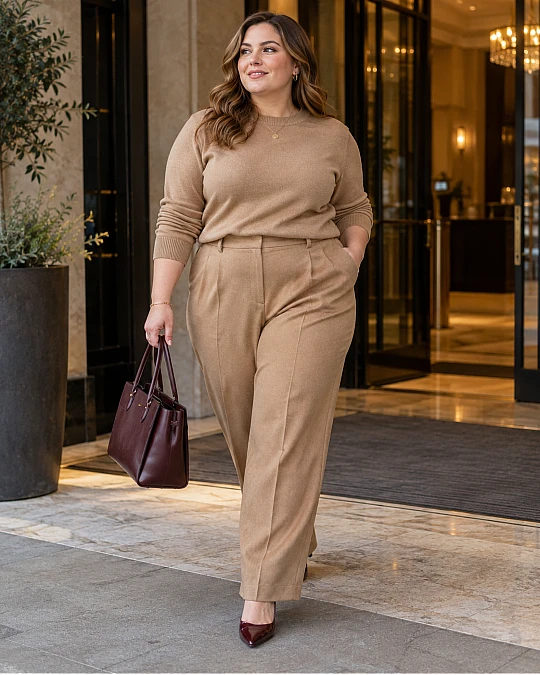
Matching or tonal top and trousers + contrasting shoe + simple jewelry
Using closely related colors creates a calm base that makes fabric and silhouette more noticeable.
Try chocolate with camel, navy with denim blue, burgundy with dusty rose, or several shades of cream.
Use Shoes to Finish the Silhouette, Not Just the Outfit
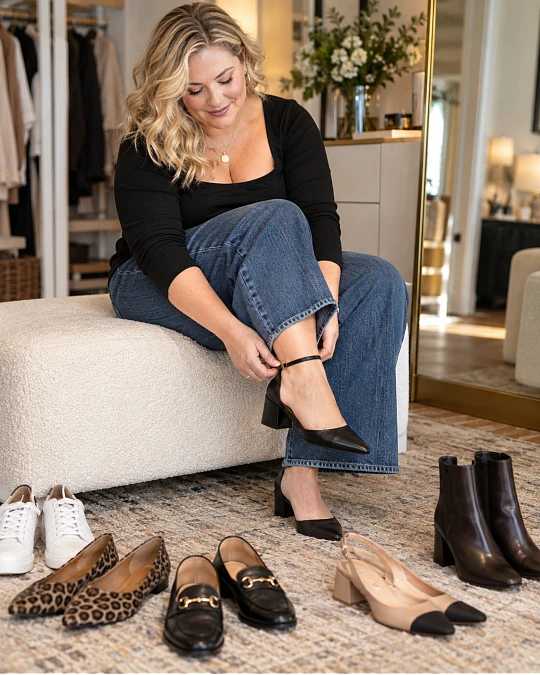
Shoes are one of the most overlooked parts of developing personal style.
A shoe changes the visual weight of an outfit.
Chunky loafers with wide-leg trousers create a grounded, modern look. A pointed flat makes the same trousers feel sharper and lighter.
A substantial sneaker can balance relaxed jeans or a long coat, while a very delicate shoe may work better with a fluid midi skirt.
Instead of buying shoes because they are “versatile,” ask what silhouettes you already wear.
| Outfit | Shoe Direction | Why It Works |
|---|---|---|
| Wide-leg trousers | Loafers, sleek sneakers, block heels | Enough visual weight for the wider hem |
| Straight jeans | Flats, loafers, sneakers, ankle boots | Easy shape works with many shoe profiles |
| Midi skirt | Boots, slingbacks, ballet flats | Lets you shift between substantial and delicate |
| Maxi dress | Sandals, streamlined sneakers, boots | Shoe choice changes the mood without changing the dress |
| Cropped trousers | Loafers, flats, low-profile sneakers | Keeps the visible ankle area clean |
Comfort matters here too.
Your personal style should still work after walking through a parking lot, commuting, standing at work, or spending three hours at dinner.
Use Color to Build Recognition in Your Wardrobe
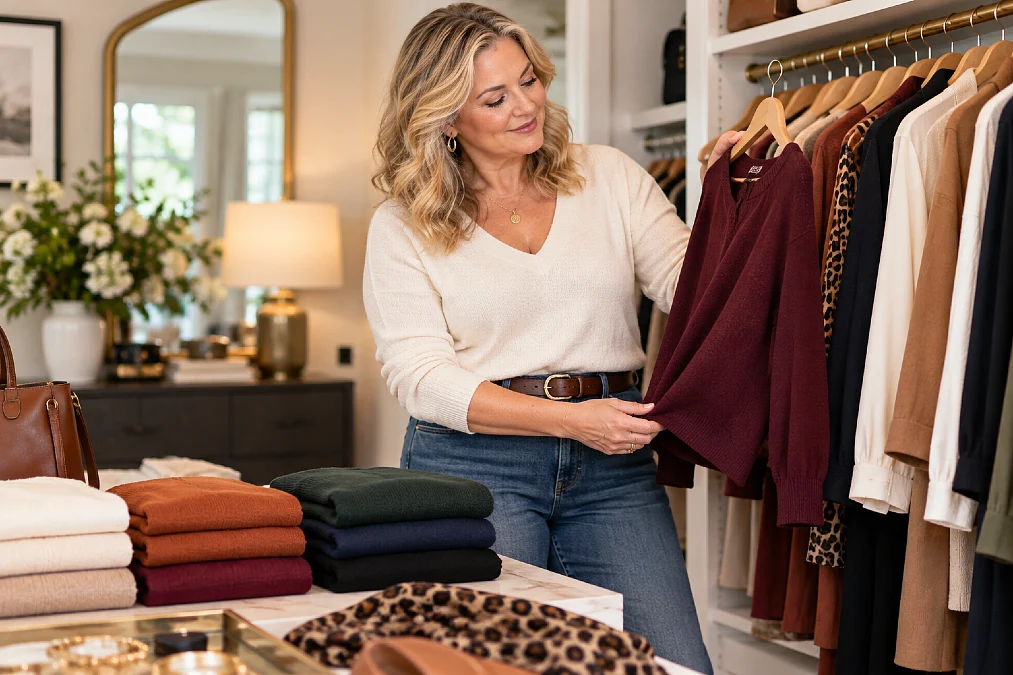
You do not need a professionally analyzed color season to create a wardrobe that feels consistent.
Start with the colors you already enjoy wearing near your face and the neutrals you naturally combine with them.
Perhaps your wardrobe works around:
- Black, ivory, burgundy, and denim
- Navy, camel, cream, and forest green
- Chocolate, rust, olive, and warm beige
- Charcoal, white, cobalt, and red
Repeating a small group of colors helps unrelated garments work together.
It also makes experimenting easier because you are changing one variable at a time.
Texture Can Replace Color
If you prefer neutrals, use texture to stop outfits from feeling flat.
Combine smooth trousers with a ribbed knit, suede shoe, leather bag, bouclé jacket, or satin blouse.
An all-black outfit built from five different surfaces can look more considered than an outfit using five unrelated colors.
Stop Buying Clothes for a Version of Your Life You Rarely Live
One of the fastest ways to lose track of your personal style is to shop for fantasy occasions.
You may love dramatic evening dresses online while spending most of your week working, driving, running errands, meeting friends casually, or managing family life.
There is nothing wrong with owning special clothes. They just should not crowd out the clothes your real life requires.
Look at an average two-week period.
Where are you actually going?
Your wardrobe might need:
- Comfortable polished work outfits
- Easy weekend layers
- Dinner outfits that do not feel overdressed
- Shoes you can genuinely walk in
- Pieces that survive long periods of sitting
- Layers for changing indoor temperatures
- Clothing that works across several casual occasions
Personal style becomes much clearer when it is built around actual use.
Comfort Upgrade
When trying on clothes, do more than stand in front of the mirror.
Sit down. Raise your arms. Walk. Bend. Put your phone in the pocket. Fasten the coat. Check whether the waistband rolls or the shirt pulls when you sit.
A beautiful outfit that becomes annoying after twenty minutes will not become part of your real personal style.
Use Inspiration Without Copying Someone Else’s Body or Wardrobe

Fashion inspiration is useful, but copying an outfit piece for piece often leads to disappointment.
Instead, identify the styling idea.
If you save an image of a woman wearing wide-leg camel trousers, a cream sweater, pointed boots, and a long coat, ask what attracted you.
Maybe it was:
- The warm tonal palette
- The long clean lines
- The combination of soft knit and structured coat
- The contrast between wide trousers and pointed shoes
- The minimal accessories
You can recreate that idea with clothes suited to your own fit preferences and budget.
Try the Three-Image Test
Save three outfits you genuinely love.
Then compare them.
Look for repeated details such as:
- Similar trouser widths
- Similar necklines
- Similar jacket lengths
- Repeated colors
- Similar shoes
- Soft versus structured fabrics
- Minimal versus layered accessories
Those repeated details are often more useful than the aesthetic label attached to the image.
Edit Your Wardrobe Slowly Instead of Starting Over
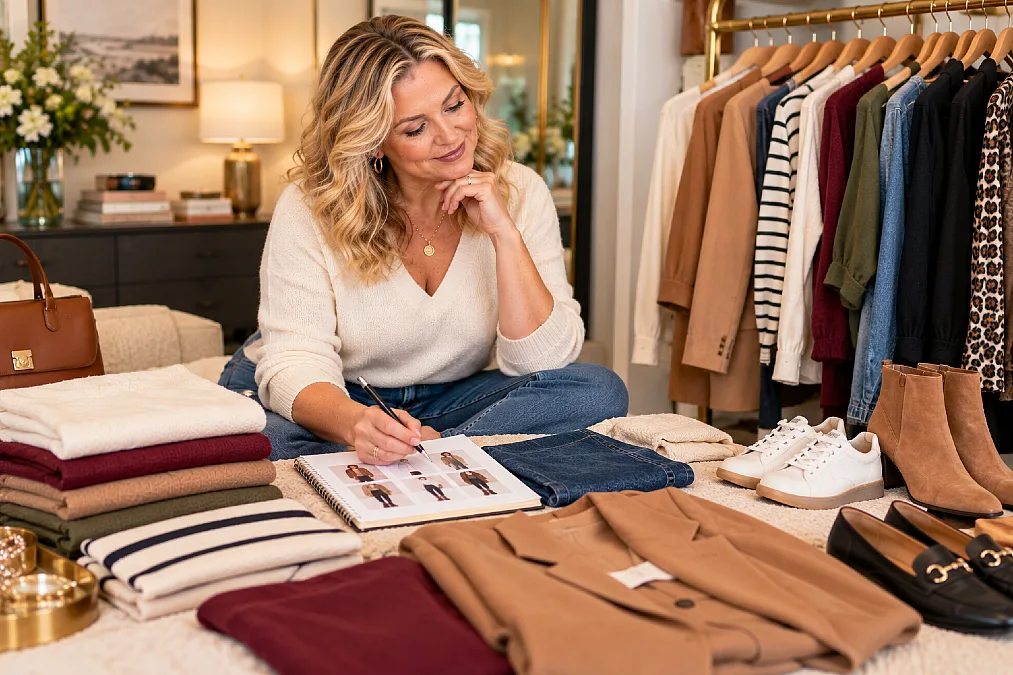
Finding your personal style does not require a dramatic closet purge.
In fact, getting rid of too much too quickly can make the process harder because you lose the chance to understand what was working.
Instead, divide clothes into three practical groups.
Wear often: These pieces probably contain your strongest style clues.
Like but struggle to style: These may need different pairings, shoes, layering, or simple alterations.
Rarely choose: Ask why. The problem may be fit, fabric, color, comfort, or simply that the garment no longer reflects your taste.
Sometimes the solution is not replacing the garment.
A trouser hem may need shortening. A blazer may work better with the sleeves pushed up. A dress may need different shoes. A long shirt may look better worn open instead of buttoned.
Small styling changes can tell you more than another shopping trip.
Make New Purchases Prove They Belong
Once your style becomes clearer, shopping should become more selective.
Before buying something, picture at least three ways you would realistically wear it.
Ask:
- Does this work with the trousers or jeans I already wear most?
- Does the fabric behave the way I like?
- Can I wear my normal bra with it?
- Does the length work with my usual shoes?
- Will I still like the silhouette when the trend moves on?
- Am I buying this because I like it or because someone told me it is “flattering”?
- Does it fit my real week?
If you cannot answer those questions, the garment may be attractive without being useful.
That distinction saves money and keeps your wardrobe focused.
Frequently Asked Questions
How do I find my style if I like several different aesthetics?
Keep all of them. Personal style can mix tailored, romantic, minimal, sporty, vintage, or trend-led elements.
Look for the details that repeat across those aesthetics, such as certain colors, shapes, shoe styles, or fabrics. Those repeated choices create consistency.
Should plus size women avoid oversized clothes?
No. Oversized clothing works best when the volume feels intentional and the garment still fits correctly at important areas such as the shoulders, armholes, or waistband.
Try balancing volume through length, footwear, fabric weight, or the shape of the other garments rather than avoiding oversized pieces completely.
How can I experiment with style without spending much money?
Start by styling your existing clothes differently.
Roll sleeves, change shoes, tuck a shirt, layer a cardigan over a dress, wear a button-down open, combine colors you normally separate, or move accessories between outfits. These experiments help identify what you like before you spend money.
What if plus size stores do not carry the style I want?
Focus on the design details instead of searching only by aesthetic name.
If you want a minimalist look, for example, search for straight trousers, clean knit tops, long coats, simple leather shoes, and solid colors rather than only searching “plus size minimalist fashion.”
How long does it take to develop a personal style?
There is no deadline.
Style usually becomes clearer through repetition. The more you notice what you wear, what stays unworn, and which outfits make getting dressed easier, the more consistent your preferences become.
Finding Your Style Should Make Dressing Easier
Your personal style does not need a clever name or a completely coordinated wardrobe.
It needs a few reliable patterns you understand: the silhouettes you enjoy, the fabrics that feel good, the proportions you repeat, the shoes that work with your clothes, and the colors you naturally combine.
Start with one simple exercise this week. Photograph three outfits you genuinely enjoyed wearing and look for what they have in common. Those repeated details are often the clearest path toward a style that actually feels like your own.
Keep reading: 19 Plus Size Old Money Outfits That Whisper Quiet Luxury and How to Build Real Confidence in a Plus Size Body
Katy McClain is the founder and senior editor of Bold Mellow, where she focuses on modern plus-size style that feels polished, wearable, and realistic. She created the site to make fashion advice more useful for women who want good clothes and thoughtful styling ideas without outdated rules about hiding, minimizing, or dressing for a certain body type.
Her editorial approach centers on proportion, fit, fabric, color, and the small details that can change how an outfit feels. Katy oversees Bold Mellow’s overall direction and works closely on its fashion guides, seasonal edits, and everyday outfit inspiration, with an emphasis on clothes that can work beyond a single photo or trend.